Prefer Jewish News on Google
Facebook STILL hosting fake AI Holocaust images months after Meta alerted
Despite Auschwitz Memorial and Jewish News warnings, fabricated AI Holocaust content remains live on Facebook, drawing millions of views
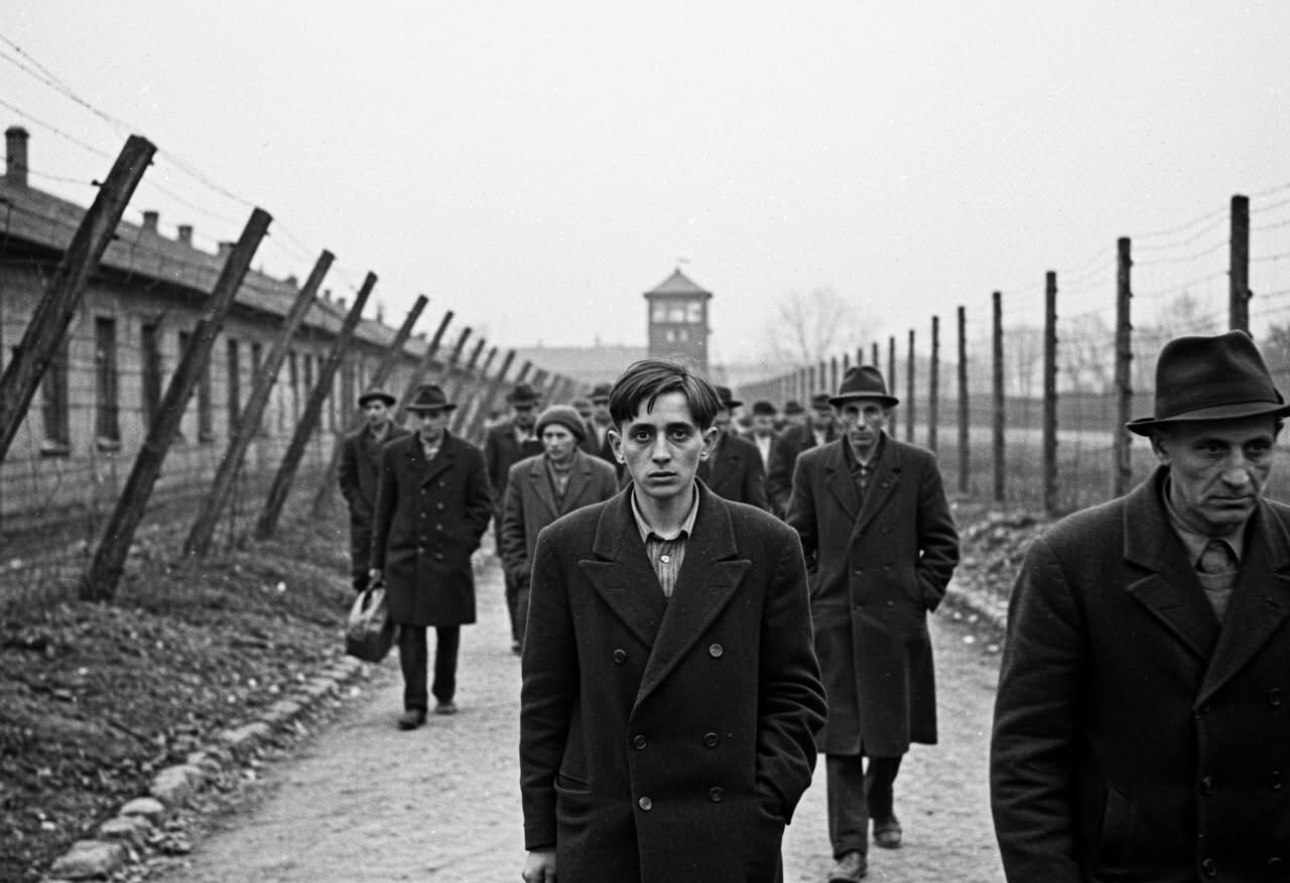
Fabricated images of Holocaust victims generated by artificial intelligence are still circulating on Facebook, months after both Auschwitz Memorial and Jewish News raised alarms and formally reported the accounts behind them.
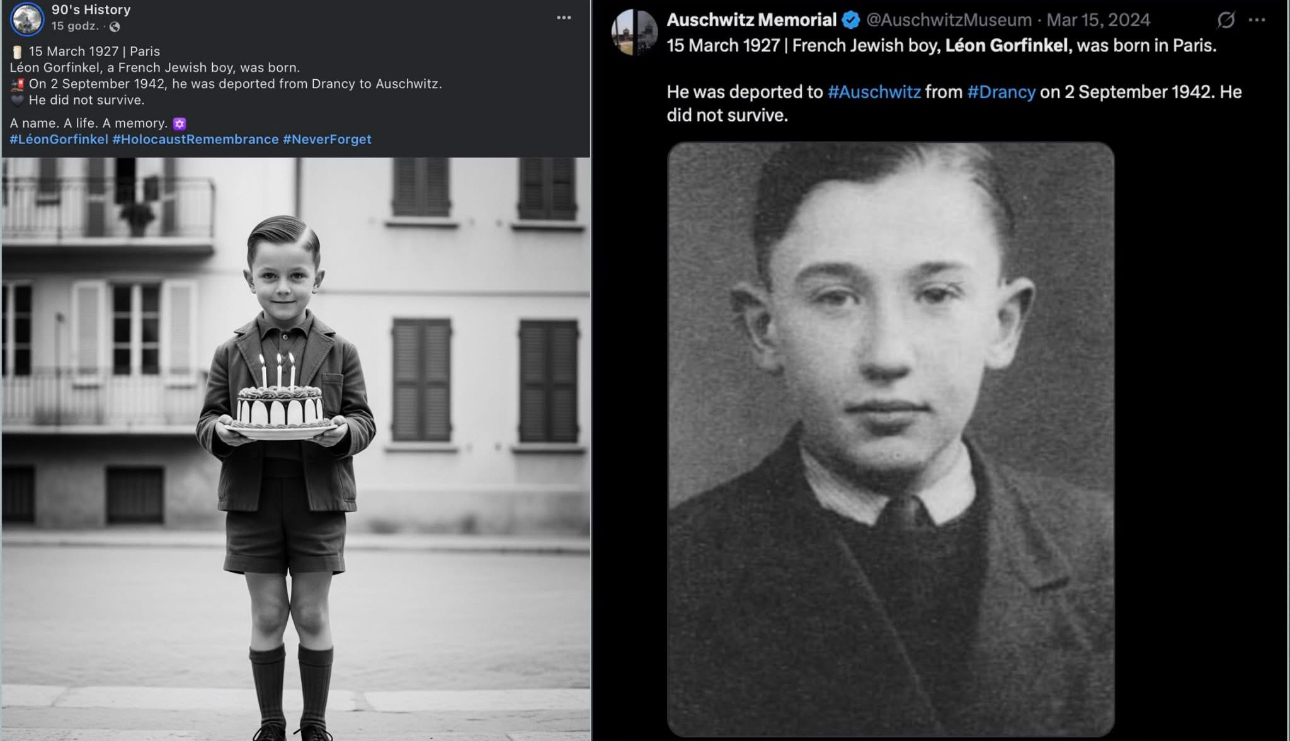
In May, Jewish News revealed how pages such as 90’s History were copying names and dates from Auschwitz archives, replacing genuine photographs with stylised AI portraits and inventing false scenarios for murdered victims. At the time, Auschwitz Memorial condemned the practice as a “profound act of disrespect” and confirmed it had flagged the content to Meta.
Now, a BBC investigation has shown that the phenomenon is part of a sprawling international spam network, with operators based in Pakistan, India, Vietnam, Nigeria, and elsewhere. These creators collaborate in private groups to mass-produce “AI-slop” – low-quality AI images and captions – specifically designed to go viral and exploit Meta’s content-monetisation programme.
One Pakistani account, named Abdul Mughees, posted screenshots claiming more than 1.2 billion views and £16,000 in revenue over four months. Although those figures could not be independently verified, the BBC’s analysis found dozens of accounts pushing almost exclusively fabricated history content, with Holocaust imagery proving a reliable traffic driver.
The posts have included invented scenes of prisoners playing violins, children abandoned on train tracks, or lovers meeting across camp fences. Many pages had previously impersonated businesses, influencers, or even official bodies before being repurposed to churn out Holocaust AI images. Others boosted reach by mass-sharing each other’s posts into history groups, effectively driving monetisation.


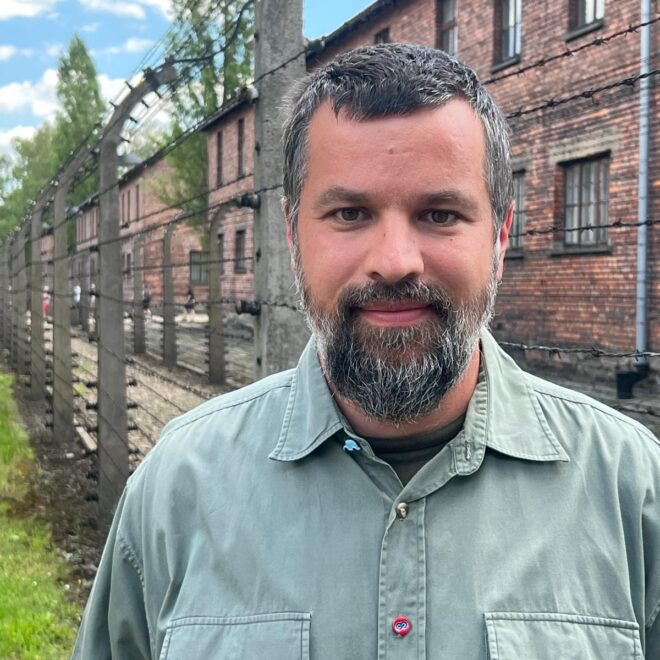
Pawel Sawicki, spokesperson for the Auschwitz Memorial, told the BBC: “Here we have somebody making up the stories… for some kind of strange emotional game that is happening on social media. This is not a game. This is real suffering… we want to and need to commemorate.”
Meta confirmed to the BBC that while some accounts were removed for impersonation or “inauthentic behaviour,” the fabricated Holocaust photos themselves do not breach its policies. The result is that the AI images, condemned by Holocaust institutions, remain visible on the platform months after being reported.
Dr Robert Williams of the International Holocaust Remembrance Alliance said survivors and their families were deeply unsettled. “They don’t quite understand what they’re seeing,” he told the BBC. “They feel a certain sense of sadness that this has been allowed to happen… because the last of the survivors will soon leave us.”
The Auschwitz Memorial has warned that this surge of digital fakes risks distorting historical understanding, especially as the number of authentic photographs from inside Auschwitz is limited. In a June post, it described AI images of victims as a “dangerous distortion” that “disrespects victims and harasses their memory.”
Yet the content remains online, raising questions about how seriously Meta treats the integrity of Holocaust remembrance on its platforms – and whether policy loopholes are enabling spammers to profit from genocide.

Keep community journalism free.
Jewish News is free for everyone. No paywall. No barriers. Just trusted journalism for anyone who wants to stay connected to Jewish life in Britain.
If you value that, please support us.
From as little as £5 a month, you can help keep our journalism free and accessible to all.
Every day, we report on the issues that matter to our community. We celebrate achievements, support charities, challenge antisemitism and ensure Jewish voices are heard more widely.
From as little as £5 a month, you can help us continue to:
- Report on the stories shaping Jewish life in the UK and beyond
- Bring our community together through shared stories, events and campaigns
- Celebrate the people, culture and moments that define our community
- Support organisations doing vital work across Jewish Britain
You can make a one-off donation or become a regular supporter. Every contribution helps keep our journalism free, independent and accessible to all.
If everyone who values Jewish News gave a small amount, it would make a real difference to our future.