Prefer Jewish News on Google
Former Foreign Secretary criticises Ed Miliband
Sir Malcolm Rifkind also says recognition of Palestinian state was "playing with words"
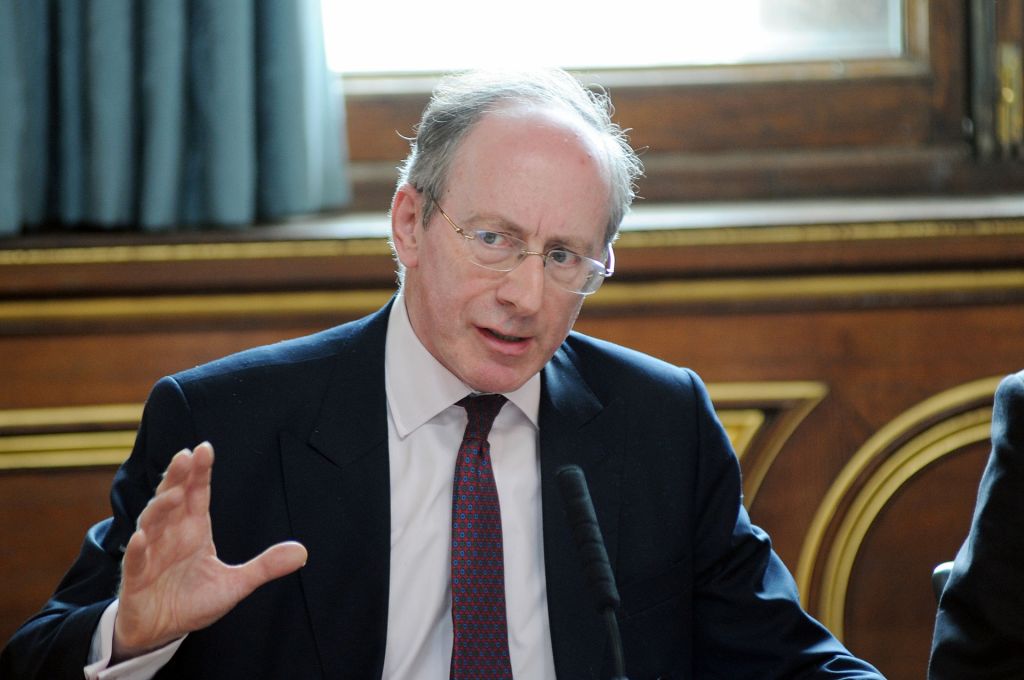
Former Foreign Secretary Sir Malcolm Rifkind has criticised both his successor, Ed Miliband, and the previous Labour administration led by Sir Keir Starmer, over their public announcements relating to the Israel-Palestine conflict.
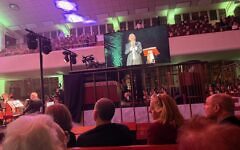
Speaking on Thursday to supporters of the British Friends of the Israeli Jewish-Arab peace village, Neve Shalom/Wahat as-Salam, Sir Malcolm said he did not believe there should have been recognition of a Palestinian state in the absence of such a reality — “it is simply playing with words.”
As far as Mr Miliband’s announcement of sanctions went, Sir Malcolm said he “disapproved” of the present Foreign Secretary’s timing, so close to the upcoming Israeli elections, but adding that he believed there was “a difference between sanctions on Israel proper and sanctions imposed in the West Bank.”
Sir Malcolm gave a largely optimistic appraisal of the current Middle East situation in his wide-ranging address, entitled “One land, two states, past present and future?” Noting that “Israel’s relations with the Arab world have changed dramatically in the last five years”, he cited various global examples of conflict such as the Troubles in Ireland, the collapse of the former Soviet Union and the end of the South African apartheid regime.
Such seemingly intransigent situations, he said, had ultimately been resolved, in ways few might have believed. He was confident, he said, that peace between Israelis and Palestinians could and should be possible; but he asked, “what’s the alternative to the two-state solution?”

Sir Malcolm said that even if there were a change of government after 27 October , he did not expect the new Israeli administration to support a two-state solution straight away. However, his hope was that “the new government will encourage new dialogue between Israeli and those Palestinians who do not support terror.” In that way, he said, there could be a gradual acceptance of the two-state solution. In the meantime he believed it was possible for the Palestinians to create a “technocratic government”, with highly educated people ready for the chance of having “grown-up dialogue” with Israel.
He added: “Maybe this is airy-fairy stuff, but I hope it can happen”. It was “blindingly obvious,” he said, that a military option could never provide total security and that a political solution would have to be reached. “Israelis are not going to leave”, he said — “but the Palestinians aren’t either.”
Recalling a conversation with Benjamin Netanyahu in Jerusalem some years ago, Sir Malcolm told the audience that when he had asked the Israeli, “what would you like your relations with the West Bank to be?”, Netanyahu had “wriggled and refused to answer”.
The evening was held under the auspices of the legal group of the British Friends of Neve Shalom. Chairman David Altaras said that though it was the 16th Philip Rueff lecture, the event would in future be named the Rueff-Goode lectures to honour the late Professor Sir Roy Goode, who died in June this year aged 93. Philip Rueff, a distinguished barrister and judge, who died in 2009, was the first chair of the legal group.
Sir Malcolm was welcomed by the former British ambassador to Israel, Sir Andrew Burns, who is a trustee of Neve Shalom. The British Friends’ director, Tal Arrowsmith, outlined the work of the village.
The chair of the British Friends, Laurence Brass, making a financial appeal, spoke of the issues the village had had with the Israeli government, which had “pulled the plug” on the funding of the village school, and withdrawn financial support. But with a shortfall of around £100,000, he said, the Friends groups around the world had “rallied round” and allowed the school to operate privately rather than rely on uncertain government funding.

Keep community journalism free.
Jewish News is free for everyone. No paywall. No barriers. Just trusted journalism for anyone who wants to stay connected to Jewish life in Britain.
If you value that, please support us.
From as little as £5 a month, you can help keep our journalism free and accessible to all.
Every day, we report on the issues that matter to our community. We celebrate achievements, support charities, challenge antisemitism and ensure Jewish voices are heard more widely.
From as little as £5 a month, you can help us continue to:
- Report on the stories shaping Jewish life in the UK and beyond
- Bring our community together through shared stories, events and campaigns
- Celebrate the people, culture and moments that define our community
- Support organisations doing vital work across Jewish Britain
You can make a one-off donation or become a regular supporter. Every contribution helps keep our journalism free, independent and accessible to all.
If everyone who values Jewish News gave a small amount, it would make a real difference to our future.