Prefer Jewish News on Google
Former hostages Eli Sharabi and Alon Ohel make first joint live appearance
More than 400 guests attended London dinner for Strands of Hope, raising £300,000 to support vulnerable young people in Israel
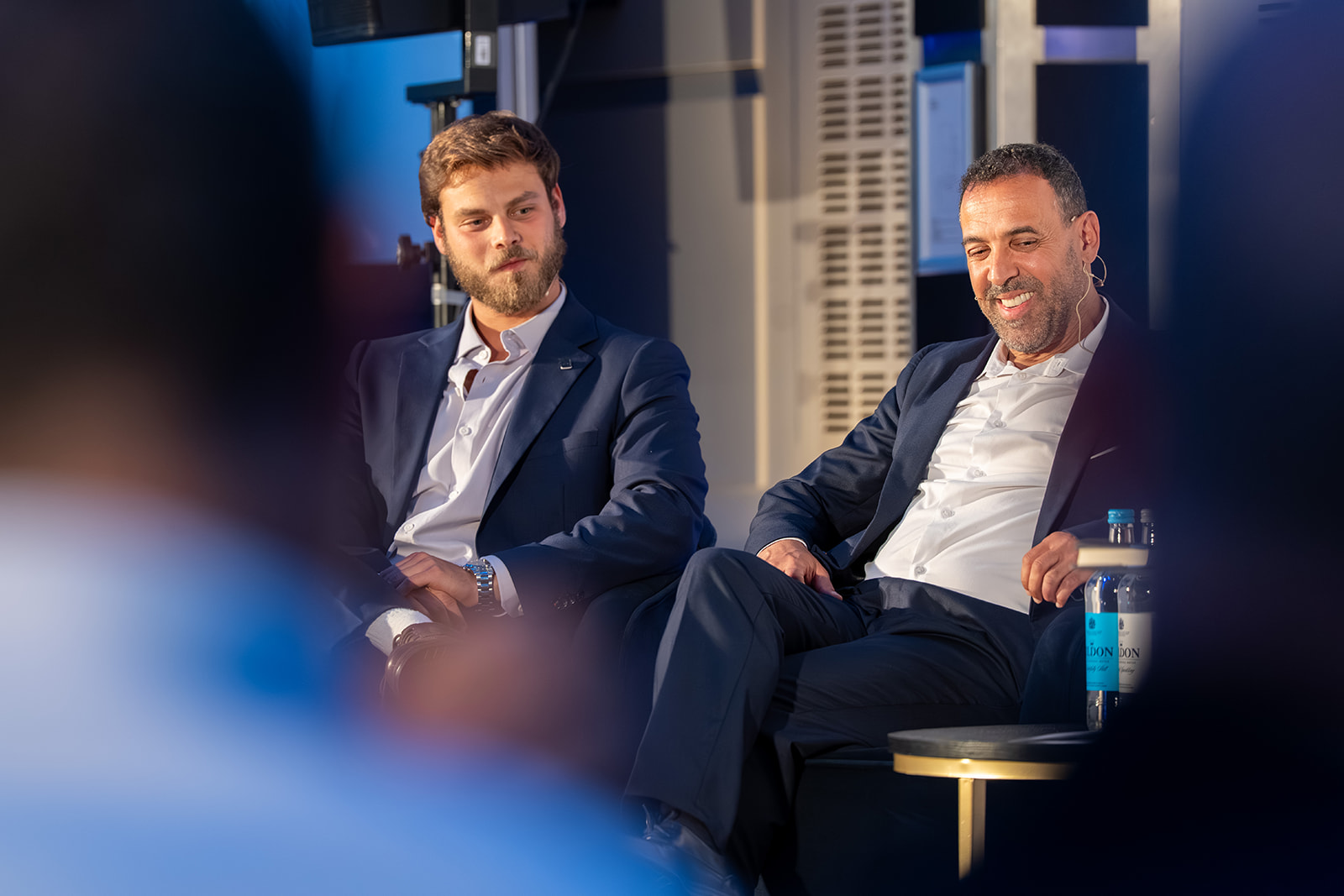
Former Hamas hostages Eli Sharabi and Alon Ohel made their first live public appearance together in the UK at the inaugural fundraising dinner for Strands of Hope, raising £300,000 to support vulnerable young people in Israel.
More than 400 guests attended the event, which raised funds for Hut HaMeshulash, an Israeli charity working with at-risk youth facing serious social and emotional challenges.
Sharabi was kidnapped from his home in Kibbutz Be’eri on October 7 and held in Gaza for 491 days. His wife, Lianne, and daughters Noiya, 16, and Yahel, 13, were murdered in the attack. He only learned of their deaths after his release in February 2025.
You could hear a pin drop as he retold the moment he discovered they had not survived.
“In captivity, the terrorists told me, ‘I saw your wife and children they are fine.’ It was the only time I ever cried in captivity. For 16 months, there wasn’t one hour when I wasn’t thinking about them. I didn’t trust the terrorists.”


He said he always knew it was possible they had lied and when he was finally told after his release that his family had been killed, it “was like a hammer to my head”.

“I am a practical person. I know I can’t bring them back. If I thought that depression and misery would bring them back, I would choose that but I choose life. I am always optimistic about the future.”
It is this attitude, he said, that was key to his survival.
Speaking to Eylon Levy about his ordeal, he added: “Talking to the media, speaking to people around the world, is part of the therapeutic process for me. Fighting for the release of the other hostages was the natural thing for me to do.”
His brother Yossi was also kidnapped and later murdered after 100 days in captivity. “It was the same with my brother. I had to fight to bring his body home.”
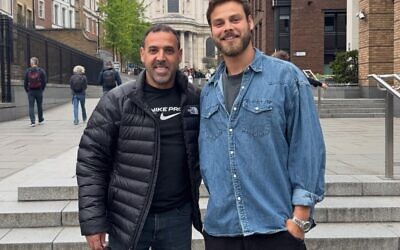
Sharabi sat alongside Ohel, 25, a young musician who was kidnapped from the Nova music festival and held hostage for 738 days before his release. He was forced to endure a further 247 days in captivity alone after Sharabi was released.
The two men formed a close bond in captivity, describing their relationship as like father and son.
Speaking on stage in conversation with Levy, they reflected on how that friendship helped them survive the unimaginable conditions they endured.
Sharabi told the audience that caring for Ohel gave him purpose. “Every day I woke up thinking I had to survive not just for me, but for him,” he said.
Ohel said Sharabi’s strength and guidance had stayed with him, adding: “We don’t have the privilege to give up. We have to move forward.
“When he was taken from me, he was always in my thoughts. I tried to think good, optimistic thoughts.”
The event marked a deeply emotional reunion for the two survivors, who had spoken privately since their release but had never before appeared together live in front of an audience.
Ohel told guests how he survived the further 247 days alone after Sharabi’s release.
After three weeks, a Hamas guard offered to bring him another hostage for company. “I told him no because I knew I would not get fed if there was another person with me, and I needed food to survive,” he said. “I told him to give me a book.”
Weeks later, the guard brought him a copy of Harry Potter and the Half-Blood Prince.
“It was great,” he said, describing how he read the book repeatedly — though he avoided the ending. “I read that part only once. I told myself, this is not my ending.”
Instead, he focused on the sections “about relationships, friendships, fantasy”.
Breaking the tension, Sharabi joked: “They should have given him my book.”
Sharabi also recalled speaking to Ohel’s parents after his own release, trying to reassure them about their son’s condition.
He said how difficult it was not knowing for certain, but told them: “I am sure he is fine. He has all the tools to survive on his own. I wanted to believe that. I said, don’t worry he will survive.”
Strands of Hope is a UK-based charity raising funds for Hut HaMeshulash, which supports around 1,400 at-risk young people in Jerusalem through emergency shelters, long-term residential homes, transitional housing, vocational training and an open-access drop-in centre.
The charity provides safe housing, hot meals, social care and a pathway towards independent adult life.
Speaking about the importance of supporting vulnerable young people, Sharabi said he understood “the moment when somebody gives you direction” and said such support could “save lives”.
He added: “Every donation makes a difference. Every pound can help change their future.”
The evening, which raised £300, 000 for the charity, closed with a powerful message of resilience from both men, who offered words of support to the UK Jewish community amid rising antisemitism.
Sharabi said: “Stay strong. Don’t hide who you are. I know it is a tough time to be Jewish, but I am hopeful for the future. Be proud. Our love is stronger than their hate.”
Ohel added: “Stay strong together. Don’t be afraid of who we are.”

Keep community journalism free.
Jewish News is free for everyone. No paywall. No barriers. Just trusted journalism for anyone who wants to stay connected to Jewish life in Britain.
If you value that, please support us.
From as little as £5 a month, you can help keep our journalism free and accessible to all.
Every day, we report on the issues that matter to our community. We celebrate achievements, support charities, challenge antisemitism and ensure Jewish voices are heard more widely.
From as little as £5 a month, you can help us continue to:
- Report on the stories shaping Jewish life in the UK and beyond
- Bring our community together through shared stories, events and campaigns
- Celebrate the people, culture and moments that define our community
- Support organisations doing vital work across Jewish Britain
You can make a one-off donation or become a regular supporter. Every contribution helps keep our journalism free, independent and accessible to all.
If everyone who values Jewish News gave a small amount, it would make a real difference to our future.