Prefer Jewish News on Google
Free speech on paper, silence in practice
This article is the second in a series for UJS’ ‘7 Weeks, 7 Values’ Omer Campaign. This weeks’ value is Gevurah: justice
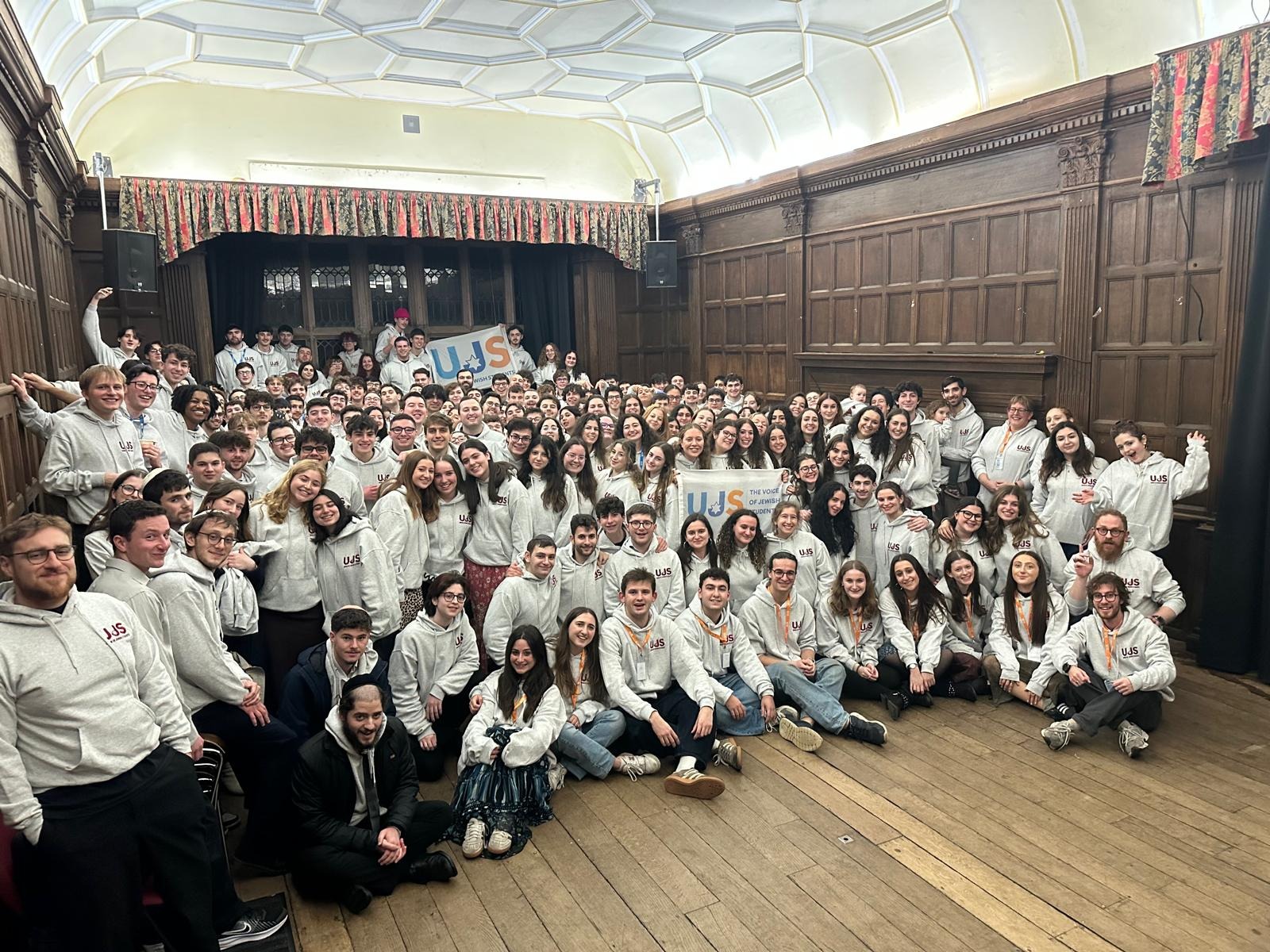
If you’ve spent time interacting with university life over the last five years, it’s likely you have heard a great deal about freedom of speech legislation. Those conversations are undeniably important and UJS and Jewish students have been staunchly engaged in the campaigning adjacent to the Higher Education (Freedom of Speech) Act 2023.
There is, however, a less discussed and equally important aspect to freedom of speech on campus. Legal protections for free expression mean little when the culture surrounding that expression is toxic enough to make genuine dialogue difficult and, at times, fraught.
This is the dual reality institutions must navigate; legal frameworks may protect speech, but it is culture that ultimately determines whether it can be exercised meaningfully.
All too often, Jewish students don’t feel comfortable expressing their views on campus. There are numerous spaces where Jewish students are technically welcome, yet practically absent.
Not because anyone said so. Because the political culture of those spaces has made the cost of showing up – visibly, authentically – too high. We have watched countless students disengage from campaigns and societies they cared about.



They don’t make a scene; they just stop going. At the City St George’s Freshers’ Fair, a significant number of society stalls, including maths, dance and neurodivergence, displayed Friends of Al Aqsa materials, an organisation that denies Israel’s right to existence.
While Jewish students are not formally excluded from joining these groups, the prevailing atmosphere would make participation feel deeply uncomfortable for many.
The same logic plays out in lecture halls. A comment lands, Jewish students notice, and nobody says anything. It might get quietly flagged to a JSoc committee-member or UJS Sabbatical Officer later to be raised with the university but a culture of impunity means often no action is taken.
Most don’t report these incidents at all, because it feels too minor to raise. That is not a personal judgement call, it is what happens when a room has never made clear it would care. Why speak if nobody will hear?
That culture doesn’t emerge from nowhere. Posters reading ‘From Cambridge to Gaza, Intifada’, ‘Intifada until victory’ and the like have appeared across university cities, on lampposts, noticeboards, outside lecture halls.
Walk through most campuses and it is difficult to find much that reflects a different perspective. For many students – whatever their views – it is a daily reminder of where the boundaries of acceptable opinions lie. Jewish students have pushed back quietly against that backdrop, running weekly events and leading interfaith dialogue that the visible culture would suggest is impossible.
But the discomfort isn’t theirs alone. UJS’ Time for Change report polled non-Jewish students and found that 61% of students find the campus climate surrounding Israel- Palestine discussions toxic or intimidating.
Moreover, 33% of students feel unsafe engaging in any political debates. It’s clear that legally protecting free speech does not translate to a renewal in open, intellectually curious debates- where ideas are tested, challenged, and refined rather than avoided, and where discomfort is a prompt for enquiry rather than a reason for silence.
How then, do we go forwards? How can we make sure freedom of speech isn’t just theoretical, but a right which all students are comfortable to exercise? Perhaps the Jewish value of gevurah gives us some sense of direction on how to approach this subject matter. Gevurah is often defined as G-ds ability to control what each individual receives according to their needs- or more succinctly, it refers to applying boundaries to goodness.
Ensuring speech, one of our greatest powers, is considerate of those around us is not something to be taken lightly.
We need academics to be given clear guidance on the distinction between academic freedom and antisemitism, and boundaries on when it is acceptable for personal politics to be shared in teaching. We need external speakers on campus to be properly researched to minimise and manage risk. We need facilitated dialogue between groups to reduce polarisation and demonisation, to increase empathy for one another and to ensure conversations on campus are productive not destructive.
Perhaps more than anything, as a community we need to empower our Jewish students to speak up for what they believe in and to be proud of their identities on campus
- Naomi Bernstein. Sabbatical Officer UJS and Gavriel Sacks, a management and history student at Cambridge University, former JSoc president and UJS Leadership Fellow 2023/4.

Keep community journalism free.
Jewish News is free for everyone. No paywall. No barriers. Just trusted journalism for anyone who wants to stay connected to Jewish life in Britain.
If you value that, please support us.
From as little as £5 a month, you can help keep our journalism free and accessible to all.
Every day, we report on the issues that matter to our community. We celebrate achievements, support charities, challenge antisemitism and ensure Jewish voices are heard more widely.
From as little as £5 a month, you can help us continue to:
- Report on the stories shaping Jewish life in the UK and beyond
- Bring our community together through shared stories, events and campaigns
- Celebrate the people, culture and moments that define our community
- Support organisations doing vital work across Jewish Britain
You can make a one-off donation or become a regular supporter. Every contribution helps keep our journalism free, independent and accessible to all.
If everyone who values Jewish News gave a small amount, it would make a real difference to our future.