Prefer Jewish News on Google
Government’s former-extremism adviser slams ban on IDF from top UK military college
Lord Walney tells peers 'even in the current context of destructive tokenism from the UK over Israel this decision or gesture seems particularly depressing'

The government’s former extremism advisor has criticised the Ministry of Defence’s move to bar IDF personnel from a prestigious defence college as a “depressing gesture.”
Cross-bench peer Lord Walney raised the Minister of Defence’s move to prevent new students from studying at London’s Royal College of Defence Studies in the Lords on Wednesday.
He claimed that “even in the current context of destructive tokenism from the United Kingdom Government over Israel, this decision or gesture seems particularly depressing and particularly likely to strike at the relationship between our countries, which I hope she will accept is vital for our long-term security and that of the British people. ”
Walney asked a government minister to respond to his question on what criteria have been applied to reach the decision.
He also cited UK relations with Qatar, “which continues to sponsor Islamist terrorism” and China, “whose treatment of the Uyghur people is an international scandal and which poses a clear risk to global security with their attitude towards Taiwan”.



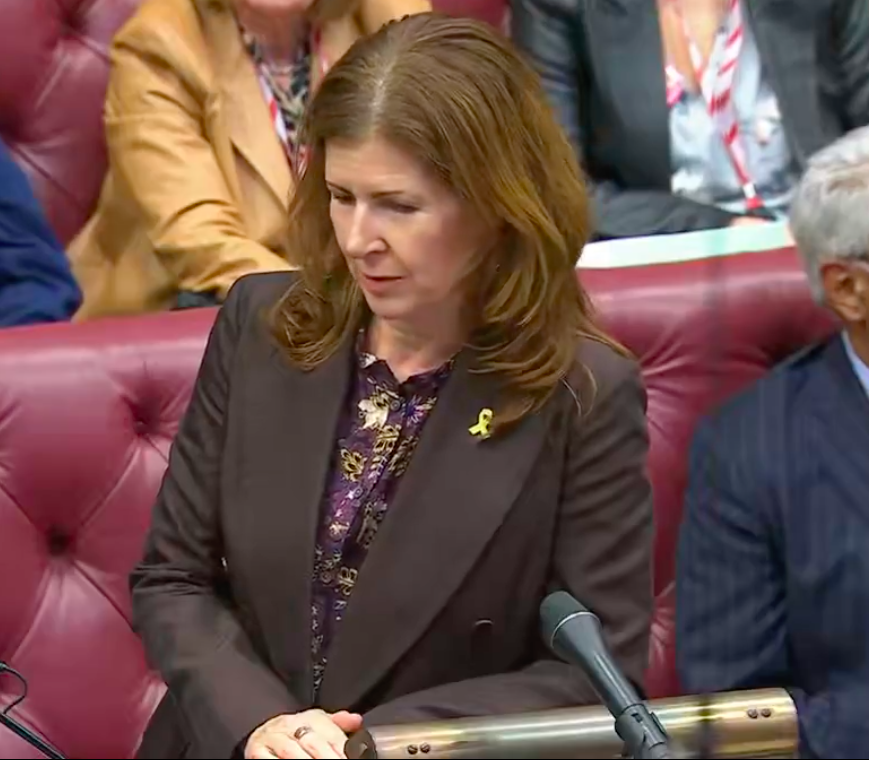
Responding for the government, Baroness Chapman said Walney had a right to disagree with a decision “that we have not taken lightly” and admitted “there is not a set criteria for this decision”.
The minister added:” It is an unusual position that we have had to take, but we are in an unusual situation.
“Israel, as he quite rightly reminds us, is a long-standing friend and ally; we have close links with Israel, through many historical ties, people-to-people ties and business ties.
“I very much hope that we can restore the arrangement as it was, because I think it is good for the United Kingdom, and for Israel too, but, as things are at the moment, the things that are happening on the ground in Gaza and the unwillingness of the Government of Israel to engage, listen and change course have led us to take this regrettable decision”.
The Conservative’s Baroness Goldie added the ban on attendance at the college by defence personnel of an ally “is, as far as I am aware, unprecedented, which makes it extraordinary”.
She asked why there was no ministerial statement to announce the move.
Chapman added:”It is a decision that has been made, I accept, to an extent, that this is in some way symbolic, but it is a reflection of the frustration and the deep concern that we have about the plight of people in Gaza, the decisions made by the Government of Israel about Gaza City, the withholding of sufficient quantities of aid and the designation of famine that we now find in Gaza.
“We are doing everything we can to try to persuade the Government of Israel to change course. This is part of that effort”.
She continued:”We are not requiring students who are currently at the RCDS to return, nor their families; that would be unnecessarily disruptive to them and their lives.
“This is a situation that we want to see resolved. We want the Government of Israel to change course. We want to be able to reinstate the arrangements that, as she quite rightly says, matter a huge deal to us and to our allies”.
Liberal Democrat peer Lord Palmer also questioned whether IDF personnel would gain more of an impression on what the UK thinks from attending the college than “if we prohibit them from hearing those views”.
Chapman said:”The British military is the best in the world; it operates to the highest of standards, and we put our values into action every day through the actions of our military personnel.
“So, I agree it is very much to the benefit of all sides to have participation internationally at our defence college. Very sadly, the decision has been taken to pause this for now, and I hope very much that the arrangement can be resumed as soon as possible”.
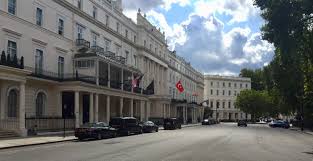
Last weekend Walney, who served as the Government’s independent adviser on political violence and disruption until February, said the decision by the UK to recognise a Palestine state marks “a low point for Britain’s international influence”.

Keep community journalism free.
Jewish News is free for everyone. No paywall. No barriers. Just trusted journalism for anyone who wants to stay connected to Jewish life in Britain.
If you value that, please support us.
From as little as £5 a month, you can help keep our journalism free and accessible to all.
Every day, we report on the issues that matter to our community. We celebrate achievements, support charities, challenge antisemitism and ensure Jewish voices are heard more widely.
From as little as £5 a month, you can help us continue to:
- Report on the stories shaping Jewish life in the UK and beyond
- Bring our community together through shared stories, events and campaigns
- Celebrate the people, culture and moments that define our community
- Support organisations doing vital work across Jewish Britain
You can make a one-off donation or become a regular supporter. Every contribution helps keep our journalism free, independent and accessible to all.
If everyone who values Jewish News gave a small amount, it would make a real difference to our future.