Prefer Jewish News on Google
Haaretz analyst ‘took Qatari cash’ in expanding Qatargate scandal
Allegations centre on claims that Netanyahu’s aides accepted Qatari money to promote favourable coverage of Doha while Qatar led negotiations between Israel and Hamas
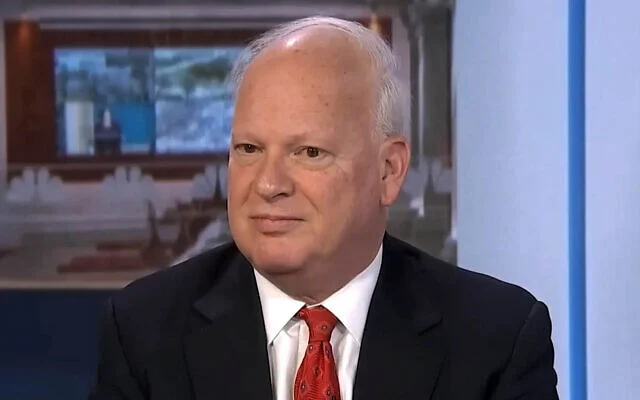
A senior political analyst at Haaretz was secretly paid hundreds of thousands of dollars in funds that investigators claim can be traced back to Qatar – plunging Israel’s most prominent left-leaning newspaper into the expanding Qatargate scandal for the second time in less than a year.
The analyst, Alon Pinkas, a former Israeli consul in New York, allegedly received the payments via Gil Birger, a businessman questioned by police over suspected financial transfers between Qatar and aides close to Prime Minister Benjamin Netanyahu.
According to Haaretz, Birger served as a conduit for money originating from Jay Footlik, a US-based pro-Qatar lobbyist.
The alleged influence operation centres on claims that Netanyahu’s aides accepted Qatari money to promote favourable coverage of Doha while Qatar was acting as a mediator in negotiations between Israel and Hamas for the release of hostages abducted during the October 7, 2023 massacre.
Channel 12 previously reported that Footlik approached several media consultants connected to hostage families. Pinkas later acknowledged that he contacted Ronen Tzur, head of the Hostages and Missing Families Forum, on Footlik’s behalf.


When the arrangement came to light, Haaretz editor-in-chief Aluf Benn questioned Pinkas, who said he and Footlik were friends and that he was assisting him in work with the Families Forum. Pinkas subsequently left the newspaper. Haaretz did not publicly announce his departure but later added disclosure notices to his columns from the period.
Another figure linked to the affair, David Saig, who also worked for Footlik, wrote an anonymous Haaretz column that criticised Egypt while praising Qatar. In October, Haaretz dismissed veteran reporter Chaim Levinson after it emerged he had earned at least NIS 200,000 ($61,000) from Yisrael “Srulik” Einhorn, a Netanyahu aide suspected of taking Qatari funds.
According to Kan, the Qatari campaign was built around five messages: that Egypt enabled the October 7 attack, that Hamas leaders were in Doha at Israeli and US request, that Israel asked Qatar to transfer money to Gaza, that Qatar is militarily vital to Israel and the US, and that Qatar should lead hostage negotiations rather than Egypt.
Haaretz reported that Pinkas echoed those themes in seven columns while being paid by Footlik. One, published on January 1, 2024 under the headline “Netanyahu wants to make Qatar the fall guy for October 7 Massacre. Don’t Let Him,” declared: “First, Hamas committed the atrocities, not Qatar. Second, Qatar funneled money into Gaza to maintain the Hamas regime at Israel’s request. Third, when Qatar was deliberating whether to stop the payments in 2018, Israel sent high-level emissaries to Doha to plead with the Qataris to continue. Fourth, Qatar is indispensable in mediating the release of Israeli hostages. It has done so already and continues to do so. Fifth, in the broader geopolitical dimensions of a postwar Middle East, Qatar could and should be a central part of the solution, and certainly not the problem.”
Pinkas denied being paid to promote Qatar, saying his views were independent and that Footlik commissioned him to write general policy papers for non-Qatari clients. Haaretz said Footlik’s firm, “Third Circle,” was also working for Morocco at the time.

Keep community journalism free.
Jewish News is free for everyone. No paywall. No barriers. Just trusted journalism for anyone who wants to stay connected to Jewish life in Britain.
If you value that, please support us.
From as little as £5 a month, you can help keep our journalism free and accessible to all.
Every day, we report on the issues that matter to our community. We celebrate achievements, support charities, challenge antisemitism and ensure Jewish voices are heard more widely.
From as little as £5 a month, you can help us continue to:
- Report on the stories shaping Jewish life in the UK and beyond
- Bring our community together through shared stories, events and campaigns
- Celebrate the people, culture and moments that define our community
- Support organisations doing vital work across Jewish Britain
You can make a one-off donation or become a regular supporter. Every contribution helps keep our journalism free, independent and accessible to all.
If everyone who values Jewish News gave a small amount, it would make a real difference to our future.