Prefer Jewish News on Google
Hackney Greens warned manifesto pledge on divestment puts pensions at ‘major’ legal risk
Hackney Council's updated risk register now records officers' concerns about pledge to divest from funds linked to Israel
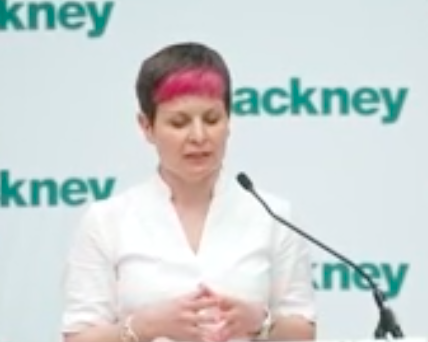
Hackney Council’s Green-led administration has been warned of a “major-to-likely” risk that its highly publicised election manifesto pledge—to divest pension funds from companies linked to Israel—may have breached legal obligations.
In the latest update to the council’s risk register, noted at a council meeting last week, officers concluded there is a “major” risk, warning it is “likely that the Hackney Pensions Committee has disregarded ‘existing legislation, legal advice, financial impact, and fiduciary duty’ over party manifesto both now and in six months.”
At that meeting, Councillor Izzy Castello-Cortes, Green Party chair of the borough’s Pensions Committee, was asked: “As of today, you haven’t divested anything from any companies involved in Israel’s ‘genocide’?”
Cortes replied, “As of today, we have taken some big steps in terms of looking into this.”



Jewish News can reveal that Hackney Council’s updated risk register now records officers’ concerns that the Green manifesto commitment to “immediate unilateral divestment” from companies profiting from Israel’s military operations and occupation has left the council facing a possible conflict with its legal obligations.
A significant part of Hackney Green’s pre-election campaign targeted the previous Labour administration for allegedly failing to divest up to £30 million said to be invested in companies linked to Israel’s “genocide” in Gaza.
Many Labour councillors were openly abused by pro-Palestine activists, facing slurs such as “child killers” and “genocide enablers.”
Former Hackney Labour councillor Vincent Stops told Jewish News: “This is quite shocking.
“Hackney Council officers judge as ‘likely’ the possibility of pension committee members ‘… making decisions based on party manifesto, disregarding existing legislation, legal advice, financial impact and fiduciary duty.’
“They assess the impact as ‘major’ and are forecasting that this is unlikely to change, even with training.”
The former chair of Hackney’s Planning Committee and current pension fund member added: “It was sobering to hear the council officer tell members the committee was not a political committee, and that the Secretary of State could take over the fund.
“This is dire. It is more than 25 years since the government intervened in running Hackney council, and in less than five months of a Green Party administration being formed, we are looking at this prospect again.”
As was the case prior to May’s local elections, recent government reforms to the Local Government Pension Scheme (LGPS) mean individual borough councils can no longer quickly divest from specific equities on their own.
The LCIV requires a “critical mass” of agreement among member boroughs to trigger blanket asset exclusions, creating a significant bottleneck for localised Green policies.
Because assets are pooled across all 32 London local authorities in the LCIV mega-fund, individual councils cannot unilaterally block specific stocks. To exclude assets based on ethics, geopolitics, or human rights, a substantial coalition of member funds must demand the same restriction.
Formal reports from the Hackney Pensions Committee estimate the fund’s exposure to companies listed on the UN Human Rights Council (UNHRC) database for operating in the Occupied Palestinian Territories at roughly £3.5 million—just under 0.2% of total assets, all within passive, multi-asset pooled investments.
Campaigners from the PSC argue the true figure is much higher—closer to £30 million. Legal experts warn that, if this is accurate, removing up to £30 million from global assets would require unwinding complex, diversified index funds, potentially resulting in severe financial penalties and jeopardising the council’s fiduciary responsibilities.
In June, Hackney mayor Zoe Garbett said: “The Pensions Committee has a duty to its members, to secure and protect the financial future of scheme members.
“Divestment is not at odds with robust financial management. Introducing an exclusion clause into our responsible investment policy goes alongside our commitment to a truly ethical pension fund, including mitigating reputational risks and advocating for the interests of our scheme members.”
But Hackney Greens’ ability to challenge the LCIV’s stance on divestment remains limited.
Four boroughs—including Waltham Forest and Tower Hamlets—have already passed council motions or changed investment strategies to restrict investments in fossil fuels, arms, or entities violating international law. Other boroughs, such as Lewisham and Barking and Dagenham, have taken similar steps but face the same legal hurdles as Hackney.

Keep community journalism free.
Jewish News is free for everyone. No paywall. No barriers. Just trusted journalism for anyone who wants to stay connected to Jewish life in Britain.
If you value that, please support us.
From as little as £5 a month, you can help keep our journalism free and accessible to all.
Every day, we report on the issues that matter to our community. We celebrate achievements, support charities, challenge antisemitism and ensure Jewish voices are heard more widely.
From as little as £5 a month, you can help us continue to:
- Report on the stories shaping Jewish life in the UK and beyond
- Bring our community together through shared stories, events and campaigns
- Celebrate the people, culture and moments that define our community
- Support organisations doing vital work across Jewish Britain
You can make a one-off donation or become a regular supporter. Every contribution helps keep our journalism free, independent and accessible to all.
If everyone who values Jewish News gave a small amount, it would make a real difference to our future.