Prefer Jewish News on Google

Hermer and Wolfson: the fault line running through Anglo-Jewry
Two parallel legal lives reflect a deepening divide over Israel, faith and Jewish identity
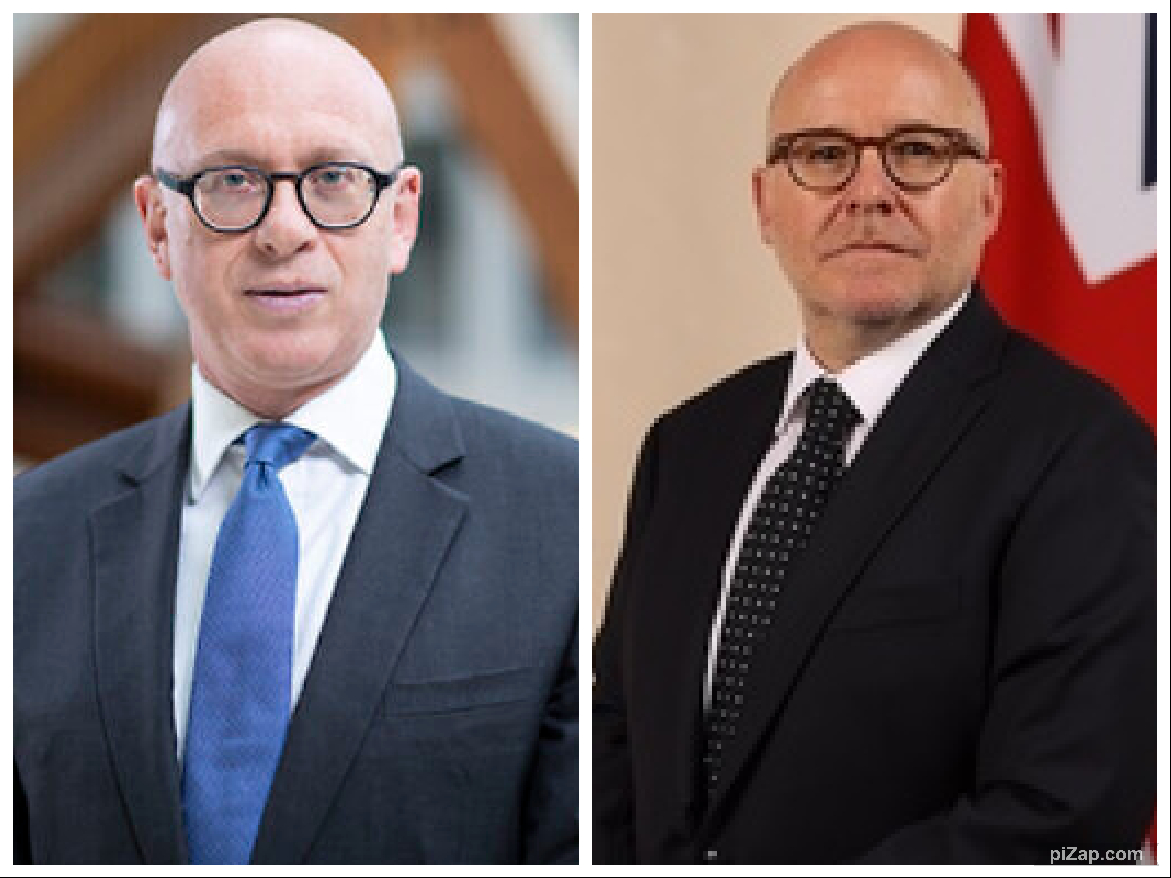
Two barristers, both alike in dignity. Alike, in fact, in so many ways it’s almost eerie.
Richard Hermer and David Wolfson were both born in 1968. Both have family roots in south Wales and grew up in provincial Jewish households, Hermer in Cardiff and Wolfson in Liverpool. Both came of age in an Anglo-Jewish generation suffused with post-1967, Milk and Honey Zionist idealism, and so perhaps unsurprisingly they both spent a gap year in Israel after leaving school.
After university they both ended up in London and joined the Bar in the early 1990s. Anglo-Jewry has a long tradition of producing outstanding lawyers and these two were among the best of their generation. They both took silk in the class of 2009 and then established leading practices as QCs.
Both have long felt the pull of politics and so, somewhat inevitably, they both gravitated towards the legal business of government and have both served as ministers in recent years, leading them to both become peers of the realm. At present, Hermer is the Labour government’s attorney general and Wolfson is the Conservative opposition’s shadow attorney general, meaning it is their duty to arm wrestle over the great legal questions of the day, from the fate of the Chagos Islands to the prosecution of British soldiers who served in Northern Ireland. I’m told they share a mutual respect despite their political opposition.
As they should. These are two exemplary British legal lives lived in almost exact parallel. Both men are patriots and public servants. And yet it is the differences between this pair of 57-year-olds that interest me even more than the similarities.
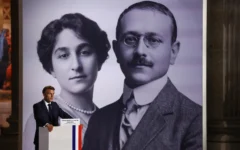

To the outside eye, some of these differences are so subtle as to be indistinguishable. But to those of us versed in the complex taxonomy of our small community, they tell the story not just of two successful lawyer-politicians, but of the journey Anglo-Jewry is on and the crossroads it now finds itself at.
Jewish life in this country is shaped by institutions, and at every step of the way, Hermer and Wolfson’s institutional choices have led them in different directions. As a boy, Richard Hermer was involved with Reform Synagogue Youth, RSY, known for its liberal Zionism and egalitarianism. Wolfson, hailing from a more religious background, became a member of Bnei Akiva, a youth movement known for its knitted kippah Zionism and modern orthodoxy.
RSY places great emphasis on the values of Tikkun Olam, teaching how a Jew must heal the world. Whereas Bnei Akiva focuses on the primacy of Torah v’Avodah, which involves studying Torah and contributing in a religious way to the great project of Jewish nationhood. This distinction is critical.
Jewish life in this country is shaped by institutions, and at every step of the way, Hermer and Wolfson’s institutional choices have led them in different directions
For his gap year, Hermer went with RSY and spent time at the “Eco-Jewish” Kibbutz Lotan, embracing the guitar-strumming campfire collectivism of the new Israel. Whereas Wolfson went to study at Yeshiva HaKotel, a religious Zionist college overlooking the Western Wall that sits at the heart of the nexus between ancient talmudic study and the modern state.
As barristers, their choice of institutions continued to reflect two distinct, but also distinctly Jewish, world views. The Tory Wolfson ended up at One Essex Court chambers, a high-powered commercial set home to fearsome and well-remunerated pugilists such as Lord Grabiner and Laurie Rabinowitz. There he has represented heavyweight commercial clients including Lehman Brothers and Roman Abramovich.
The Labourite Hermer joined Doughty Street and then Matrix Chambers, right at the beating heart of the human rights project, where his milieu was the likes of Keir Starmer and Philippe Sands, the archdeacon of post-Holocaust legal universalism. There, Hermer had a more progressive mission and took on vested interests by representing clients such as Gerry Adams, Guantanamo Bay detainee Abu Zubaydah and the Grenfell families.
These men are both archetypes of a particular kind of lawyer, but also of a particular kind of Jewishness. In some ways, they embody two parallel responses to the challenges of being a post-Holocaust Jew.
Wolfson leans into particularism and national sovereignty and embraces the idea that Israel, emerging from the ashes of Auschwitz, now represents the inevitable focal point of Jewish life across the world. Hermer is a universalist. He does still believe in the idea of the Jewish state that once ignited his teenage imagination, but as part of the broader human rights project that also emerged from the ashes of Auschwitz. For Hermer, the emergence of Bibi’s Israel is a potentially fatal repudiation of that ideal.
Alyth synagogue, where Hermer is a member, is barely a mile from Hampstead Garden Suburb synagogue, known as “Norrice Lea”, where Wolfson says his shema. Yet again, the proximity of these institutions belies their differences. Alyth is a shul where men and women sit together, both wearing kipot. It sits under the umbrella of Progressive Judaism, which has fused the progressive threads of Jewish thought with contemporary liberal politics, espousing feminism, environmentalism and equality. Alyth’s Zionism, where it still exists, is increasingly conflicted and ambivalent.
At Norrice Lea, on the other hand, women still sit in a gallery upstairs. It is a guitar-free zone and has a large Israeli flag in front of the ark. Its criticisms of Israel will generally be narrower and more muted.
Which way Anglo-Jewry? This schism, this choice, is becoming a defining story of life in the Jewish diaspora
You may have observed that my comparison of these two men is unusually granular. Why? I suppose because I see something of myself in both of them. I grew up in Norrice Lea shul, but I also attended youth club at Alyth and was a leader on RSY camp. For much of my life, I have straddled the Wolfson and Hermer world views, particularism and universalism, existing as the consummate mushy centrist. When in Israel, I’ve ridden both horses at once, Jerusalem and Tel Aviv, Kotel and kibbutz.
And yet under the pressure of war and faith, Israel is changing, and those two horses are pulling further apart. Sustaining a liberal Zionist worldview is still not impossible, but it’s a knotty and painful business.
In Britain, our two broad communities, progressive and orthodox, have always had very different approaches to faith and ritual, but have been at least somewhat united in their commitment to Israel. Since 7 October and the Gaza war, it increasingly feels as though they are engaging in very different conversations.
Which way Anglo-Jewry? This schism, this choice, is becoming a defining story of life in the Jewish diaspora. For the Wolfsons of this world, their commitment to Israel remains strong. In response to a rise in domestic hostility and antisemitism, some are making or accelerating plans for aliyah. That is where their arc of Jewish history is bending.
But for the Hermers of the world, their affinity for the Jewish state is an embattled ideal that may not survive what unfolds over the next decade or two. Their progressive politics retain primacy, and so their arc may be bending away from Israel.
For 57 years, these two lives have unfolded in parallel, inhabiting different wings of their community but as two sides of the same coin. Today, however, as the shockwaves from Israel’s wars torque and twist our lives in the diaspora, it seems less clear that they, or indeed Anglo-Jewry as a whole, still share a common destiny.
• Josh Glancy is associate editor of the Sunday Times

Keep community journalism free.
Jewish News is free for everyone. No paywall. No barriers. Just trusted journalism for anyone who wants to stay connected to Jewish life in Britain.
If you value that, please support us.
From as little as £5 a month, you can help keep our journalism free and accessible to all.
Every day, we report on the issues that matter to our community. We celebrate achievements, support charities, challenge antisemitism and ensure Jewish voices are heard more widely.
From as little as £5 a month, you can help us continue to:
- Report on the stories shaping Jewish life in the UK and beyond
- Bring our community together through shared stories, events and campaigns
- Celebrate the people, culture and moments that define our community
- Support organisations doing vital work across Jewish Britain
You can make a one-off donation or become a regular supporter. Every contribution helps keep our journalism free, independent and accessible to all.
If everyone who values Jewish News gave a small amount, it would make a real difference to our future.