Prefer Jewish News on Google

How the Great Croissant War became a proxy for Jewish anxiety in a world on fire
British Jews turning their anger on a vituperative Guardian column felt like angst looking for somewhere safe to land
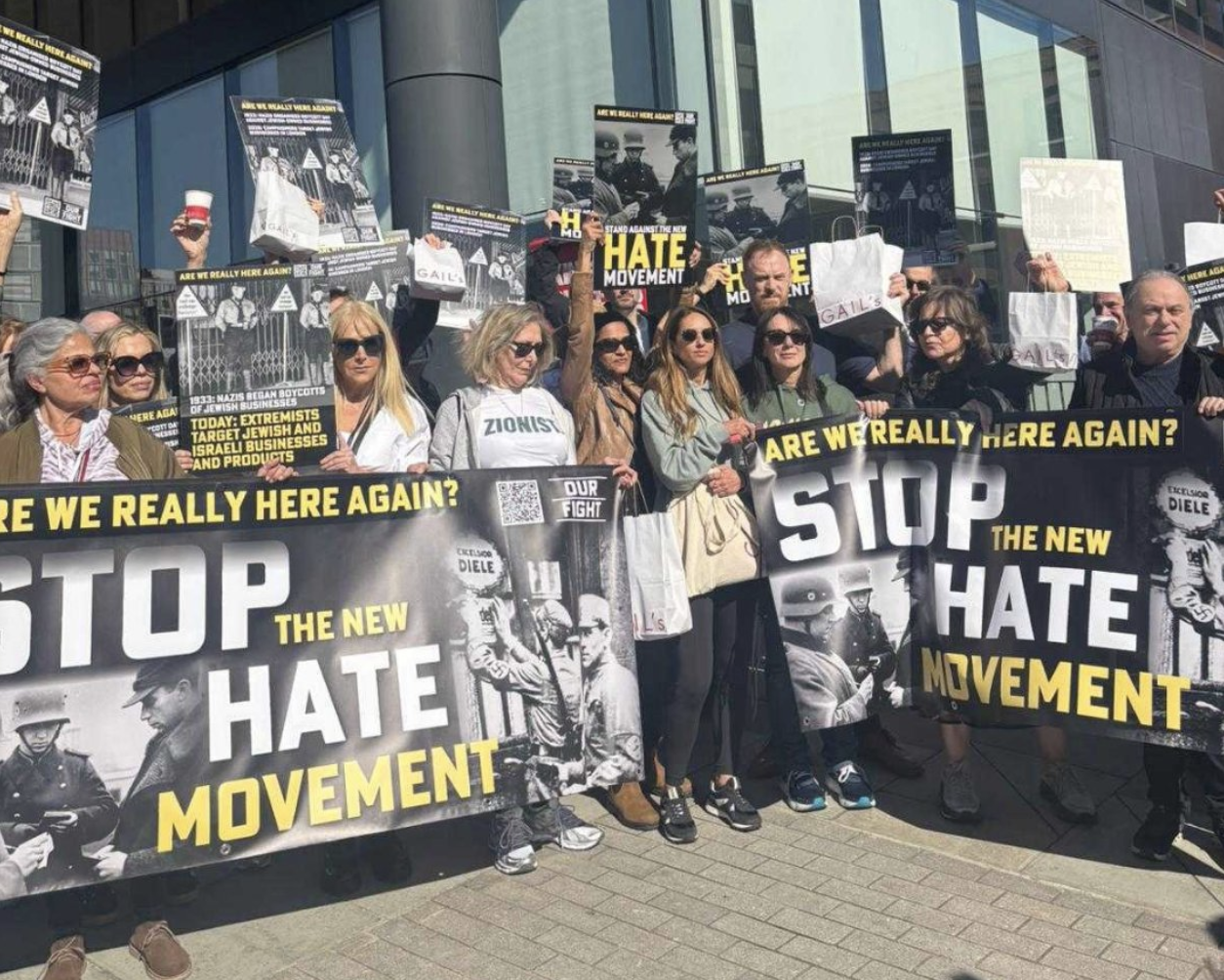
As the Middle East goes up in flames, Israel fights an epochal war against Iran, a calamitous oil shock hoves into view and the British state’s staggering defence vulnerabilities become ever more apparent, it is jarring, but perhaps also revealing, that hundreds if not thousands of British Jews have spent the past week mobilising to defend Gail’s Bakery.
This new ‘Let them eat cake’ movement is a response to an inflammatory column by sportswriter Jonathan Liew, contrasting Gail’s in Archway with a small Palestinian cafe nearby. In response to this column, protests have been staged outside the offices of The Guardian newspaper, with demonstrators queuing up to deliver buttery pastries to the newspaper’s editor, Kath Viner. Angry op-eds have been written. Sweeping allegations of antisemitism levelled. The outrage has reached a remarkable, at times disproportionate pitch.
Why is this revealing? On some level, conscious or not, the scale and intensity of the fury about this particular newspaper column looks rather like a form of displacement activity.
As British Jews, we are in a deeply anxious moment. We’ve had almost two-and-half years of this now, since the world changed on October 7, 2023. Almost 30 months of hostages and antisemitism and war and online meta-war. Thirty months of fretting about our future on these isles, or indeed our future anywhere. The community is verklempt, an emotion best expressed by the swirling paranoia and fury of Howard Jacobson’s new novel, Howl.
Gaza hangs around our necks like a horse collar harness. Is what happened there really justifiable? And even if it was, do we not feel a sense of guilt somehow, that the country we support, cherish, idealise and need, the place we hoped would be a light unto the nations, ended up committing acts of such immense violence? Do we not fret about what further violence lies in its future?



Now we have the war in Iran. Gog and Magog are being pulverised by Israeli jets over the skies of Persia. And, joy of joys, a new wave of increasingly open and unapologetic antisemitism that pins this chaos entirely on Jewish malevolence. Even if you support this war’s aims, even if you don’t question its rationale or direction of travel, the level of risk here is staggering, the uncertainty terrifying.

Even if this war ends up being a strategic success for Israel and indeed America, it will likely further imperil and undermine the position of diaspora Jewry. The old forces of Jew hatred, at least partially suppressed under the rock of the Holocaust since 1945, are now crawling back into the sunlight once more.
Enter Gail’s and Jonathan Liew. Since 7 October, The Guardian newspaper has, unsurprisingly, been a vehement critic of Israel’s wars. Its coverage is undeniably partisan, but there haven’t really been any great scandals or screw ups since Steve Bell was sacked in 2023, for seeming to draw on Shylock imagery in a cartoon.
Then Liew padded up and strode out to the crease. The result was fairly dismal. His framing in the now infamous column was crude and his prose surprisingly trite, given Liew’s undoubted ability as a sports writer. He seemed blinded by his own anger.
The article drew on some suspect tropes: big nasty capitalist Israeli mega-bakery coloniser versus honest indigenous salt-of-the-earth Palestinian cafe. It also offered a tenuous rationale for Gail’s being vandalised, which is that Bain Capital, its ultimate private equity owner, has investments in Israeli tech and defence firms. (This firm also invests in other high street chains, such as Burger King and Domino’s Pizza, which were not founded by Israeli Jews. These have not been similarly protested.)
Liew’s framing in the now infamous column was crude and his prose surprisingly trite, given his undoubted ability as a sports writer. He seemed blinded by his own anger.
But was it actually an antisemitic column? This is pretty debatable in my view. I think it can also be viewed as a simplistic and tendentious attack on Israel (and indeed gentrification) that strayed into dubious territory. I’m not convinced it was unequivocally racist.
Clearly others will strongly disagree, which is their right. But either way, many greater crimes against the Jews have been committed in media history. This was not akin to the New Statesman’s kosher conspiracy cover. Nor does it come close to the deranged bile currently being spewed out to millions daily by the likes of Tucker Carlson and Candace Owens.
So why the ferocity of the reaction? British Jews are utterly fed up with soaring antisemitism and that’s more than understandable. They are fed up with The Guardian, which has history in this area. And they are fed up with feeling attacked and under siege every time they check their phone. I can certainly see why this column provoked a fierce response.
I don’t seek to minimise these emotions, but I do think there is slightly more going on here than just frustration with an obnoxious piece in an unfriendly newspaper. Many of us feel dizzy and discombobulated by the events currently unfolding and yearn for a sense of control. Our fear and anxiety needs a focal point. We want a fight we can actually understand and win. In this context, Antisemitism Scandal at Guardian Towers offers a comforting and familiar target.
I think that parts of British Jewry, much like many other communities, much like myself to be honest, are spending too much time online, devouring the worst algorithmic nastiness and whipping themselves and each other up into a frenzy. Hunting down every last flicker of domestic antisemitism can at times become a welcome distraction from actually staring directly at the catastrophic damage that has been wrought since 7 October, the wars that continue to spin out from it, and working out how you really feel about it all.
Observing the great croissant war of 2026, I can’t help but feel a touch of perspective has been lost. I fear we’re slightly losing the plot and, to my mind at least, this increasingly shrill form of activism does not fit well with the traditions of Anglo-Jewry, a community that has for centuries generally been dignified, thoughtful and judicious in its diplomacy.
Maybe this outlook is wrong and out of date. Maybe this is how the game is played now, a zero sum, terminally online, loudest-voice-in-the-room victim olympics. Perhaps I am failing to adapt to the age of content wars, just an elite centrist practising stale respectability politics amid a howling digital gale.
Perhaps now is a time for anger and conflict and this is how you win in the 21st century, by dividing the world into friends and enemies. Perhaps. But you’ll struggle to convince me that a bad column is anything more than what it is, a bad column. Not a crime against history or humanity, just a few more ill-considered words in a world with many bigger things to worry about.
• Josh Glancy is associate editor of the Sunday Times

Keep community journalism free.
Jewish News is free for everyone. No paywall. No barriers. Just trusted journalism for anyone who wants to stay connected to Jewish life in Britain.
If you value that, please support us.
From as little as £5 a month, you can help keep our journalism free and accessible to all.
Every day, we report on the issues that matter to our community. We celebrate achievements, support charities, challenge antisemitism and ensure Jewish voices are heard more widely.
From as little as £5 a month, you can help us continue to:
- Report on the stories shaping Jewish life in the UK and beyond
- Bring our community together through shared stories, events and campaigns
- Celebrate the people, culture and moments that define our community
- Support organisations doing vital work across Jewish Britain
You can make a one-off donation or become a regular supporter. Every contribution helps keep our journalism free, independent and accessible to all.
If everyone who values Jewish News gave a small amount, it would make a real difference to our future.