Prefer Jewish News on Google

How I discovered that my father was a wartime hero
As former Jewish servicemen march in the Ajex Parade this Sunday, I will be remembering my father, who provided an essential service to the combat troops during WW2
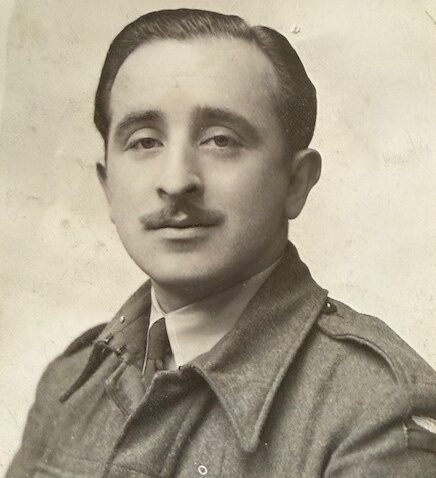
At Rosh Hashanah last year my family were discussing the Second World War, and what my father, Leonard Frazer, might have done during his military service. We realised that none of us knew anything verifiable — all we had was a group of unprovable family stories, not helped by the fact that Mum, in full yiddishe momma style, shut down any conversations about the war quite firmly.
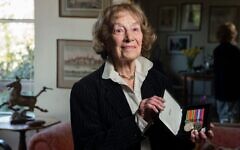
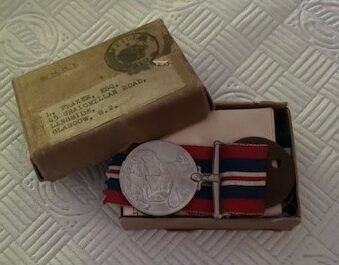
“Wait a minute,” said my nephew, disappearing upstairs and returning with a small, battered cardboard box. I hadn’t seen it for years. It contained Dad’s wartime medals and a bruised leather identity tag, about the size and colour of an old pre-decimal penny. On the back of the box it says: “If undelivered return to Air Ministry.”
We rooted through the box’s contents. There were brightly coloured ribbons, each probably as smart as when first received in 1945. There were medals — but one seemed to be missing. We didn’t know what went with what, or what they had been awarded for.
My brother and I looked at each other. Dad had never, as far as we remembered, walked in the Ajex parades in Glasgow or Manchester, which probably accounts for the pristine condition of the ribbons.
The dog-tag offered another mystery. There was a smudged identity number stamped into the leather, making the last figure difficult to read. And above the letters RAF — for Royal Air Force — can be seen CofE — indicating Church of England. This, we absolutely knew, was wrong, given our father was emphatically and proudly Jewish.

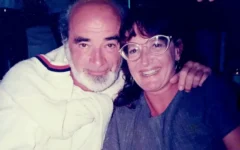
Here’s what we (more or less) knew. Dad had joined up at the beginning of the war and had given up working with his father in a tailoring business in Glasgow, to become a member of a specialised radar unit, serving the army, navy and air force. We knew that he had travelled into Europe on D-Day, 6 June 1944, a date always remembered in our house, because it was his birthday.
He had left school with excellent shorthand and typing skills, which was perhaps why he ended up in comms during his wartime service. In fact, before bowing to the inevitable and joining his father in tailoring, Dad had worked as a court reporter in the Glasgow district of Govan.
It was frustratingly difficult to get any information from him as to what he actually did during the war, though he did entertain us when we were small by trying to teach us Morse Code. We didn’t even know he was actually nominally in the RAF, though we did know he didn’t take part in active combat. Once, though, when he took me swimming, I saw a huge scar on his leg, and he said he had been forced to crawl under barbed wire and had caught his leg as he did so.
What else? He told me that he had been asked to write an account for an RAF magazine of his unit’s travels through Belgium and Holland. The article was called Journey to Nijmegen, and spoke of the men rushing to hide underneath the lorries carrying their radar equipment, as they were being strafed by Luftwaffe planes flying low in the air.
Nijmegen is in Holland and, as I later learned, was the focus of an important September 1944 battle, Operation Market Garden, in which British and American forces, both airborne and armoured troops, attacked the Nazis. It was a massive offensive, and crucial in beginning the major pushback against the Germans. And it seems that Dad was there, providing, with his unit, vital radar support for the Allied forces.
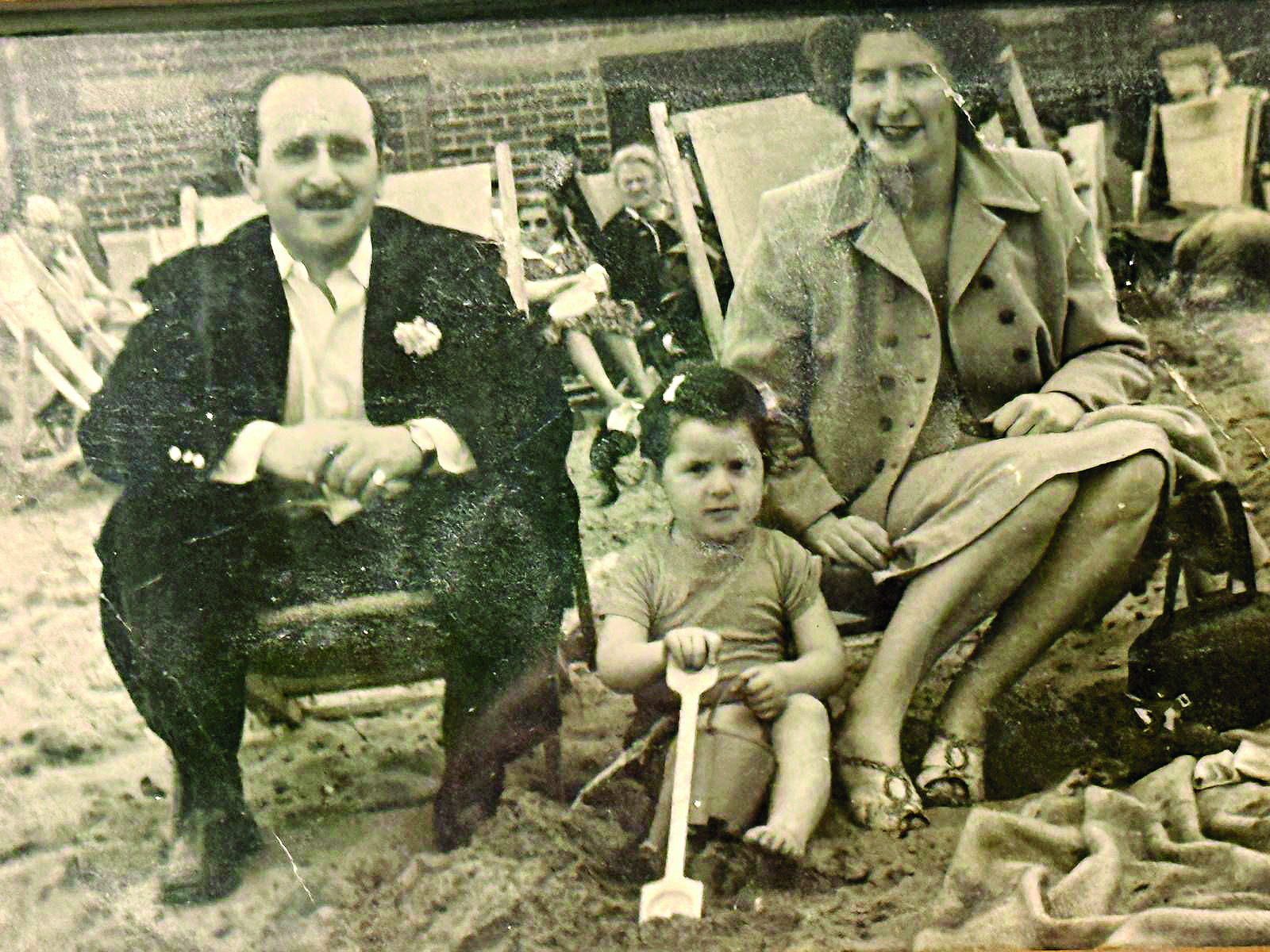
So I decided to begin some detective work. Armed with a photograph of Dad in what I later learned was an RAF uniform — though sadly without a cap and any identifying badges — I went to the London Coins and Medals shop, just around the corner from Leicester Square tube. It proved to be an absolute rabbit warren of Second World War paraphernalia, from books and photographs to — crucially, medals.
The men in the shop give off an air of having seen it all before, which they almost certainly have. I produced the battered cardboard box and the ribbon with the missing medal. Oh yes, said the man serving me. That’s easily replaced. You want one of these, he said, rummaging in an appropriate drawer.
Now the medal set was complete, I asked him if he’d ever heard of what I thought was the name of my father’s unit, the Combined Services Unit. No, he said, but advised me to apply to the government records — which are free but can take up to a year for a reply.
Then he took a look at Dad’s photograph and asked me, very seriously, if he had spoken various languages and if he might have been in an intelligence unit. I am afraid I laughed. My father did speak good French and a fair amount of Yiddish, but that was the extent of his linguistic ability.
I believe that Dad had been present at the liberation of Belsen, which had a terrible effect on him — though I am unsure if he ever went into the camp. But we do know that the RAF were there when Belsen was freed in April 1945, so that checked out Dad’s account.
He once told me of a surreal-sounding Seder — Pesach began in 1945 on 28 March — in which Jews from a Belgian village had emerged from hiding, their faces yellow from having spent years literally underground and deprived of sunlight.
I also learned, via Ajex, that many Jewish servicemen had “C of E” on their identity tags as protection in case they were ever captured by the Germans.
I put in my application to the government records, though I have still not had a reply. I also contacted the RAF Museum’s library to see if they might identify the magazine for which Dad wrote his article, Journey to Nijmegen. So far, no response.
It was time for — if you’ll excuse the expression — the big guns. Artificial Intelligence, to be precise, in the form of ChatGPT, which I had never used before, but thought I might as well try.
This was a revelation — and unnervingly like speaking to a real person.
After a couple of false starts when it thought my father had served in the First World War in Canada, ChatGPT got with the programme. It established as follows: “The strongest lead I’ve found so far is No.15054 Fighter Director Post (FDP). The RAF’s own historical account says this was a mobile radar unit that operated in Belgium and the Netherlands and, crucially, it was sent to Grave, just south of Nijmegen, during Operation Market Garden to provide radar coverage and fighter control for the bridges. It subsequently followed the British advance into Germany.
“Even more strikingly, the RAF account says that in April 1945 the unit was operating near the recently liberated Bergen-Belsen camp. Personnel loaded a three-ton lorry with clothing, blankets and food and arranged for these supplies to be distributed at the camp”.
ChatGPT mentioned books by John Kemp, commander of the 15054 unit, a couple of times. In one of them, there is a blurry picture of men from the radar unit working in a small hut. Right at the back there is a man with a moustache — the only moustached one in the hut — who is a dead ringer for my dad.
And my new best friend ChatGPT also managed the hitherto impossible, by expanding the picture I had of Dad, so that for the first time we could see the insignia on his sleeves, showing his rank and unit.
I sent off for one of Kemp’s books, Off to War with 054. In one of the appendices there is a list of the unit personnel, and there is my father’s name. I could scarcely believe my eyes.
Chat GPT kindly signed off one of our latest conversations by saying that if I ever did get my hands on the Journey to Nijmegen article, “I suspect it will be very special for you to read after all these years.” You can see what I mean when I say it was like talking to a person.
So, I never discovered that my Dad was a wartime superhero or a secret general. But I did find out that he was an accidental hero who had a hard war and helped to, as one of the thousands of Jewish community members who signed up to serve his country.
Behind every single family member marching in this year’s Ajex parade, there will be a similar story. We are so proud of them.

Keep community journalism free.
Jewish News is free for everyone. No paywall. No barriers. Just trusted journalism for anyone who wants to stay connected to Jewish life in Britain.
If you value that, please support us.
From as little as £5 a month, you can help keep our journalism free and accessible to all.
Every day, we report on the issues that matter to our community. We celebrate achievements, support charities, challenge antisemitism and ensure Jewish voices are heard more widely.
From as little as £5 a month, you can help us continue to:
- Report on the stories shaping Jewish life in the UK and beyond
- Bring our community together through shared stories, events and campaigns
- Celebrate the people, culture and moments that define our community
- Support organisations doing vital work across Jewish Britain
You can make a one-off donation or become a regular supporter. Every contribution helps keep our journalism free, independent and accessible to all.
If everyone who values Jewish News gave a small amount, it would make a real difference to our future.