Prefer Jewish News on Google

If we’re going to discuss Edwin Montagu’s views on Zionism, we cannot ignore Herbert Samuel
if Zack Polanski wants to use Jewish history to make his political case, he should acknowledge the inconvenient fact that one of the most British Jewish politicians was a committed Zionist
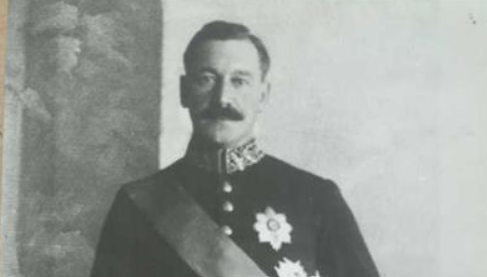
Josh Glancy has done an important service in revisiting the arguments of Edwin Montagu, the Jewish aristocrat who opposed the Balfour Declaration and feared that Zionism would undermine the position of Jews in Britain.
In his excellent opinion piece for Jewish News, Jewish Glancy exposed the shortcomings of Montagu’s thinking, as well as the uncomfortable truth that his arguments are now being selectively resurrected by those seeking to undermine the legitimacy of the State of Israel.
But there is another British Jewish statesman around at exactly the same time at Montagu whose story and provenance deserves equal attention: Sir Herbert Samuel, later Viscount Samuel.
For where Montagu saw Jewish nationalism as a threat, Samuel saw it as an opportunity. Where Montagu feared Zionism would make British Jews foreigners in their own country, Samuel believed passionately that the Jewish people had a legitimate right to national restoration in their historic homeland.
And unlike Montagu, Samuel did not simply express his convictions in private correspondence or parliamentary speeches. He put his political standing, intellect and public service behind them.


His contribution to the development of modern Zionism deserves far greater recognition in today’s debate.
Herbert Samuel was no political outsider, no marginal activist and certainly no fringe figure in British public life.
Born in 1870 into an established Anglo-Jewish family, he became one of the most prominent Jewish politicians in British history. In June 1909, he became the first professing Jew to sit in the British Cabinet, when Prime Minister H.H. Asquith appointed him Chancellor of the Duchy of Lancaster. He subsequently held several senior government positions, including Postmaster-General and Home Secretary. He achieved these distinctions without converting to Christianity or relinquishing his Jewish identity.
Yet he never believed that being British required him to abandon his Jewish identity or deny the Jewish people’s historic connection to their ancestral homeland.
In January 1915, two years before the Balfour Declaration, Samuel submitted a remarkable memorandum to Prime Minister H.H. Asquith entitled The Future of Palestine.
This was no passing expression of sympathy for Jewish aspirations. It was a serious political proposal, presented at the highest levels of government, advocating British involvement in Palestine and the encouragement of Jewish settlement there.
Samuel envisaged the development of a substantial Jewish national centre, with the potential for eventual self-government.
Asquith was distinctly unimpressed. He recorded his reservations about Samuel’s proposal to encourage millions of Jews to settle in Palestine.
History, however, would take Samuel’s side on one fundamental question: Jewish national restoration was not some fanciful or illegitimate aspiration. It would become a central feature of British foreign policy.
It is important not to overstate Samuel’s individual role in the Balfour Declaration. He was not its sole architect. But he was among the earliest and most influential advocates of the idea within the British political establishment.
That matters enormously.
In July 1920, Samuel became Britain’s first High Commissioner for Palestine, a position he held until 1925.
This was a remarkable appointment. A Jewish British statesman who had openly advocated Zionism was entrusted with overseeing the new civilian administration of Palestine under British rule.
For the Jewish community, his arrival was an extraordinary moment of historical significance.
Samuel supported the development of Jewish institutions, immigration and the economic and administrative foundations upon which the future state of Israel would eventually be built.
He understood that a national home could not be created through declarations alone. It required infrastructure, economic development, education and institutions capable of supporting a growing population.
He also understood that Jewish national aspirations had to be pursued within the complex realities of a country with an existing Arab population.
His administration was not without controversy. Arab opposition to Zionism was real, and Samuel faced serious political and security challenges. He sought to balance the British Mandate’s commitments, maintain public order and protect the rights of different communities.
Some Zionists criticised him for being too cautious, particularly over immigration restrictions. Others questioned whether his efforts to accommodate Arab opposition went too far.
But this complexity should not obscure his underlying convictions.
Samuel was a Zionist. He believed the Jewish people had a legitimate national claim in Palestine and worked to advance the development of their national home.
In July 1923, Samuel expressed the distinction between the two national movements in striking terms. Speaking at a dinner in his honour hosted by the Maccabeans (an Anglo-Jewish friendly society), with Lord Walter Rothschild presiding, he declared: “Both Arab and Jewish national sentiment are worthy but Arabs have many lands, while the Jews have Palestine alone.”
One need not agree with every decision Samuel made as High Commissioner to recognise the importance of his commitment.
This brings us back to the current political debate.
Zack Polanski, the Green Party leader, has sought to draw upon Edwin Montagu’s opposition to Zionism as part of a wider argument about the relationship between Jewish identity and Israel.
But why should Montagu’s interpretation of Jewish identity be afforded such prominence, while Samuel’s profoundly different perspective receives so little attention?
Both men were British Jews. Both occupied positions of considerable influence. Both understood the challenges of being Jewish in British public life.
Yet they reached radically different conclusions.
Montagu believed Jewish nationalism endangered the position of Jews in Britain. Samuel believed that Jewish national identity was entirely compatible with British citizenship and public service.
Montagu feared that a Jewish homeland would encourage others to question the loyalty of British Jews. Samuel demonstrated, through his own extraordinary career, that a British Jew could serve his country with distinction while remaining an unapologetic supporter of Jewish national aspirations.
There is a fundamental problem with the way anti-Zionist campaigners invoke Montagu. They present one historical Jewish perspective as though it represents an authoritative Jewish verdict on Zionism. It does nothing of the sort.
Jewish history is not a convenient collection of quotations from which contemporary politicians can select whichever passages suit their ideological purposes.
If Polanski wishes to invoke the Jewish history of anti-Zionism, he must also acknowledge the Jewish history of Zionism, including the extraordinary contribution of one of Britain’s most distinguished Jewish public servants.
Samuel’s Zionism was not born of hostility towards Britain. It emerged from a conviction that Jewish identity, Jewish history and Jewish national belonging were legitimate and enduring realities.
He did not regard support for a Jewish national home as a repudiation of his Britishness. He saw no contradiction between the two.
That is a far more compelling answer to Montagu’s anxieties than the selective appropriation of his arguments by today’s anti-Zionist politicians.
There is a more fundamental point here, particularly given the rhetoric increasingly associated with the Green Party under Polanski’s leadership.
Zionism, at its core, is the belief that the Jewish people have the right to national self-determination in their historic homeland.
That principle does not require uncritical support for every Israeli government, every military operation or every political decision made in Jerusalem.
One can be a Zionist and passionately advocate a negotiated two-state solution. One can support Israel’s right to exist and simultaneously demand that its government respect international law and protect the rights of all its citizens.
But to equate Zionism itself with racism is to deny the Jewish people a right to national self-determination that is routinely accepted for other peoples.
It also ignores the historical reality that Zionism emerged in significant part as a response to centuries of persecution, exclusion and the repeated failure of supposedly enlightened societies to guarantee Jewish security.
Samuel understood that reality long before the Holocaust exposed the catastrophic consequences of Jewish vulnerability in Europe.
He believed the Jewish people needed more than assurances of tolerance from other nations. They needed a secure national home, rooted in their history and capable of offering refuge and opportunity.
The creation of Israel in 1948 did not make that aspiration illegitimate. Nor did it extinguish the rights or national aspirations of the Palestinians.
Both truths can and must be recognised.
There is a final reason why Herbert Samuel’s story matters.
He was not simply a Zionist who happened to be British. He was a British statesman who helped shape the history of the modern Middle East while remaining proud of his Jewish identity.
He subsequently returned to British public life, served as Liberal Party leader and continued to contribute to national debate. He was elevated to the peerage as Viscount Samuel.
His career stands as a powerful rebuttal to the suggestion that Jewish national identity and British civic identity are somehow incompatible.
At a time when British Jews are increasingly being asked to explain their relationship with Israel, Samuel’s example should be celebrated rather than forgotten.
The danger of invoking historical figures such as Montagu is not that their arguments should never be discussed. They should. Their concerns, however misguided in important respects, form part of the history of Anglo-Jewry and deserve serious examination.
The danger is presenting them as the definitive Jewish voice while ignoring those who took the opposite view and helped turn Zionism from an aspiration into a political reality.
If Edwin Montagu is to be given a place in today’s debate, then Herbert Samuel must be given an equal, if not greater, place.
Montagu feared what Zionism might mean for British Jews.
Samuel demonstrated what a British Jew could achieve while believing in it.
And if Zack Polanski wants to use Jewish history to make his political case, he should acknowledge the inconvenient fact that one of the most distinguished Jewish figures in British political history was not ashamed of Zionism, did not regard it as racism and devoted a significant part of his public life to helping make the Jewish national home a reality.
The story of Anglo-Jewry does not belong to Edwin Montagu alone. And neither does the history of Jewish self-determination.
Gavin Stollar OBE is honorary chairman of Liberal Democrat Friends of Israel

Keep community journalism free.
Jewish News is free for everyone. No paywall. No barriers. Just trusted journalism for anyone who wants to stay connected to Jewish life in Britain.
If you value that, please support us.
From as little as £5 a month, you can help keep our journalism free and accessible to all.
Every day, we report on the issues that matter to our community. We celebrate achievements, support charities, challenge antisemitism and ensure Jewish voices are heard more widely.
From as little as £5 a month, you can help us continue to:
- Report on the stories shaping Jewish life in the UK and beyond
- Bring our community together through shared stories, events and campaigns
- Celebrate the people, culture and moments that define our community
- Support organisations doing vital work across Jewish Britain
You can make a one-off donation or become a regular supporter. Every contribution helps keep our journalism free, independent and accessible to all.
If everyone who values Jewish News gave a small amount, it would make a real difference to our future.