Prefer Jewish News on Google
In secret ballot, German town council votes to stop installing Stolpersteine memorial stones
International March of the Living calls the decision a 'wake-up call' and urges Heidenau to reverse its decision

Local council members in the German town of Heidenau near Dresden have voted to no longer permit new Stolpersteine plaques commemorating Jews and other victims of the Nazi regime to be placed on the city’s streets and pavements, in a decision described as “deeply troubling” by a leading Holocaust remembrance organisation.
A secret ballot, requested jointly by the far-right AfD and Chancellor Friedrich Merz’s right-wing CDU together with representatives of the “Oberelbe Alliance for More Democracy”, resulted in the council voting to end the initiative, with 13 votes in favour, 6 against, and 1 abstention.
The resolution says: “The City Council of the City of Heidenau resolves to integrate or create a commemorative area for the victims of war, terror, dictators, expulsion, and especially National Socialism in Heidenau, preferably within the existing commemorative area of the Heidenau Nordfriedhof (North Cemetery). The integration must be carried out in such a way that directly stepping on the commemorative elements is prevented. This is intended to ensure a dignified remembrance of the victims of war, terror, dictators, expulsion, and National Socialism.”
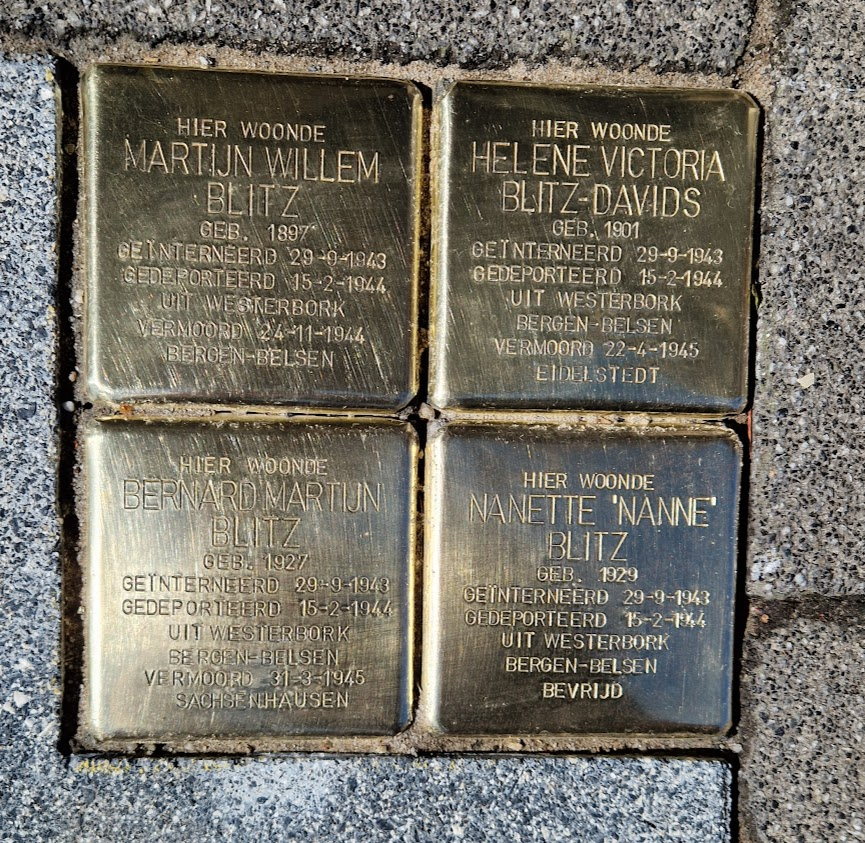
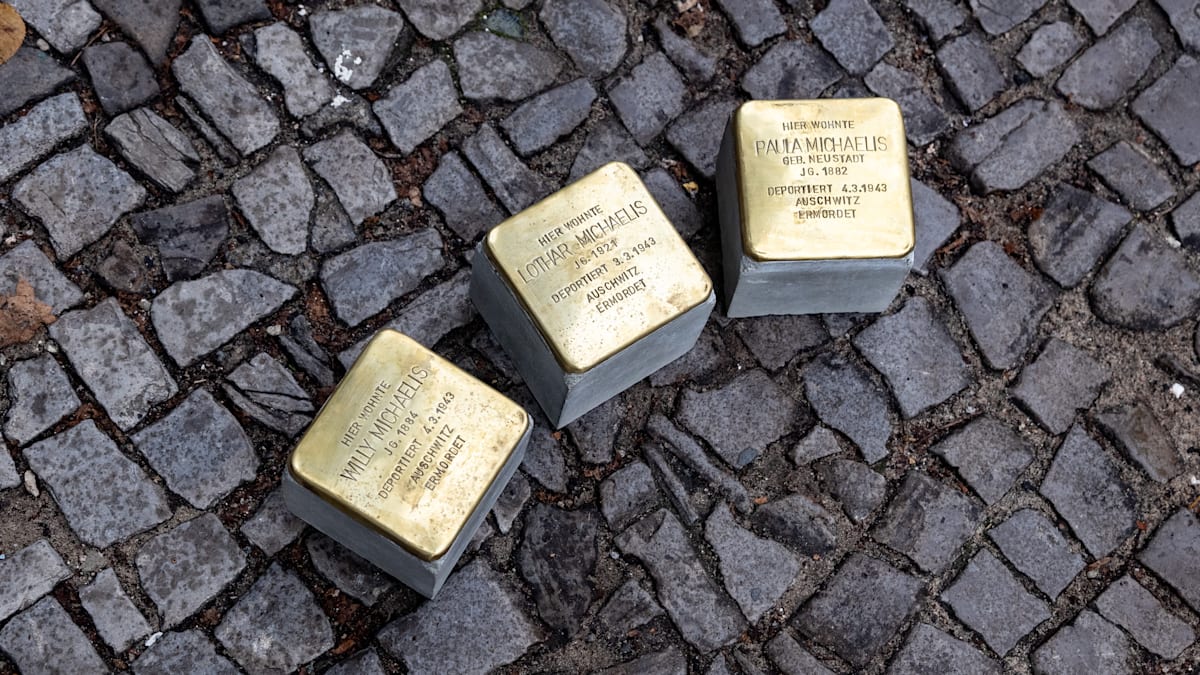
The stones, ten-centimetre concrete cubes bearing a brass plate inscribed with the name and life dates of victims of Nazi extermination or persecution, are usually placed outside the building where the person lived before being deported.
Currently there are five Stolpersteine in Heidenau, including one commemorating Paul Gröger, who served as mayor until 1933.
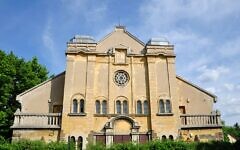


The city’s administration has spoken out against the decision, whilst supporters of the ban argue that, to avoid people walking over them “consciously or unconsciously” future memorial stones should be installed at a commemorative site in the city’s Northern Cemetery.
Less than a year ago, the AfD party submitted a first proposal to move the Stolpersteine to the burial site, where at least 31 Wehrmacht (armed forces of Nazi Germany) soldiers are buried.
A spokesperson from the International March of the Living said: “The decision by the town council of Heidenau, in the German state of Saxony, to stop installing Stolpersteine memorial stones must be a wake-up call. Together with reports of similar attempts elsewhere in Germany, it raises a deeply troubling question: are political interests being allowed to push the memory of Nazi victims out of public life? Stolpersteine confront people with the history of Nazi persecution in the places where it happened. Preventing more of them from being laid serves political interests at the expense of historical truth.
The statement continues: “The Nazis murdered Jews and tried to erase their names, their communities and their place in history. Eighty-one years after the end of the war, elected officials in Germany have voted to prevent more of those names from appearing on the streets where the victims lived. The murders cannot be undone. Denying the victims remembrance adds another grave wrong: it continues the effort to erase them from history.”
Germany has “a particular responsibility to confront the crimes committed against Jews and against humanity” and eighty one years later that responsibility “calls for stronger commemoration and a determined fight against both forgetting and deliberate erasure. We call on Heidenau to reverse its decision and on Germany’s leaders and citizens to oppose every effort to hide this history.”
The German-Israeli Society (DIG) Dresden expressed its “dismay” at the joint proposal by the AfD and CDU, writing: “It is incomprehensible to us that some city councillors in Heidenau apparently fail to recognise the complexity of the issue and the opportunity this form of remembrance offers, and needlessly put forward a proposal that would remove the commemoration from the heart of society and relegate it to a cemetery.”
Posting on Twitter/X, Marie-Agnes Strack-Zimmermann, a German politician serving as a Member of the European Parliament and a member of the Presidium of the Free Democratic Party, wrote: “Whoever bans stumbling stones and wants to relocate them to some peripheral site is pushing the victims of the National Socialists to the margins of the city and of consciousness.”
She added: “Stumbling stones bring remembrance to where the persecuted lived: right to their front door, in the midst of everyday life. That is precisely what constitutes their power. A memorial site in the cemetery, which one only visits intentionally, is no substitute but rather the more convenient path to forgetting.”
Michael Newman, chief executive of the Association for Jewish Refugees told Jewish News the organisation was “appalled” by the “disgraceful decision”, adding: “The power of the Stolpersteine lies precisely in their presence within everyday life. By marking the places where victims of Nazi persecution once lived, they restore individual names and stories to people who were stripped of their rights, their homes and, in so many cases, their lives.”
He added: “At a time when living memory of the Holocaust is rapidly diminishing, the victims of Nazi persecution deserve to be remembered visibly, publicly and permanently. We urge Heidenau to reconsider this shameful decision.”
The Stolpersteine project was launched by German artist Gunter Demnig in 1992; as of June 2023, 100,000 Stolpersteine have been laid, with the majority commemorating Jewish victims of the Holocaust. Others have been placed for Sinti and Romani people, Poles, homosexuals, the physically or mentally disabled and Jehovah’s Witnesses, as well as many other victims of the Nazis.
Jewish News has contacted the Stolpersteine Project and the Association of Jewish Communities in Saxony for comment.

Keep community journalism free.
Jewish News is free for everyone. No paywall. No barriers. Just trusted journalism for anyone who wants to stay connected to Jewish life in Britain.
If you value that, please support us.
From as little as £5 a month, you can help keep our journalism free and accessible to all.
Every day, we report on the issues that matter to our community. We celebrate achievements, support charities, challenge antisemitism and ensure Jewish voices are heard more widely.
From as little as £5 a month, you can help us continue to:
- Report on the stories shaping Jewish life in the UK and beyond
- Bring our community together through shared stories, events and campaigns
- Celebrate the people, culture and moments that define our community
- Support organisations doing vital work across Jewish Britain
You can make a one-off donation or become a regular supporter. Every contribution helps keep our journalism free, independent and accessible to all.
If everyone who values Jewish News gave a small amount, it would make a real difference to our future.