
 Prefer Jewish News on Google
Inside the Zack Polanski fan club: Pop star politics in Hackney
'Antisemitism and Islamophobia are 'two sides of the same coin': Green leader's message on night of the Golders Green attacks
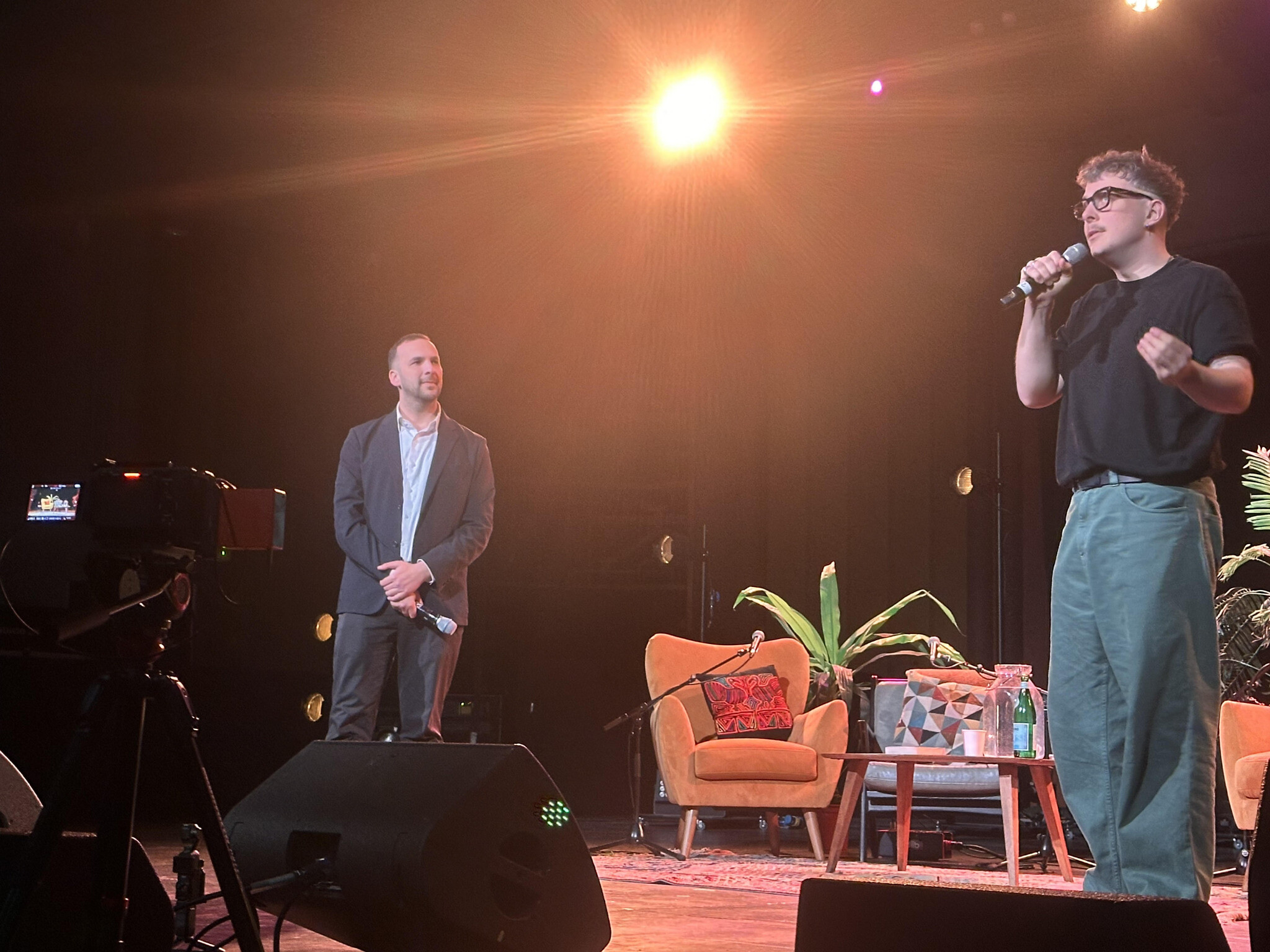
“Many of you will know I’m Jewish, I’m from the Jewish community,” announces Green Party leader Zack Polanski from the stage of Hackney’s fashionably tatty EartH (correct spelling) venue.
It’s a Monday evening, but no less than 700 fans, Green Party activists, and journalists like myself have filled the former home of the Savoy Cinema to capacity.
It’s no exaggeration to say that the vast majority who have paid money to attend the filming of the latest episode of Polanski’s Bolder Politics podcast offer him the sort of welcome normally reserved for a pop star rather than a political leader.
How do I feel, sitting in my front row press seat as the 90-minute session, featuring Polanski, Hackney Greens mayoral candidate hopeful Zoe Garbett, her 19 year-old local election running partner Dylan Law, and comic Corby Dahler begins?
Intimidated? No. Angry? Not really.

Bemused by Polanski’s genuine popularity with the predominantly young — 25-40 year-old audience, which is overwhelmingly white and seemingly middle-class? Yes.
Asked by a guy in the queue to get in, why I decided to attend, I had told him I was a journalist. “What publication?,” he asked. “Jewish News,” I replied. “Sick (as in cool),” he responded.
As a prelude to the show, Ross Hanson-Lowe appears on stage. He is the exec producer of the Bolder Politics podcast, who couldn’t be kinder about Polanski. He explains how he messaged the Greens leader on social media one night with the idea for the now extremely successful podcast.
Both he and Polanski have gone on to benefit from the podcast’s success, we are told, with many listeners going on to join the Green Party.
Polanski offers “hope” where no other political leaders currently do, we are told. He is, according to Hanson-Lowe, the only person who can defeat Nigel Farage at the next general election.
Hanson-Lowe also cured his fear of public speaking as a result of advice given to him by Polanski.
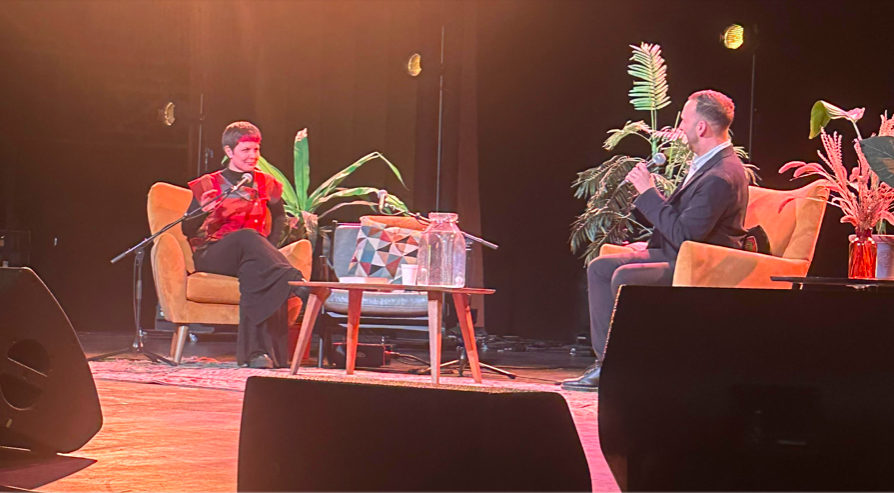
As the show eventually gets going, Polanski announces he has only a couple of speeches to make before proceeding to the main interviews section, conducted upstage on two chairs set up to look like somebody’s living room.
Greeted by ecstatic cheers as he walks on stage for the first time, Polanski actually begins his “I’m Jewish” speech by referencing the conflict with Iran. “I’m sure we speak with one voice in saying this war is not in our name.” Loud applause erupts from all areas of the seats.
Polanski then references his link to the Jewish community, before adding: “Today I spoke about the antisemitic attack that happened in Golders Green.”
But just as you, perhaps foolishly, expect the Greens leader to say something substantive and reflective of the community he comes from, he diverts his message.
“The BBC reported my quotes, and just underneath they reported a quote from Nigel Farage, who immediately was using it as a moment to divide, to create more pain and more conflict,” he continues.
“Once again, we know that antisemitism and Islamophobia are two sides of the same coin, and our communities are best when we stand united, and we will not be divided.”
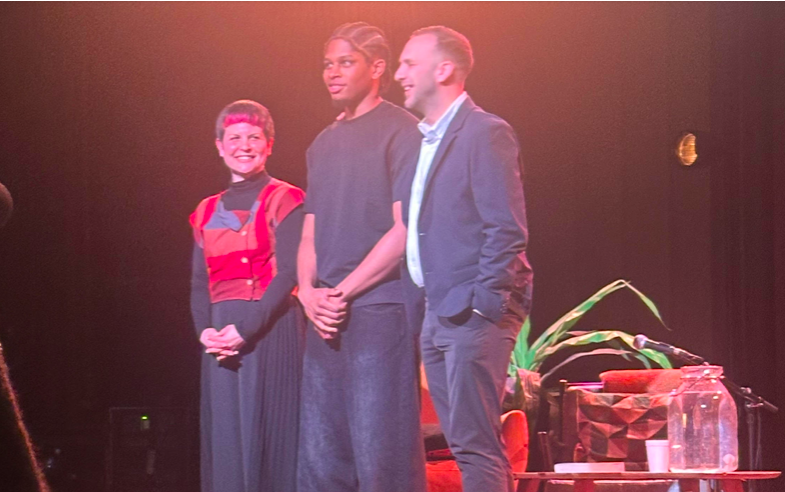
So there we have it. On the same day as the despicable Golders Green arson attacks took place, Polanski’s message to the crowd was “antisemitism and Islamophobia are two sides of the same coin.”
And boy did they lap it up. More loud cheers, more standing ovations. Oh, and before the podcast recording starts, there is just time for one more message from the boy wonder.
“You know we still have a government who are selling arms to Israel despite the genocide that is happening in Palestine,” he opines. “We must stop selling those arms. It is time to end the genocide.”
Huge cheers erupt from the audience.
And so on to the podcast filming itself. It would be wrong to suggest that Israel-Palestine dominated the interviews that followed.
While I didn’t stay to the very end of the show, only briefly did the Middle East even crop up again. Mayoral wannabe Garbett, I think, suggested she would pursue pension divestment aims if elected in May. Apart from the warranted put downs of Trump by the comic later on, foreign policy rarely featured again.
Polanski was gushing as he interviewed his London Assembly political colleague, Garbett. She had written the Greens’ drug policy that Keir Starmer had dismissed as stupid and foolish during the Gorton and Denton by-election.
Polanski asked Garbett to run through the policy in more detail. Some of it — cocaine on prescription for users — did indeed sound foolish. When the legalisation of softer cannabis and mushrooms sounded frankly obvious.
Garbett is clearly desperate to finally win the mayoral race in May, having run unsuccessfully before. If she does win, she plans to make Dylan Law, who turned 20 years old only this week, deputy mayor.
When his turn on stage arrived, Law was indeed genuinely impressive. A local kid from an estate, determined to forge a career in politics for himself, and at the same time, inspire his own local black community members into successful careers in whatever field they choose.
Law is standing in May’s local election and would need to secure a ward in Hackney to further his clearly promising political career.
Later, Dahler appears on stage. I check — he has 1.2 million followers on Instagram. His politics are staunchly Green. He makes a observation about Trump, and shoes.
But I’m hungry, having skipped lunch, and decided it’s time I left to return home for dinner.
Final thoughts? Polanski is a big draw in Hackney, and the Greens are clearly connected locally to a very particular sector of the local community. And it’s a phenomenal achievement getting 700 youngish people to attend a political event on a Monday night.
It’s also all a million miles away from the days of Polanski’s time as a struggling Liberal Democrat and bit part player in the Greens, still very much connected to Jewish communal life.
Am I left bemused by it all as I board a London Overground train home? Yes.

Keep community journalism free.
Jewish News is free for everyone. No paywall. No barriers. Just trusted journalism for anyone who wants to stay connected to Jewish life in Britain.
If you value that, please support us.
From as little as £5 a month, you can help keep our journalism free and accessible to all.
Every day, we report on the issues that matter to our community. We celebrate achievements, support charities, challenge antisemitism and ensure Jewish voices are heard more widely.
From as little as £5 a month, you can help us continue to:
- Report on the stories shaping Jewish life in the UK and beyond
- Bring our community together through shared stories, events and campaigns
- Celebrate the people, culture and moments that define our community
- Support organisations doing vital work across Jewish Britain
You can make a one-off donation or become a regular supporter. Every contribution helps keep our journalism free, independent and accessible to all.
If everyone who values Jewish News gave a small amount, it would make a real difference to our future.





















