Prefer Jewish News on Google
INTERVIEW: Sadiq Khan: ‘I understand the fear – I’m not in denial’
Mayor of London speaks to Jewish News over response to spate of attacks on synagogues and Jewish sites
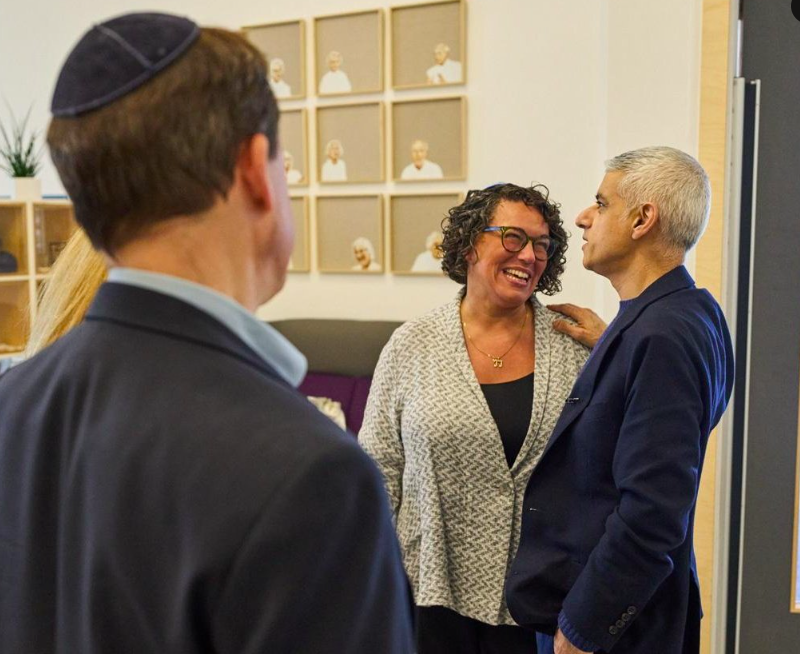
Sadiq Khan has rejected suggestions he is in denial about the severity of the threat posed to London’s Jewish community following a series of attacks on synagogues and communal buildings.
Speaking exclusively to Jewish News after meeting with rabbis, communal leaders and Barnet council chiefs at Finchley Reform Synagogue, the mayor of London also spoke of an urgent need to tackle the radicalisation of young people in the capital.
Tellingly, Khan also echoed the concerns of senior police chiefs that the Iranian regime could be linked to recent arson incidents targeting Jewish sites across the capital.
“I don’t want to give the impression that either the government or I myself or the police are in denial,” Khan told Jewish News. “We get this is serious.”
He added: “There’s a very good reason why the Deputy Commissioner Matt Jukes and the Security Minister Dan Jarvis are visibly seen in the Jewish community … to show the haters, the antisemites, the Iranian regime.”

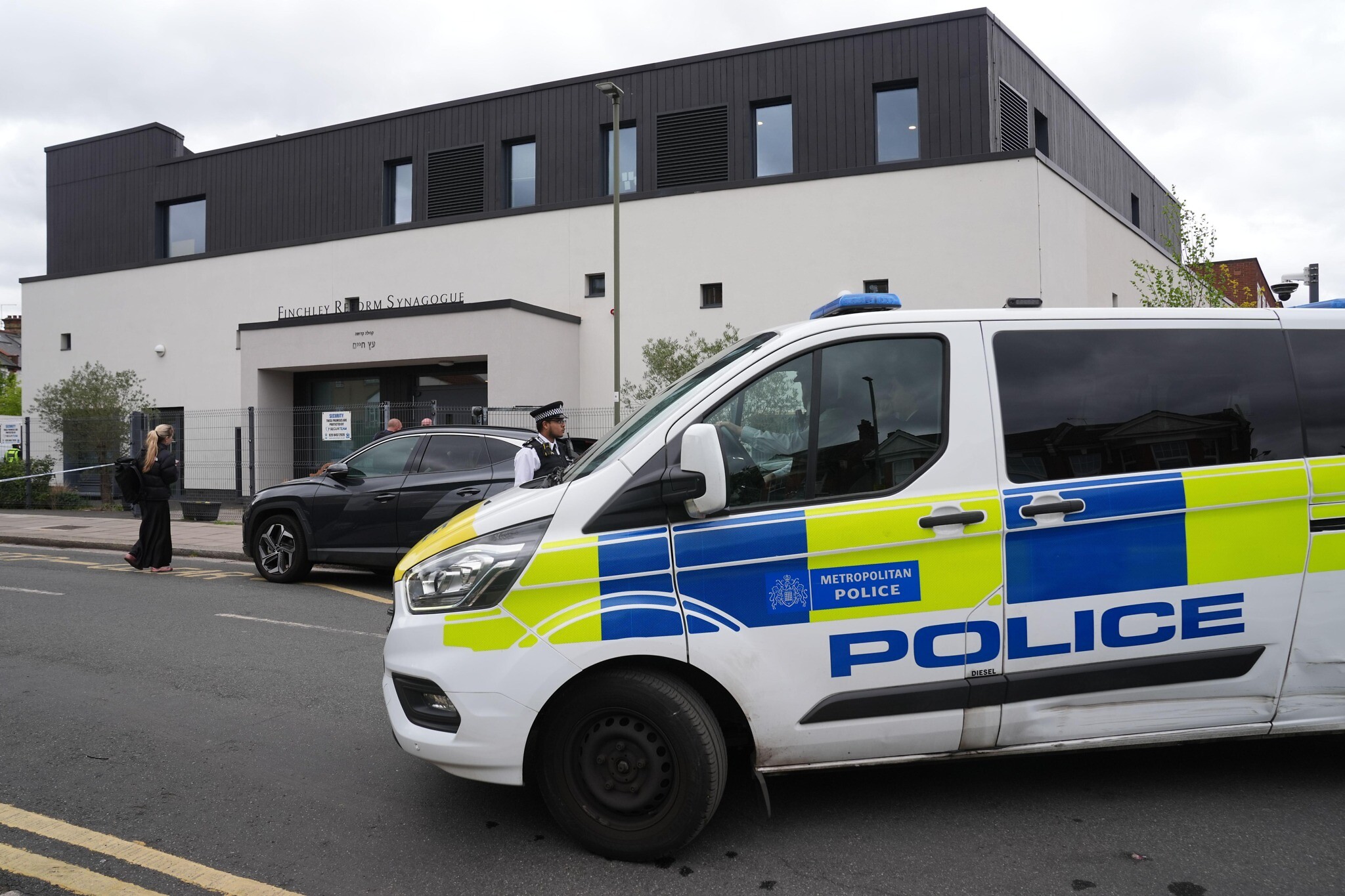
Earlier that same day, Jarvis and Jukes had joined other communal and council leaders for a meeting, held at the same shul to discuss the continued and impressive response to the attacks on the community, including an arson attack at Finchley Reform.
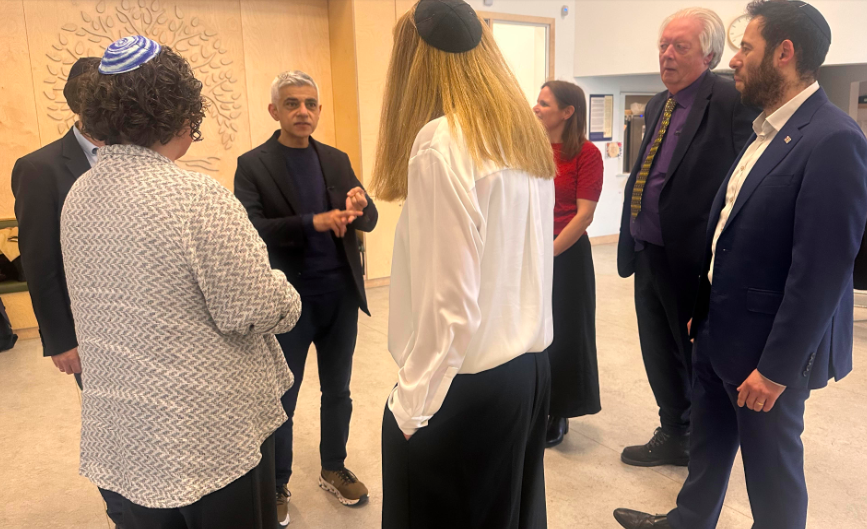
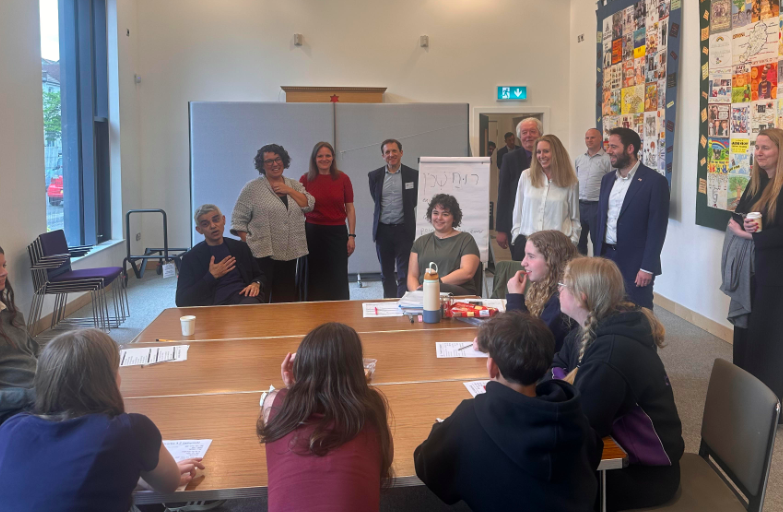
Later, the mayor himself sat down for a meeting at which Rabbi Miriam Berger, Cantor Zoe Jacobs, Board of Deputies president Phil Rosenberg, Barnet council leader Barry Rawlings, and London Assembly member Anne Clarke were among those present.
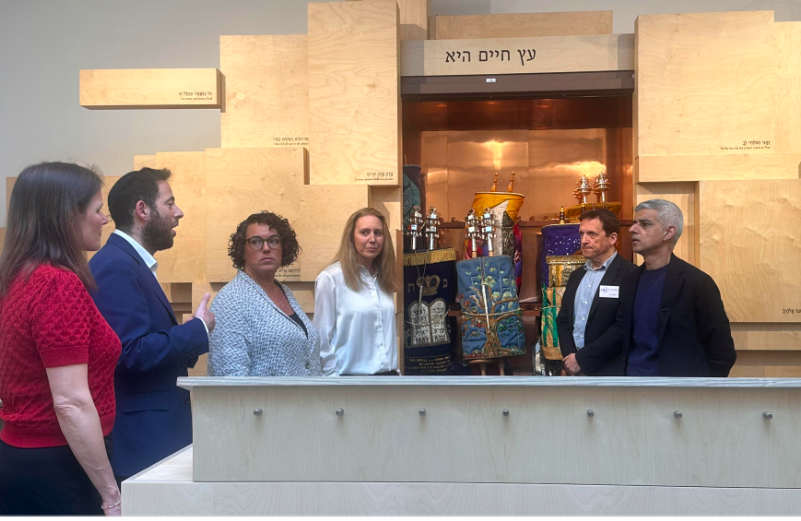
Khan listens intently to accounts of a congregation and wider community living in fear. The questions from younger shul members on why being born Jewish now leaves them facing a gauntlet of hate from antisemites living in London.
But there are also accounts of resilience. Of packed, and uplifting services held at Finchley Reform in the aftermath of the 15 April attacks, which have seen a 46-year-old man and a 47-year-old woman arrested.
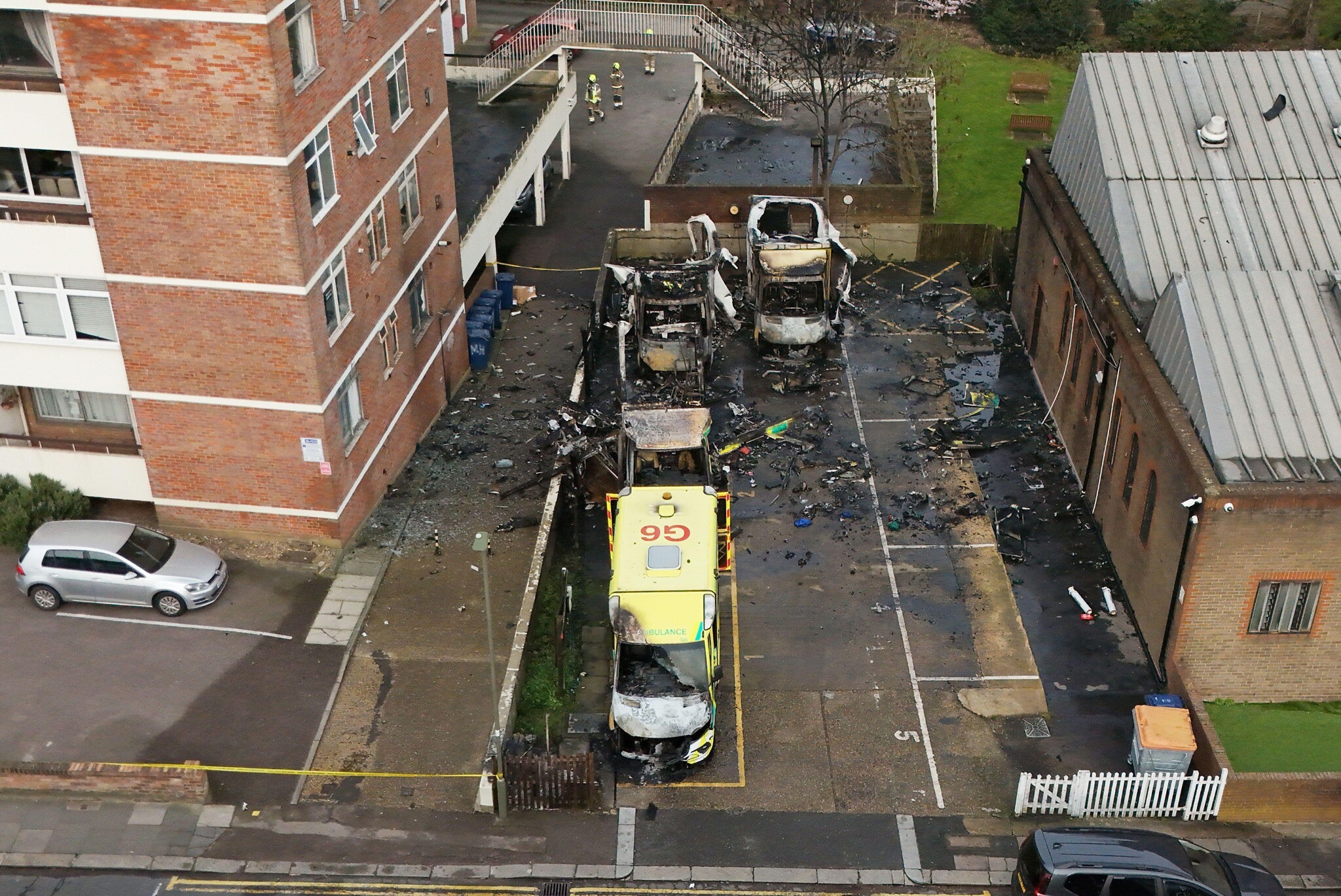
After the 23 March attack on the Hatzola ambulances in Golders Green, three people – Hamza Iqbal, 20, of Leyton, Rehan Khan, 19, of Leyton, and a 17-year-old boy from Walthamstow who cannot be named due to his age – have already been charged in connection with the incident.
A fourth person, Judex Atshatshi, 18, of Dagenham in east London, has now also been charged with arson, being reckless as to whether life would be endangered.
Following last weekend’s arson attack on Kenton United Synagogue, a 17-year-old boy and a 19-year-old man have been arrested.
A 17-year-old British national from Brent – has now also been charged with “arson not endangering life” as part of the Counter Terrorism Policing London investigation into the attack.
And the mayor is unflinching about the scale of what has unfolded across north-west London in recent weeks.
“We’ve never had, in my lifetime, in this short period, five churches, five mosques, five temples, five gurdwaras attacked this way,” he tells the meeting, and later also to Jewish News.
“And so all of us should recognise this is an attack on our way of life,” he adds. “One joy of this great city of ours is you’re free to love who you are, you’re free to worship who you want to be. If you’re Jewish, there’s a price — and that’s unacceptable.”
The mayor, like other political leaders, often receives flak, including from within the Jewish community, for posts on social media offering solidarity, but seemingly little else in the aftermath of now all too frequent antisemitic incidents.
But at the heart of Khan’s message to Jewish News is an urgent call to tackle the radicalisation and grooming of vulnerable young people, which he said was accelerating because of social media algorithms, disinformation and misinformation.
He is unsparing about those carrying out the attacks. “These are evil people,” he said. “What their religion of birth is doesn’t matter. What religion they have converted to in prison doesn’t matter. They’re evil people.”
The mayor also issues a stark warning that radicalisation is now happening faster than ever before, driven by social media algorithms, online disinformation and propaganda.
In our schools, the mayor points to the importance of projects, some funded by City Hall, aimed at ensuring school kids avoid “being prone to being groomed or being radicalised.”
Khan adds: “Because it does happen, and we know it’s happening faster now, because of algorithms, because of disinformation, misinformation and lies.”
“Nobody’s born an extremist. Nobody’s born an antisemite or filled with hate,” he adds. “And so we’ve got to start early in terms of giving young people the stoicism, the resilience, the antidote to this hatred.”
Khan stressed the renewed importance and significance of City Hall’s investment in grassroots programmes to counter extremism in schools.
“What we do from City Hall is — although we’re not in charge of schools — we fund projects. I think we’ve invested £30 million,” he said.
“It’s like the Shared Endeavour Fund, where we are funding groups, some Jewish groups, some non-Jewish groups, to go into our schools, with clinical expertise, to work with young people, give them what I call life skills — teach them about what’s going on in the real world, explain to them some of the haters out there, explain about disinformation — to avoid them in the future being prone to being groomed or being radicalised.”
In numerous meetings with the community over the past two years, with the Community Security Trust, and with police chiefs, Khan says he is fully aware of the fear now gripping London’s Jewish community.
“I’ve seen since 7 October 2023, a massive increase in the numbers of Jewish friends, colleagues, neighbours that I’ve spoken to who are genuinely scared,” he said.
“This sense of heightened fear is really important because it’s just the lived experience of a Jewish person.
“Whether you’re a child going to school, an adult going to a synagogue, or someone coming to central London, you are scared. And this can’t just be an issue for the Jewish community. All of us have a responsibility to respond.”
He added: “An attack on Jewish people is an attack on London, an attack on civic values, an attack on London. These are ripples of fear. We all feel that as human beings.”
Pointing to the significant policing effort already underway, Khan said:
“There have been literally thousands of additional shifts over the last two and a half years. Even more over the last six weeks.
“We’ve seen, over the last six weeks, a massive increase in Jewish places being targeted — whether it’s Hatzola, whether it’s Finchley Reform Synagogue, whether it’s a progressive synagogue or a United Synagogue.”
The mayor also directly acknowledged the police’s emerging lines of inquiry pointing toward the Iranian regime.
“The deputy commissioner has said publicly that there are thugs for hire,” he said. “Who is hiring them? That’s the investigation taking place.”
He voiced support for the Home Secretary Shabana Mahmood’s decision to ask independent reviewer Jonathan Hall KC to examine whether current laws around protests are fit for purpose.
“The police’s job is to act to enforce the law without fear or favour,” he said.
“They’ve been pragmatic in interpreting the law differently to make sure some things are now quite clearly against the law — for example, the globalised Intifada.
“Because quite clearly, whether you go to Bondi, whether you go to Heaton Park synagogue, whether you go to London, or the last five, six weeks — there’s something going on.”
Khan is aware of the criticism from within the community, and elsewhere, that he has not spoken out himself on the incendiary chanting often heard at pro-Palestinian demos in the capital.
It’s a criticism that has grown louder as protests became more frequent, and in some cases saw grotesque chants and placards waved in the name of anti-Zionism and allegedly in support of the Palestinian cause.
In reality, Khan has sometimes spoken out, including a high-profile interview on Radio 4’s Today programme in which he asked those engaging in these chants to consider the impact of Jewish neighbours, colleagues and friends.
But his vocal pro-Palestine stance has clearly angered some in the community at the same time.
Asked about criticism, he had not made clear enough his objections to those using inflammatory chants at protests, Khan insisted he had spoken out directly on the limits of protest.
He said: “I’ve been quite clear about saying to people who are protesting: the fact that it’s not unlawful for you to protest doesn’t mean it’s the right thing to do,” he said. ”
“Be cognisant of the fact that you may not be breaking the law, but you’re scaring people. You’re not being a good neighbour. You’re not being a good citizen.”
But Khan also insisted the silent majority of Londoners stood firmly with the Jewish community.
“The silent majority of Londoners condemn hate, condemn what’s happening to Jewish Londoners,” he said.
“And it’s really important for those of us that aren’t Jewish to show allyship — not just performative, as some politicians try and be, suddenly woken up to the fact that the Jewish community exists. It has to be consistent.
“I’m really proud that my administration has been consistent since 2016, and we’re going to carry on dealing with the issue of enforcement — really important — reassurance, prevention, bridge building, education, and all the things we need to do.”
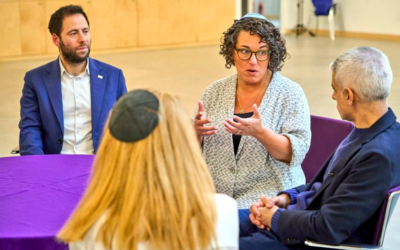
Khan paid warm tribute to Finchley Reform Synagogue, noting that his connection to the shul stretches back more than a decade.
“My record in this synagogue goes back more than ten years, back to 2013,” he said.
This synagogue opened its doors to Muslims to pray when their place of worship was the victim of an arson attack. That’s the Jewish community that I know and love
He highlighted the congregation’s long history of reaching out across community lines — in particular, the moment it opened its doors to the local Somali Bravanese community after they were victims of an arson attack in 2013.
“This synagogue is a classic example of a hand of friendship being put out to the Somali Bravanese community when they were the victims of an arson attack,” he said.
“And what was lovely was that, in the horrors of this synagogue being attacked, the Somali Bravanese community had the usual memory and decency to show allyship to the synagogue as well.
“This synagogue opened its doors to Muslims to pray when their place of worship was the victim of an arson attack. That’s the Jewish community that I know and love.”
He concluded with a message directed squarely at London’s Jewish community — and at the city as a whole.
“I discovered in 2008, when I was a faith minister, you can do a linear graph — whenever there’s tension in the Middle East, antisemitism goes up,” he said. “And that’s been the experience since October 2023. What’s heartbreaking is you’ve got a new generation of Londoners who are Jewish, who are experiencing antisemitism for the first time in their lifetime. And when they speak to their grandparents, they tell them, unfortunately, that’s the Jewish experience. It’s a hate as old as mankind.
“And that’s heartbreaking in a city that I call the beacon when it comes to diversity, multiculturalism, and multiracial cities. That’s why it’s very important we lead by example.”
He continued: “That’s why I say an attack on Jewish Londoners is an attack on London and our values. An attack on synagogues is an attack on London and our values. And this is a fight that all of us have a role to play — not just Jewish people. You aren’t on your own.”
Now it is “our turn”, he said, as a majority non-Jewish community, “to show that allyship and support to Jewish Londoners.”

Keep community journalism free.
Jewish News is free for everyone. No paywall. No barriers. Just trusted journalism for anyone who wants to stay connected to Jewish life in Britain.
If you value that, please support us.
From as little as £5 a month, you can help keep our journalism free and accessible to all.
Every day, we report on the issues that matter to our community. We celebrate achievements, support charities, challenge antisemitism and ensure Jewish voices are heard more widely.
From as little as £5 a month, you can help us continue to:
- Report on the stories shaping Jewish life in the UK and beyond
- Bring our community together through shared stories, events and campaigns
- Celebrate the people, culture and moments that define our community
- Support organisations doing vital work across Jewish Britain
You can make a one-off donation or become a regular supporter. Every contribution helps keep our journalism free, independent and accessible to all.
If everyone who values Jewish News gave a small amount, it would make a real difference to our future.