Prefer Jewish News on Google
Iran experts: ‘Don’t underestimate the regime’
At JW3, three leading experts lead in-depth analysis on Iran and the geopolitics of the Middle East
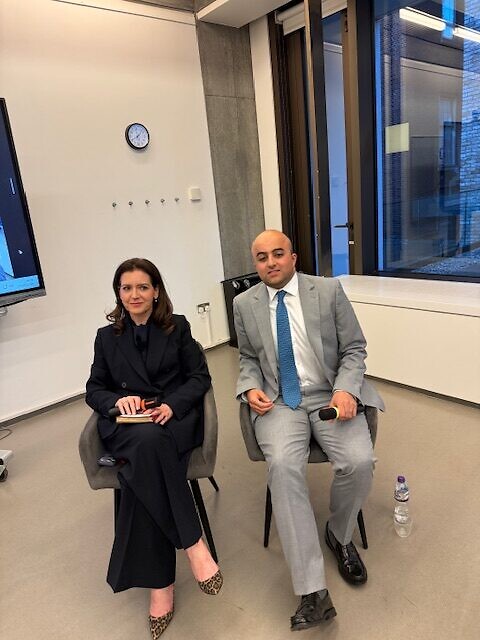
Leading experts in Iranian geo-politics spoke this week of the prospects for regime change after the outbreak of American and Israeli attacks on the country on February 28.
But one writer, David Patrikarakos, said that though he believed that the current regime was “unreformable”, he was nevertheless scathing about the possibility of a post-war Iran being led by Reza Pahlavi, the former Crown Prince and son of the last Shah, who was deposed by the Islamic Republic leadership.
Patrikarakos, an internationally recognised journalist and author whose book, War in 140 Characters: How Social Media Is Reshaping Conflict in the 21st Century, is taught at Sandhurst and used by the UK Ministry of Defence, joined panellists Jonathan Harounoff and Dr Efrat Sopher at JW3 for an in-depth assessment of what was happening in Iran, and predictions of whether the Iranian people might overthrow the regime.
Harounoff, a British-Iranian journalist who now serves as Israel’s international spokesperson to the United Nations, is the author of Unveiled: Inside Iran’s #WomenLifeFreedom Revolt. He told the audience that Iran had “gone dark” since the outbreak of hostilities, with a ban on Internet communications, meaning that “we still don’t know the full state of what happened since the January slaughter” of thousands of Iranians opposed to the regime.
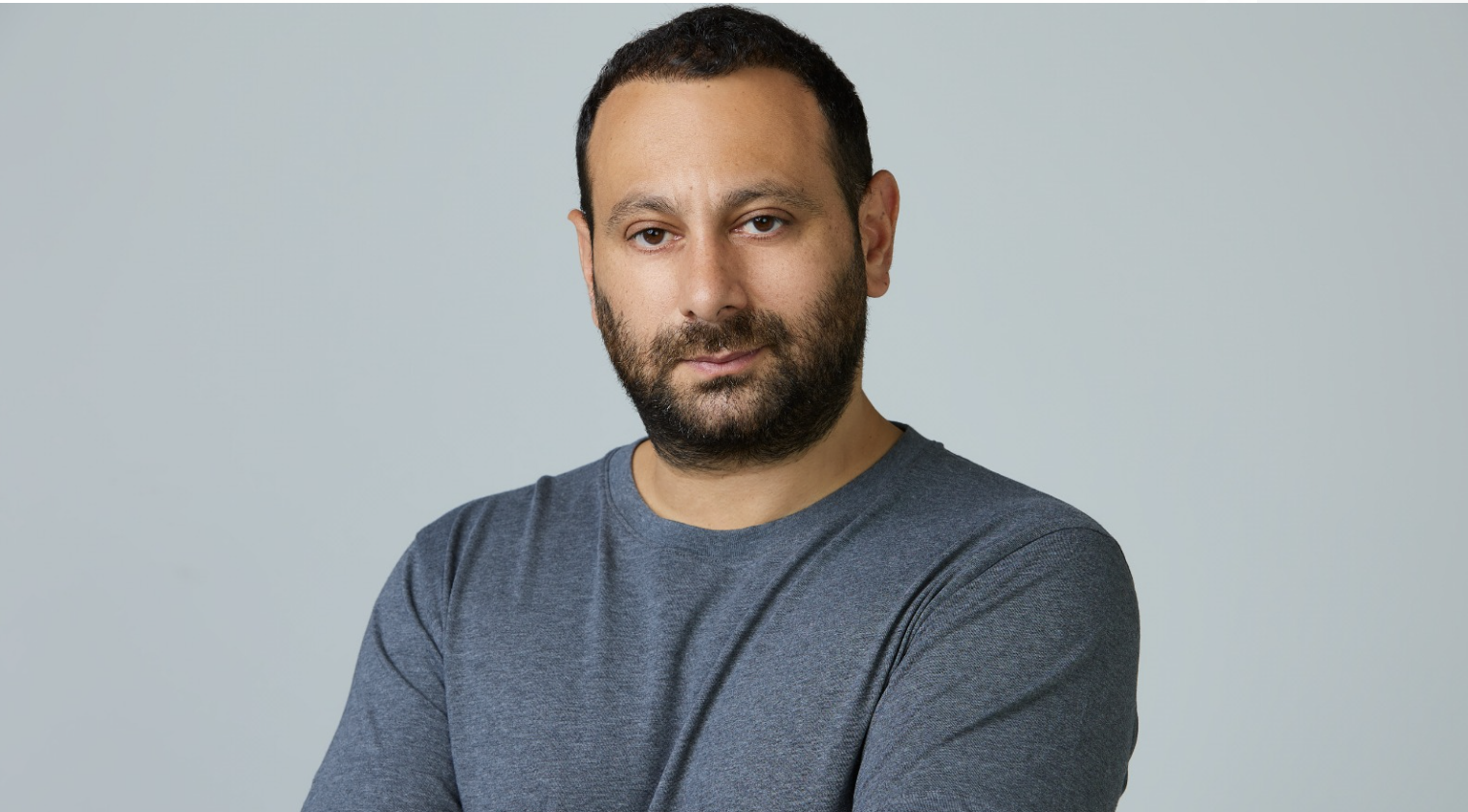
But he, Patrikarakos. and the third panellist, Dr Efrat Sopher, chair of the Ezri Centre for Iran and Gulf States Research at the University of Haifa, where she is a governor, have many personal and intelligence contacts, which enable them to provide a better picture of what is really taking place in Iran.


All three experts warned that even though much of the regime leadership had been assassinated by American or Israeli military, it was wise not to underestimate the Islamic Republic rulers. Harounoff described Iran as “waging a war of attrition, [a regime] whose greatest strength is that it is not a democracy”. Sopher said that “Persian perceptions of time” were calculated in “hundreds of years, not a weekly cycle of events”. Harounoff added that any deal to end the war would “not be packaged [by Iran] as a peace deal, but as a victory deal”.
Efrat Sopher, who spoke of the regime’s “obsession with the eradication of Israel,” is the granddaughter of Meir Ezri, Israel’s first ambassador to Iran during the time of the Shah. She recalled that he had arranged for a carpet which had formerly belonged to Adolf Hitler to be put on the floor in the Israeli embassy in Teheran, as a symbolic response to Israel-haters, but that it and everything in the Israeli building had been removed when the Islamic Republic took over.
Patrikarakos, who joined the discussion on-line from Athens, warned of the spread of the regime’s network outside Iran, speaking of “Little Teheran” in London’s Maida Vale, where the Islamic Republic owned numerous buildings and from which it is suspected it plans and runs terror operations against the West.
But Harounoff suggested that there was hope on the horizon, saying that he had witnessed “an unprecedented realignment” within the United Nations in relation to Iran, particularly among the Gulf states. He said that a Security Council resolution, adopted on March 11 this year, condemned Iran’s “egregious attacks” against the Gulf states and its attacks on ships going through the Strait of Hormuz.
The resolution was sponsored by Bahrain and co-sponsored by 135 countries, the largest number of supporters for any Security Council resolution in history. Though he acknowledged that Iran was deploying “some very sophisticated propaganda”, particularly on social media, nevertheless he was optimistic that many countries were beginning to see the true face of Iran.
And there was optimism, too, about the decision of the UAE to leave Opec, the oil cartel, and the “very good burgeoning relationship between Israel and Azerbaijan”, with the reminder that 30 per cent of Iranians were ethnically Azeri.
Patrikarakos also referred to Iranian activities on social media, noting that they had “privileged sensationalism over truth”. All three panellists deplored “lazy journalism” in which too many correspondents saw only what the regime permitted them to see inside Iran, and failing to question what they had seen once they left the country.
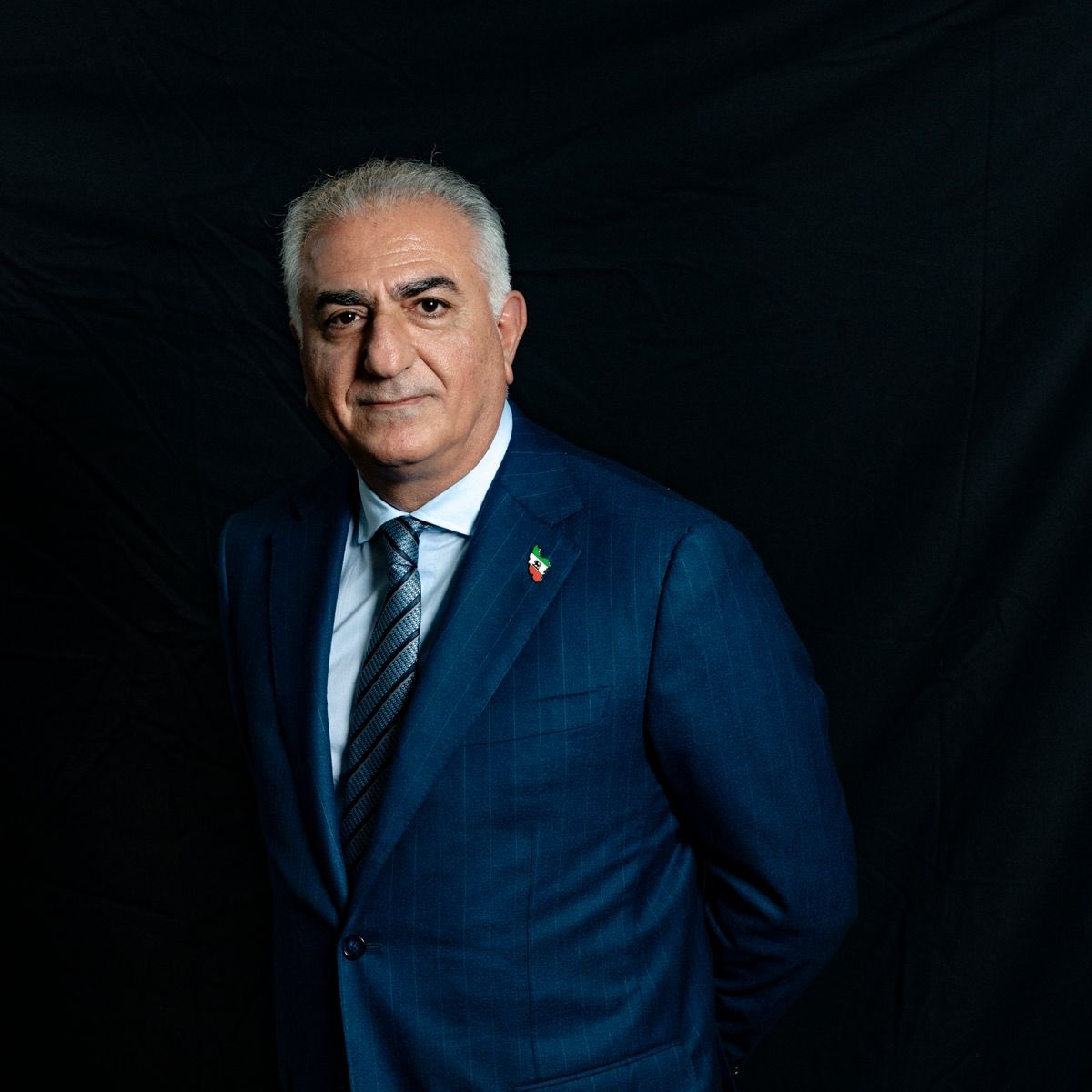
But Patrikarakos did not agree with Harounoff and Sopher about the possibility of Reza Pahlavi leading a post-war Iranian regime once the military conflict concluded. Harounoff described Pahlavi as “a good person with devoted followers”, who even had — like Donald Trump — a Jewish son-in-law, while Sopher said she believed Pahlavi could unite opposition factions as a transitional leader. Patrikarakos was much less admiring, but acknowledged that no other opposition name had yet emerged.
The panel, convened by Jewish News, was moderated by Jewish News deputy editor Daniel Sugarman.

Keep community journalism free.
Jewish News is free for everyone. No paywall. No barriers. Just trusted journalism for anyone who wants to stay connected to Jewish life in Britain.
If you value that, please support us.
From as little as £5 a month, you can help keep our journalism free and accessible to all.
Every day, we report on the issues that matter to our community. We celebrate achievements, support charities, challenge antisemitism and ensure Jewish voices are heard more widely.
From as little as £5 a month, you can help us continue to:
- Report on the stories shaping Jewish life in the UK and beyond
- Bring our community together through shared stories, events and campaigns
- Celebrate the people, culture and moments that define our community
- Support organisations doing vital work across Jewish Britain
You can make a one-off donation or become a regular supporter. Every contribution helps keep our journalism free, independent and accessible to all.
If everyone who values Jewish News gave a small amount, it would make a real difference to our future.