Prefer Jewish News on Google

Why Israel must stop introducing itself through victimhood
Israel is not merely a refuge born from a European catastrophe. It is the homeland of an ancient people whose history, language and civilisation are rooted in that story
It was a privilege to participate in the JNS International Policy Summit in Jerusalem earlier this month alongside leaders, diplomats, policymakers and public figures from around the world. The summit made international headlines.
On the panel in which I participated, speakers offered different perspectives on how Israel can better explain itself to an increasingly sceptical or hate-filled world. Some focused on digital media and journalism, others on strengthening strategic partnerships, including the growing opportunities presented by certain Gulf States. My own contribution drew on my professional experience.
Working in public relations and lobbying on behalf of a myriad of causes has taught me that the most successful campaigns are those that aim to broaden minds. Growing up, I’d often hear my father quip “shouting merely deafens.”
Over many years, whether advocating for oil, gas, aircraft landing rights, planning permission, Shechita, Brit Milah or Jewish education, we have tried to create opportunities for people to engage with subjects they may otherwise never encounter.
We bring together politicians, experts and stakeholders, respectfully, in good faith and without apology. Regarding Shechita, we explain what Shechita actually is. We explain the origins mechanical stunning and the latest peer-reviewed scientific evidence which demands requalifying the whole debate. We explain the reality of Jewish education, and broaden the understanding of the wide range of educational choices that exist across Britain, from radical home schooling to unschooling.



Of course, there are those who reject Israel’s right to exist. Whether driven by religious extremism or ideological hostility, they are not interested in dialogue. But they are not the audience that matters. Far more important are the millions across the West who have been exposed to an unrelenting torrent of hate, often surreptitiously funded by rejectionist forces, demonising Israel as uniquely malevolent. Many are misinformed rather than malicious. If minds are to be changed, they will be changed through a broadened perspective.
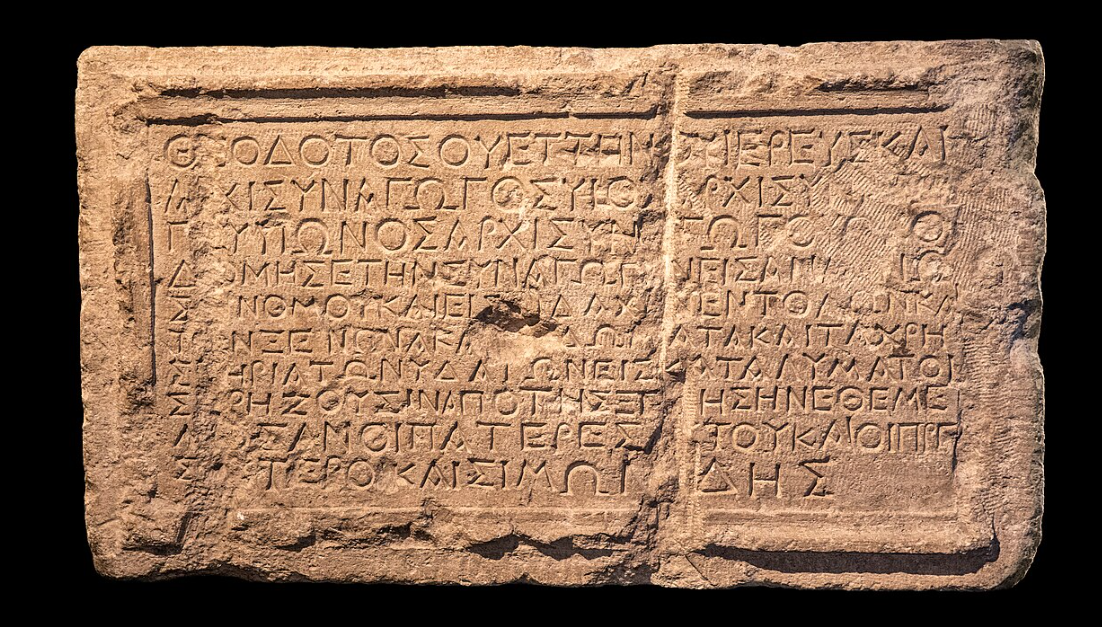
Nothing diminishes the importance of Holocaust remembrance, the testimony of survivors or the extraordinary work of Yad Vashem. But perhaps we should ask a difficult question. Why is every king, pope and visiting dignitary taken to Israel’s Holocaust Museum straight from arriving at Ben Gurion? Perhaps instead, or as well, they should visit the Ir David site. Standing among excavations dating back more than 3,000 years, overlooking the glistening Old City of Jerusalem, nobody needs to justify the existence of a Jewish state. Israel is not merely a refuge born from a European catastrophe. It is the homeland of an ancient people whose history, language and civilisation are rooted in that story.
Similarly, Robert Kraft’s Blue Square Alliance Against Hate spent $15 million on a Superbowl advertisement in February introducing Jews to more than 120 million viewers through the image of a frightened cowering schoolboy enduring antisemitic abuse. A well-intentioned campaign, I am sure but, to me, a profound missed opportunity. Where was the pride, broadening positivity, the shifting of narratives to show our vitality as a people?
One further thought struck me in Jerusalem. I was honoured to be there alongside valuable and notable British voices, yet Britain’s communal leadership was conspicuously absent. Chief Rabbi Warren Goldstein of South Africa was there, as well as North American Jewish leaders. Delegations had travelled from across the world. Where were ours?
There perhaps remains a belief within parts of British Jewish life that influence is best exercised quietly, from the inside, and that publicly identifying with Israel somehow weakens our position. Is that really the case? We have not been nearly as effective behind closed doors as we sometimes imagine. So there is no reason we cannot continue that work from the inside whilst also standing outside, publicly, confidently and unapologetically alongside Israel.
Jerusalem is where these conversations are taking place. We should not merely be reading the headlines; we should be helping to shape them. If we stop introducing Israel through victimhood and start introducing it through history, confidence and purpose, with a breadth and breath of fresh air, others may begin to see it differently too. Shouting merely deafens, but the right speech can open ears.

Keep community journalism free.
Jewish News is free for everyone. No paywall. No barriers. Just trusted journalism for anyone who wants to stay connected to Jewish life in Britain.
If you value that, please support us.
From as little as £5 a month, you can help keep our journalism free and accessible to all.
Every day, we report on the issues that matter to our community. We celebrate achievements, support charities, challenge antisemitism and ensure Jewish voices are heard more widely.
From as little as £5 a month, you can help us continue to:
- Report on the stories shaping Jewish life in the UK and beyond
- Bring our community together through shared stories, events and campaigns
- Celebrate the people, culture and moments that define our community
- Support organisations doing vital work across Jewish Britain
You can make a one-off donation or become a regular supporter. Every contribution helps keep our journalism free, independent and accessible to all.
If everyone who values Jewish News gave a small amount, it would make a real difference to our future.