Prefer Jewish News on Google

Paying the president risks creating two captains at the Board of Deputies
The Board already has a six-figure CEO. Blurring governance and management could weaken accountability rather than strengthen leadership

The debate over whether the president of the Board of Deputies should be paid for his service goes to the heart of how our community wishes to govern itself.
This is not merely a question of salary. It is a question of constitutional balance, leadership, accountability and institutional purpose.
In 2024, the historian Andrew Johnston published The Bank of England and the “Prehistory” of Corporate Governance, a study examining the evolution of non-executive directors and chairmanship within British institutional life. The Board’s leadership would benefit from reading it. Johnston’s central insight is simple but profound: institutions function best when governance and management are clearly separated.
The Board of Deputies already employs a respected and experienced chief executive officer on a salary exceeding £100,000. One assumes he was appointed because he possesses the skills, judgement and professional competence required to lead the organisation operationally. If so, he should be allowed to do precisely that.
The problem is that many organisations – charities especially – become unstable when the distinction between governance and executive management begins to blur.



The role of a CEO is well understood in modern British charitable governance. The CEO runs the organisation day to day. He manages staff, oversees operations, develops and implements strategy, supervises fundraising and finances, engages stakeholders, and acts as the principal public representative of the institution. According to Charity Commission guidance and accepted governance practice across the UK voluntary sector, the CEO is the operational leader of the organisation.
The president’s role is, or should be, fundamentally different.
Traditionally, the president of the Board of Deputies has been a non-executive figure: a volunteer leader who chairs proceedings, safeguards governance, protects institutional values and ensures accountability to the community. The president’s authority derives not from executive control, but from independence, judgment, and the ability to unify disparate constituencies.

In successful organisations, the chair does not attempt to become the chief executive. Nor does the chief executive attempt to become the chair.
The president should lead plenary sessions; support and challenge the CEO where necessary; ensure that trustees and lay leadership function effectively; and maintain focus on the Board’s long-term mission and communal responsibilities. That is an important role. Indeed, it is indispensable. But it is not the same role as running the organisation.
If the proposal now is to create an executive presidency, then important questions arise.
Where precisely will responsibility for operational leadership sit?
Who will speak for the organisation publicly: the president or the CEO?
Who will manage senior staff?
Who will set strategic priorities?
And perhaps most importantly: who will hold whom accountable?
At present, none of this appears remotely clear.
That should concern everyone who cares about the effectiveness of the Board. History – corporate, charitable and political alike – is littered with institutions damaged by confused leadership structures: chairmen desperate to become chief executives, chief executives behaving like chairmen, and organisations paralysed by rivalry, duplication and blurred authority.
Good governance is not bureaucracy for its own sake. It exists to prevent precisely this sort of institutional confusion.
The real question, therefore, is not whether the president deserves payment for hard work. No serious observer doubts that the role demands enormous time and commitment. The question is whether the Board wishes to preserve the distinction between governance and executive management that underpins every well-run modern institution.
The Board already has a highly paid CEO whose professional responsibility is to manage the organisation. He should be empowered to flourish in that role. Equally, the president should flourish in his own distinct role: providing leadership, oversight, communal legitimacy and strategic guidance without becoming an alternative executive centre of power.
When those two roles work in partnership – while respecting the boundaries between them – institutions succeed. When they do not, confusion is rarely far behind.
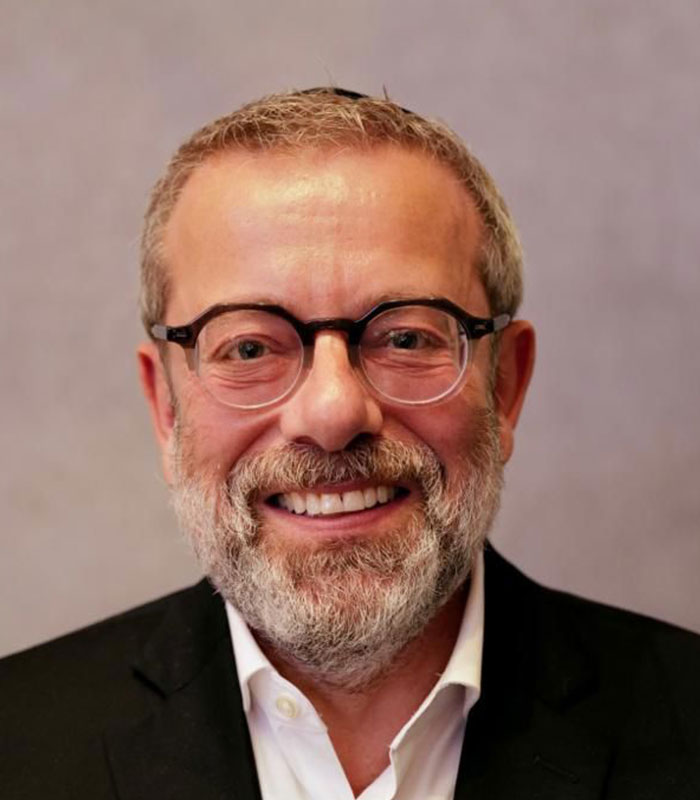
- Shimon Cohen is chairman of Roath PR

Keep community journalism free.
Jewish News is free for everyone. No paywall. No barriers. Just trusted journalism for anyone who wants to stay connected to Jewish life in Britain.
If you value that, please support us.
From as little as £5 a month, you can help keep our journalism free and accessible to all.
Every day, we report on the issues that matter to our community. We celebrate achievements, support charities, challenge antisemitism and ensure Jewish voices are heard more widely.
From as little as £5 a month, you can help us continue to:
- Report on the stories shaping Jewish life in the UK and beyond
- Bring our community together through shared stories, events and campaigns
- Celebrate the people, culture and moments that define our community
- Support organisations doing vital work across Jewish Britain
You can make a one-off donation or become a regular supporter. Every contribution helps keep our journalism free, independent and accessible to all.
If everyone who values Jewish News gave a small amount, it would make a real difference to our future.