Prefer Jewish News on Google
Israel to perform world’s first spinal cord implant using patients’ own cells
Groundbreaking Tel Aviv University procedure could allow paralysed patients to stand and walk again
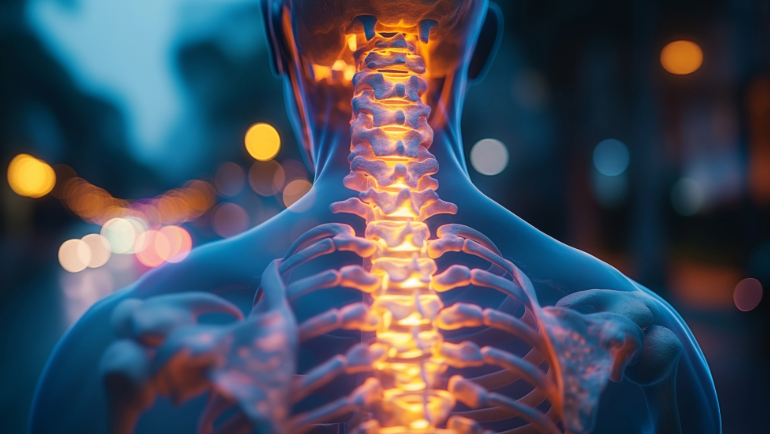
Israel is preparing to carry out the world’s first human spinal cord implant, a pioneering operation using a patient’s own cells that could one day enable paralysed people to regain the ability to walk.
Tel Aviv University confirmed on Wednesday that the surgery – expected within months – will mark a historic step forward in regenerative medicine.
According to the World Health Organisation, more than 15 million people live with spinal cord injuries worldwide, most caused by falls, road accidents, or violence. Current treatments can only stabilise patients and limit further damage; no therapy has ever succeeded in restoring full spinal cord function.
Professor Tal Dvir, head of the Sagol Centre for Regenerative Biotechnology and the Nanotechnology Centre at Tel Aviv University, is leading the project. He explained: “The spinal cord transmits electrical signals from the brain to all parts of the body. When it is severed… the chain is broken. Think of an electrical cable that has been cut: when the two ends no longer touch, the signal cannot pass, and the patient remains paralysed below the injury.”
Unlike other tissues, spinal neurones cannot regenerate, and scar tissue eventually blocks residual signals. The new method replaces damaged sections with a laboratory-grown spinal cord that fuses with healthy tissue above and below the injury.

Animal studies have already delivered striking results, with paralysed mice regaining the ability to walk normally after receiving the engineered implants.
The procedure uses a patient’s own blood and fat tissue. Blood cells are reprogrammed into stem-like cells, while fat is converted into a hydrogel “scaffold”. This combination is then grown into a personalised spinal cord structure for transplant.
Earlier this year, Israel’s Ministry of Health authorised “compassionate use” trials in eight patients – the first such approval anywhere in the world.
“This is undoubtedly a matter of national pride,” said Prof Dvir. “The technology was developed here in Israel, at Tel Aviv University and at Matricelf, and from the very beginning it was clear to us that the first-ever surgery would be performed in Israel, with an Israeli patient.”
Founded in 2019, Matricelf is the biotech company commercialising the breakthrough. Its CEO, Gil Hakim, said: “This milestone marks the shift from pioneering research to patient treatment. Using each patient’s own cells eliminates key safety risks and positions Matricelf at the forefront of regenerative medicine. If successful, this therapy could define a new standard of care in spinal cord repair.”
He added: “We are proud that Israel is leading this global effort and are fully committed to bringing this innovation to patients worldwide.”
Prof Dvir concluded: “Our goal is to help paralysed patients rise from their wheelchairs. The animal model trials showed extraordinary success, and we are hopeful that the results in humans will be just as promising.”

Keep community journalism free.
Jewish News is free for everyone. No paywall. No barriers. Just trusted journalism for anyone who wants to stay connected to Jewish life in Britain.
If you value that, please support us.
From as little as £5 a month, you can help keep our journalism free and accessible to all.
Every day, we report on the issues that matter to our community. We celebrate achievements, support charities, challenge antisemitism and ensure Jewish voices are heard more widely.
From as little as £5 a month, you can help us continue to:
- Report on the stories shaping Jewish life in the UK and beyond
- Bring our community together through shared stories, events and campaigns
- Celebrate the people, culture and moments that define our community
- Support organisations doing vital work across Jewish Britain
You can make a one-off donation or become a regular supporter. Every contribution helps keep our journalism free, independent and accessible to all.
If everyone who values Jewish News gave a small amount, it would make a real difference to our future.