Prefer Jewish News on Google
Rare burnt First Temple-era beams unearthed in Jerusalem after 2,600 years
Exceptionally preserved timber could allow archaeologists to date Jerusalem’s destruction in 586 BCE with unprecedented precision for the first time
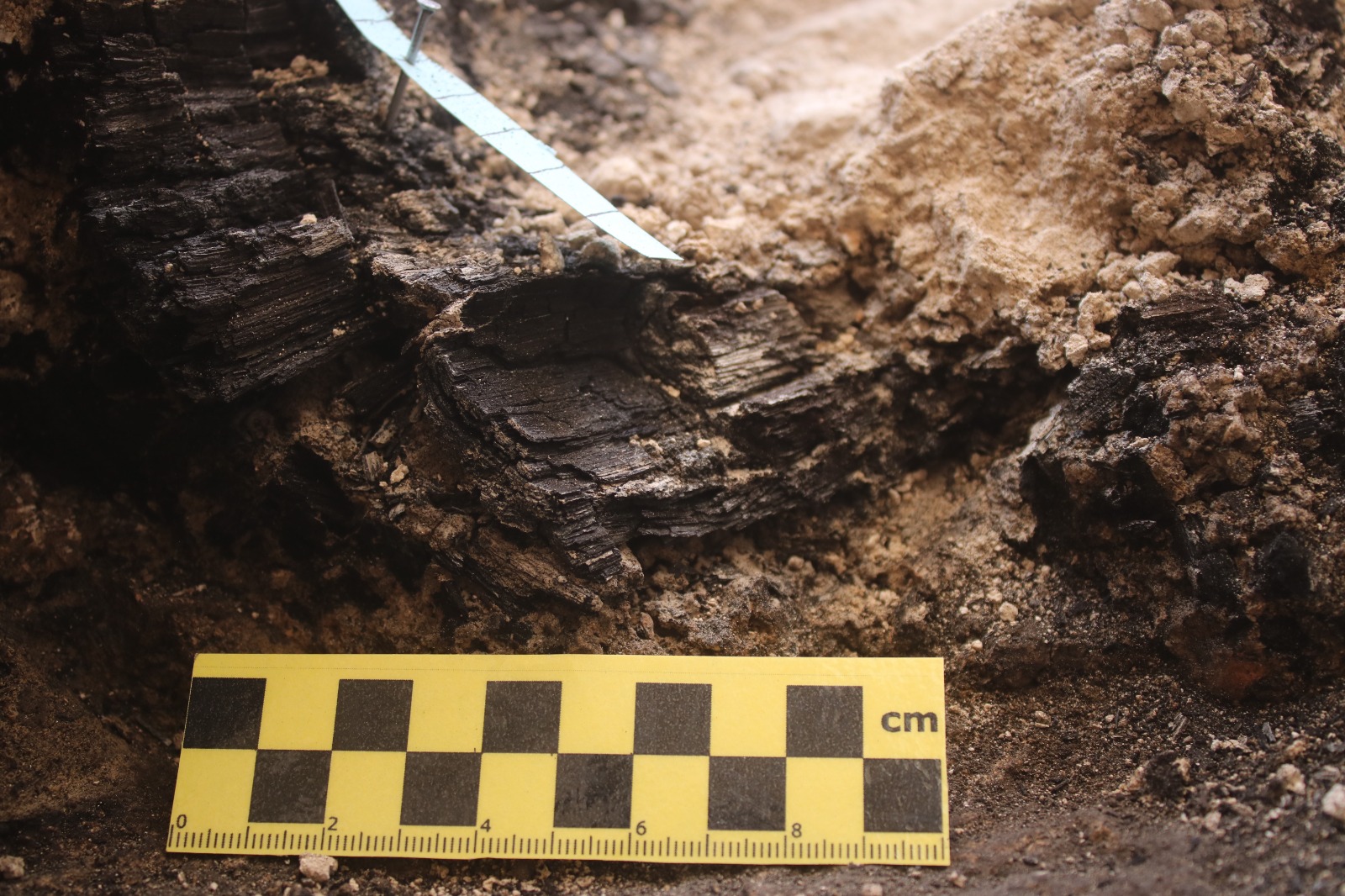
Archaeologists have uncovered rare charred wooden beams in Jerusalem believed to date to the Babylonian destruction of the First Temple in 586 BCE, in a discovery that researchers say could transform understanding of one of Jewish history’s defining moments.
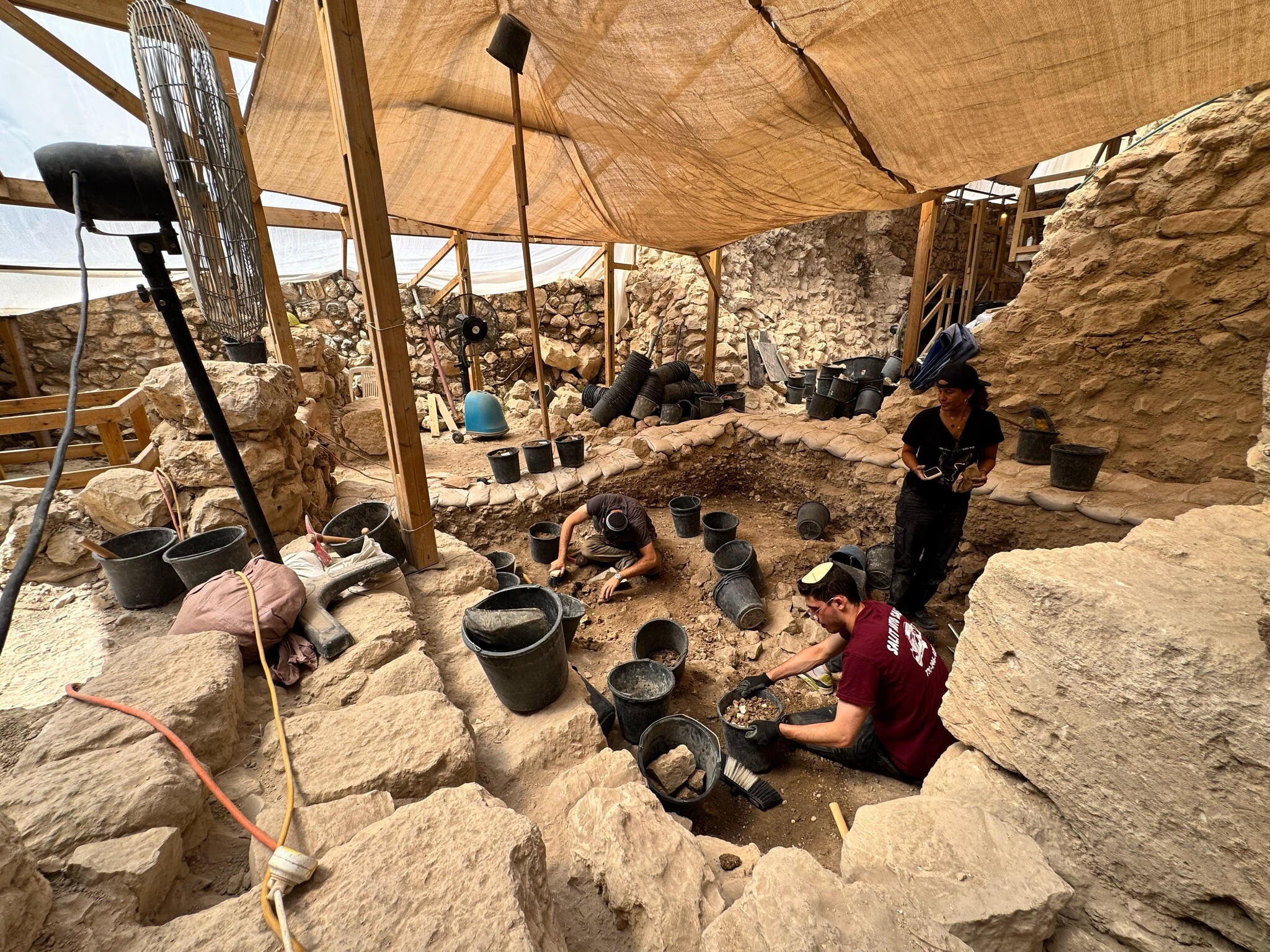
The burnt timbers were unearthed during excavations by the Israel Antiquities Authority (IAA) and Tel Aviv University in the City of David, within the Jerusalem Walls National Park. Researchers believe they formed part of the roof of a First Temple-period building that collapsed as the city was destroyed by Babylonian forces.
The discovery is considered highly unusual because well-preserved wood from the Iron Age is exceptionally rare in Israel. Archaeologists believe the beams survived for around 2,600 years after plaster from the building’s walls melted in the intense fire and sealed the burnt wood beneath it.
Excavation director Efrat Bocher said: “The beams appear to have served as the roof of an inner courtyard in a building from the First Temple period. During the destruction, they collapsed onto the floor. We believe that the plaster cladding of the building’s walls, melted by the fire, covered the charred wooden beams, and ultimately enabled their exceptional preservation.”
Scientists say the find could also provide the most precise dating yet for the destruction of ancient Jerusalem.



Dr Johanna Regev, of the Israel Antiquities Authority, explained that the unusually large number of growth rings preserved within the timber will allow researchers to date the wood with far greater accuracy than has previously been possible.
“It is very rare in Israel to find wood with such a large number of growth rings,” she said. “Here, in the City of David, we found thick beams with many rings, offering significant research potential – with more growth rings enabling higher dating resolution. Until now, we could date finds within a range of hundreds of years. Now we can attain much greater precision, narrowing the dating range down to as little as ten years.”
Researchers also believe Jerusalem’s returning inhabitants may have deliberately left the burnt remains untouched after the Babylonian exile as a permanent reminder of the city’s destruction.
Dr Yiftah Shalev, who co-directs the excavation for the Israel Antiquities Authority alongside Professor Yuval Gadot of Tel Aviv University, said: “Preserving memory is a human need, seeking to preserve what once existed. Here we see it in its clearest form: a deliberate choice to leave ruins in place as a testament to the destruction and build the new layer over them.”
The discovery was announced ahead of Tisha B’Av, the annual fast commemorating the destruction of both the First and Second Temples in Jerusalem.
Reflecting on the timing, Bocher said: “We are just before Tisha B’Av. This discovery makes you feel that you are witnessing the very moment of destruction, the moment when it all happened.
“It’s deeply moving.”

Keep community journalism free.
Jewish News is free for everyone. No paywall. No barriers. Just trusted journalism for anyone who wants to stay connected to Jewish life in Britain.
If you value that, please support us.
From as little as £5 a month, you can help keep our journalism free and accessible to all.
Every day, we report on the issues that matter to our community. We celebrate achievements, support charities, challenge antisemitism and ensure Jewish voices are heard more widely.
From as little as £5 a month, you can help us continue to:
- Report on the stories shaping Jewish life in the UK and beyond
- Bring our community together through shared stories, events and campaigns
- Celebrate the people, culture and moments that define our community
- Support organisations doing vital work across Jewish Britain
You can make a one-off donation or become a regular supporter. Every contribution helps keep our journalism free, independent and accessible to all.
If everyone who values Jewish News gave a small amount, it would make a real difference to our future.