Prefer Jewish News on Google
Israeli-Arab Joint List coalition is revived ahead of country’s general election
Leaders of the four key Israeli-Arab parties - Hadash, Ta'al, Balad and Ra'am - signed an agreement during a visit to the city of Sakhnin
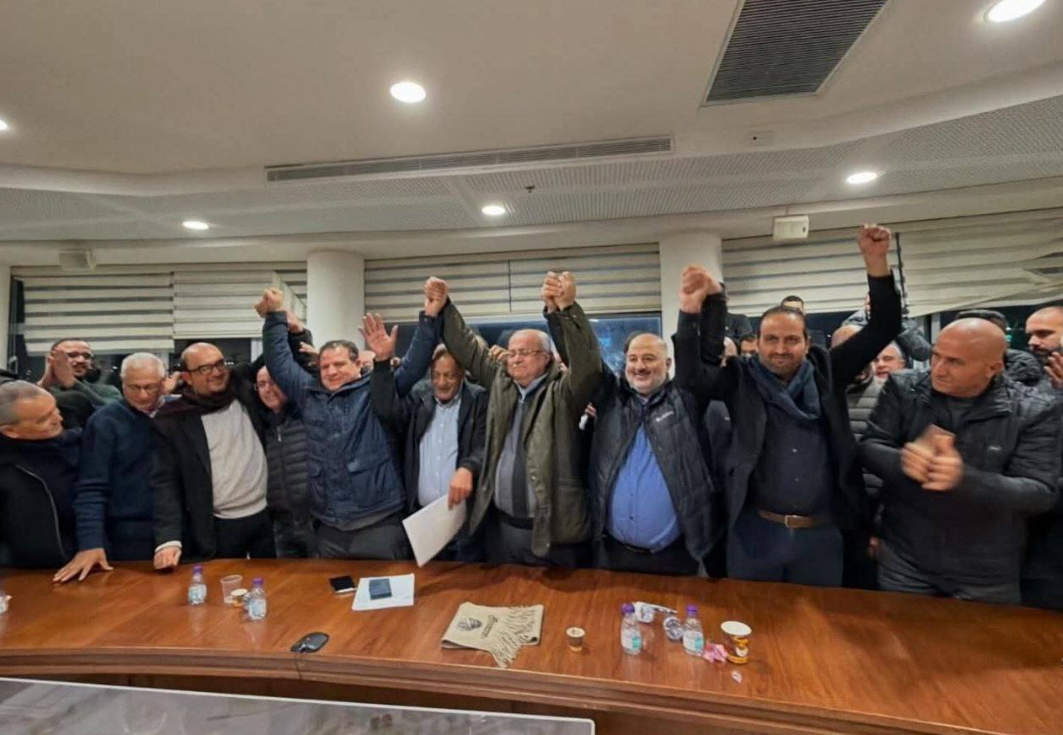
The four key Arab political parties in Israel have taken a significant step towards re-establishing a joint political bloc which would enable them to form a united vote bloc for the upcoming Israeli Knesset elections, signing a political agreement to that effect on Thursday.
The leaders of Hadash, Ra’am, Ta’al, and Balad reportedly agreed to re-establish the Joint List, which could potentially enable them to win as many as 15 of the Knesset’s 120 seats at the election, during talks in the Israeli-Arab city of Sakhnin.
According to Israel’s Kan public broadcaster, the main obstruction to the reforming of the coalition, which was formed in 2015 and dissolved in 2019, before being reformed later that same year and running until 2022, was the demand of the Ra’am party to be able to have the choice to split away post-election in order to potentially join a government coalition. The other parties finally agreed, leading to the resurrection of the electoral bloc.
During its previous existence, the Joint List was the third largest faction in the Knesset; the grouping ultimately fractured due to disagreements about the decision of the United Arab List party (also known as Ra’am) to attempt to join an Israeli government coalition. In 2021 Ra’am officially joined the Israeli government – the first time in more than 50 years that an Arab party had been part of the country’s governing coalition.
However, a source from one of the parties told Times of Israel that the wider Arab community had effectively demanded that the parties reach a public agreement, due to a major crime wave within the Israeli Arab community which has seen a significant number of homicides during attempts at violent extortion.



“You can’t say it’s absolutely final, but such a public commitment will lead to more serious meetings, and everyone will be afraid to look like the ones who collapsed the list,” the source told the paper.
The four leaders signed a piece of paper with the letterhead of the Sakhnin municipality, having visited the city after it became the epicentre of a general strike by Israeli-Arab businesses in protest at the ongoing violence.

Keep community journalism free.
Jewish News is free for everyone. No paywall. No barriers. Just trusted journalism for anyone who wants to stay connected to Jewish life in Britain.
If you value that, please support us.
From as little as £5 a month, you can help keep our journalism free and accessible to all.
Every day, we report on the issues that matter to our community. We celebrate achievements, support charities, challenge antisemitism and ensure Jewish voices are heard more widely.
From as little as £5 a month, you can help us continue to:
- Report on the stories shaping Jewish life in the UK and beyond
- Bring our community together through shared stories, events and campaigns
- Celebrate the people, culture and moments that define our community
- Support organisations doing vital work across Jewish Britain
You can make a one-off donation or become a regular supporter. Every contribution helps keep our journalism free, independent and accessible to all.
If everyone who values Jewish News gave a small amount, it would make a real difference to our future.