Prefer Jewish News on Google
‘It can happen again’: Chief Rabbi’s stark warning at Holocaust education summit as non-Jewish youth lead fight to remember
Chief Rabbi joins historian Laurence Rees and non-Jewish ambassadors in urgent call to action at annual HET youth conference
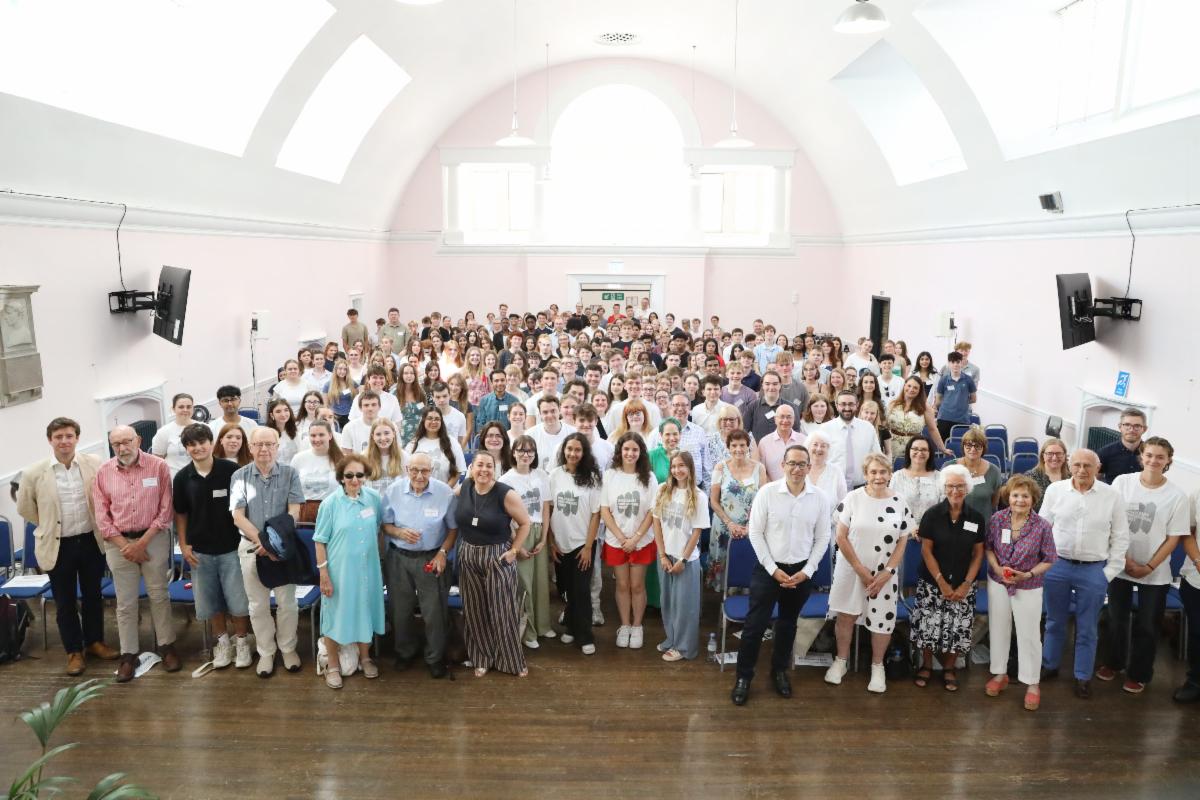
The Chief Rabbi has warned that the Holocaust “can happen again” during an impassioned address at a youth conference where young non-Jewish ambassadors pledged to carry forward the memory of the Shoah.
Speaking at the Holocaust Educational Trust’s (HET) annual Ambassador Conference in London on Monday, Chief Rabbi Ephraim Mirvis told more than 200 students: “For the sake of our own protection and our own future, we have to be realistic; what’s happened in the past can, God forbid, happen in the future.”
He added: “Like many other Jewish families, I grew up in one which I was aware, from the earliest time that I could understand what was happening around me, that in our family we lost some precious members who were murdered during the Holocaust.
Despite being raised to be “optimistic”, he said, the horrors of history demand vigilance. “When we look around us and see certain trends within our societies around the world, we can detect certain similarities,” he warned.
Mirvis praised the HET and its young ambassadors for their “sacred efforts” to spread awareness. “You have decided to invest in learning… discovering everything you can about the horrific fate of the Jewish people… in order that you can come forward and do something about it.”


Later that same day, the Chief Rabbi publicly condemned the BBC’s handling of antisemitism at Glastonbury Festival, where chants of “death to the IDF” were broadcast during a performance.
In a post on X, he wrote: “This is a time of national shame. The airing of vile Jew-hatred at Glastonbury and the BBC’s belated and mishandled response brings confidence in our national broadcaster’s ability to treat antisemitism seriously to a new low.
“It should trouble all decent people that now, one need only couch their outright incitement to violence and hatred as edgy political commentary, for ordinary people to not only fail to see it for what it is, but also to cheer it, chant it and celebrate it.
“Toxic Jew-hatred is a threat to our entire society.”
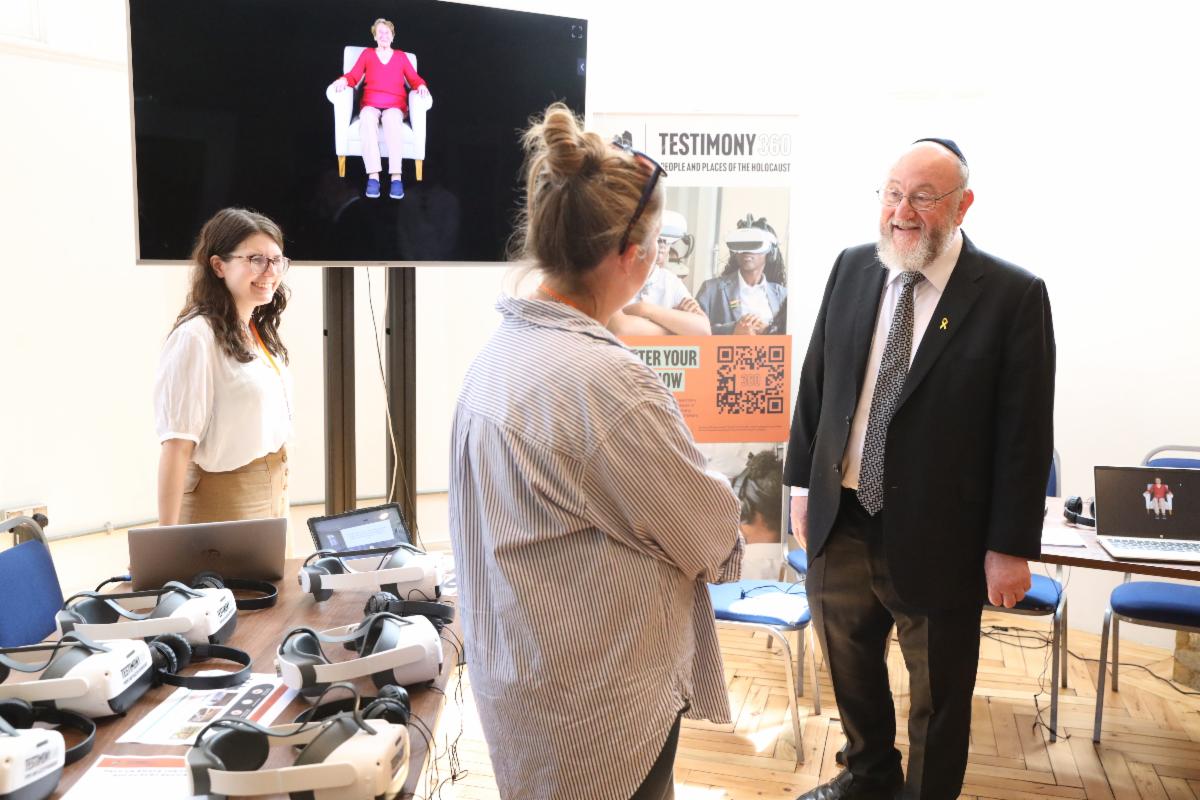
Photo: Grainge Photography
HET chief executive Karen Pollock opened the event with a call to action. “We are entering a new era,” she said. “The Holocaust is moving away in history. And that makes what we do today more vital than ever. Because now the responsibility becomes yours.”
The conference also featured a keynote by acclaimed historian and documentary maker Laurence Rees, who is not Jewish but has spent decades studying the Holocaust, including interviewing both survivors and perpetrators.
“We are a historically illiterate country,” he said, citing data showing that many young people don’t know what Auschwitz was. “The problem of Holocaust denial is very real… But almost as big, if not bigger, is historical ignorance.”
Rees warned how conspiracy theories and dehumanisation fuelled Nazi ideology. “Hitler understood that it’s easier to unite people around what they hate than what they love,” he said. “The only scaffold of emotion, he [Hitler] said, is hate.”

He also spoke about the psychological mechanisms that allowed Nazis to justify genocide. “They believed Jews were responsible for everything – democracy, capitalism, communism, department stores. If there was no evidence, they said it was because Jews were too clever to leave any.”
Among the most moving moments of the day came from two regional ambassadors who spoke exclusively to Jewish News about why they chose to dedicate themselves to Holocaust education.
Zafran, 22, a Muslim ambassador from Yorkshire, said: “From my personal experience as a Muslim, I’d never really learnt in detail about the Holocaust… In history we always see it through the Nazi perspective: they killed six million Jewish people.”
“I wanted to know about the people, the experiences – because these are six million people with their lives and dreams.”
Before joining the Trust’s ambassador programme, he said, “I had never met a Jewish person before.” That changed after taking part in a 10-day study trip to Israel in 2022, where he visited Yad Vashem and heard from world-renowned experts.

“It’s been a true honour,” he said. “The more we tell people about what happened, the more we can prepare them. We’ve seen hate rise in the last couple of years. It’s getting worse now.”
Anna, 24, a non-religious ambassador from Newcastle, said she was first inspired after standing at the gates of Auschwitz-Birkenau in 2018. “I remember just looking back and being like, I can’t do nothing.”
Recalling Holocaust survivor Eva Clarke’s testimony that same year, she said: “I remember someone asking her how she felt, and she said, ‘You’d think we don’t feel frightened – but we still do.’ I’ve always remembered that.”
Though she is not Jewish or religious, she said: “I would stand up for anyone. This is just a human issue.”
Since returning from Auschwitz, Anna has helped organise local Holocaust Memorial Day events and now works with a museum group archiving the Jewish contribution to North East history. “It opens a lot of conversations,” she said. ‘People ask, ‘You’re not Jewish – why are you involved?’ But I say – I can reach different communities who might not have heard these stories before.”

Photo: Grainge Photography
She added: “In school you’re always told the numbers. But it’s not about numbers – it’s about people. If we know their names, we should use them. Let’s humanise the Holocaust.”
Pollock urged students to “take in as much as you can, ask questions, share reflections, and when you go home, tell people what you’ve learnt.”
“This year’s conference comes at a moment of change, or urgency, or responsibility,” she said. “The time is now – not only to reflect, but to speak out. Enough to antisemitism. Enough to hate. Enough to racism.”

Keep community journalism free.
Jewish News is free for everyone. No paywall. No barriers. Just trusted journalism for anyone who wants to stay connected to Jewish life in Britain.
If you value that, please support us.
From as little as £5 a month, you can help keep our journalism free and accessible to all.
Every day, we report on the issues that matter to our community. We celebrate achievements, support charities, challenge antisemitism and ensure Jewish voices are heard more widely.
From as little as £5 a month, you can help us continue to:
- Report on the stories shaping Jewish life in the UK and beyond
- Bring our community together through shared stories, events and campaigns
- Celebrate the people, culture and moments that define our community
- Support organisations doing vital work across Jewish Britain
You can make a one-off donation or become a regular supporter. Every contribution helps keep our journalism free, independent and accessible to all.
If everyone who values Jewish News gave a small amount, it would make a real difference to our future.