Prefer Jewish News on Google
Judaism doesn’t ask us to choose between faith and facts
Richard Ferrer's new book Error 404 argues that religion evolved to provide humans with meaning. But he overlooks what faith actually asks of us

Last week, promoting his satirical novel Error 404, Richard Ferrer wrote an article that was witty, provocative and, in places, unexpectedly sympathetic to faith. The main thrust of his thesis is that blind faith, rather than pure factual logic, serves as humanity’s greatest evolutionary gift, acting as a psychological tool that gives life purpose, meaning, and comfort.
Here I invite him to consider a different perspective.
When I was a lad, one of my favourite TV adverts was for Ready Brek. Hoping it would surround me with the red glow that it promised, I tried the porridge. But I didn’t like it, nothing could replace the sugary hit of Sugar Puffs!
However, it is a category error to assume that because faith can provide psychological meaning, faith must therefore have originated as a psychological coping mechanism.
The mistake originates in considering what religion might do for human beings without ever really asking whether what religion claims about reality might actually be true.



An atheist might be convinced that faith is essentially a psychological comfort blanket: humanity’s existential Ready Brek, providing warmth in a cold and meaningless universe. They might concede that faith may be humanity’s “greatest evolutionary gift”, giving us purpose, hope and something to live for. But usefulness is not truth.
A parachute may make you feel safer, but that does not tell you whether it will open. The fact that belief gives people meaning tells us nothing, by itself, about whether the object of that belief exists.
Judaism is not blind faith, and ‘blind faith’ is not an accurate description of the Jewish intellectual tradition. Consider Maimonides who taught that the foundation of Jewish religious life is not simply believing in God but knowing God. In the opening chapters of Hilchot Yesodei HaTorah, he begins with the existence and unity of God and describes the contemplation of creation as a route to love and awe of God.
The Torah does not tell us to switch off our minds and take a leap into the dark. It tells us to use them, and Judaism has an extraordinarily long tradition of argument, questioning, interpretation and intellectual investigation. Just think about Abraham and Moses who directly challenge God and are invited by Him to do so. The Talmud is hardly a handbook for unquestioning obedience. It records arguments that span generations, preserves minority opinions alongside majority ones, and frequently asks: How do you know?
The Jewish tradition does not fear the question. It is built around it.
We are not expected to choose faith over facts. Facts tell us something about the world. Reason helps us understand it. And faith asks questions that empirical science, by its very nature, cannot answer.
Not “How did this happen?” alone, but “Why is there something rather than nothing?”
Not simply “What are human beings?” but “What ought human beings become?”
Not merely “What gives me pleasure?” but “What makes a life worthwhile?”
We are not expected to choose faith over facts. Facts tell us something about the world. Reason helps us understand it. And faith asks questions that empirical science, by its very nature, cannot answer
Those are not anti-scientific questions. They are questions of a different order.
Understood this way, faith bridges the gap between our finite intellect and the Infinite.
For some, Judaism is rejected when it has only been understood through its external practices: what people eat, what they wear, when they pray and the extraordinary number of rules they follow. But imagine someone saying, “I don’t like opera” having heard one aria. Or, “Literature is pointless” having read the blurb on the back of a novel. We would rightly ask: Have you actually studied it?
Judaism deserves the same intellectual courtesy, curiosity and rigour. To reject it as a comforting fiction without seriously engaging with the Torah, Talmud, Rambam, Maharal, Rav Kook, Rabbi Sacks and the vast intellectual tradition of Jewish philosophy is rather like dismissing an entire library after reading the contents page. You may still disagree but at least you will know what you are disagreeing with.
It is also a misconception to suggest that religion gives people “something to live for” and “another reason to glow”. Judaism actually promises remarkably little in the way of immediate happiness. It demands and restricts. It tells you that not everything you want is good for you, and that not everything that feels good should be done. It asks you to wait and to fast, to restrain yourself. To give away money you could have kept, to control what you say when gossip would be entertaining, to stop working when you could carry on, to forgive when you would rather remain angry, to give up something you desire because there is something more important than desire.
That is not a psychological comfort blanket, it is a boot camp, it is training.
Judaism is, in many respects, a tutorial in deferred gratification, self-control, self-refinement and growth. The mitzvot are not there simply to make us feel warm and protected. They are imposed to make demands upon us, a means to end: to transform the way we eat, speak, work, spend, love, rest and relate to other people.
The question Judaism asks is not, “What will make you feel better?” It is, “What will make you better?”
And those are very different questions.
We may need to believe that “someone is behind the wheel”, that there is a reason we are here and that “everything happens for a reason” but perhaps the fact that we hunger for meaning does not prove that we invented God. It does suggest that we were made for meaning. A fish does not have to be taught that it belongs in water and the human longing for transcendence is not evidence that God is a psychological invention. It is evidence of something much more profound: that the human being is a creature capable of reaching beyond the material world.
The question Judaism asks is not, “What will make you feel better?” It is, “What will make you better?”
Even if you perceive God as our “operating system” or the God-shaped hole in your bagel, that is not evidence that we invented the programmer. Perhaps it is evidence that there was one.
Of course, facts alone cannot answer every human question but that does not mean facts are irrelevant to faith. Judaism has never demanded that we abandon reason in order to believe. It asks us to employ reason, experience, tradition, revelation and intellect in our search for truth.
The Jewish word for faith, emunah, is not the suspension of disbelief but carries connotations of faithfulness, trust and reliability. Jewish belief is inseparable from a long historical and intellectual claim about God, revelation, Torah and the Jewish encounter with the Divine.
You may accept that claim or reject it but that is a very different proposition from saying that Jews believe simply because believing makes them feel better.
We should not assume that just because faith can provide comfort, it must have been created for comfort. Judaism has never promised us a comfortable life. The Jewish experience throughout the generations has never been the easy one. But it has provided us a meaningful one. There is a world of difference.
And perhaps the real question isn’t whether faith is more important than facts.
Perhaps it is whether, in our determination to measure only what can be measured, we have mistaken the limits of our instruments for the limits of reality.
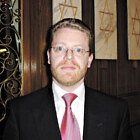
• Alex Chapper is senior rabbi of Borehamwood & Elstree Synagogue. Error 404 by Richard Ferrer is available to buy HERE and on Audible next month

Keep community journalism free.
Jewish News is free for everyone. No paywall. No barriers. Just trusted journalism for anyone who wants to stay connected to Jewish life in Britain.
If you value that, please support us.
From as little as £5 a month, you can help keep our journalism free and accessible to all.
Every day, we report on the issues that matter to our community. We celebrate achievements, support charities, challenge antisemitism and ensure Jewish voices are heard more widely.
From as little as £5 a month, you can help us continue to:
- Report on the stories shaping Jewish life in the UK and beyond
- Bring our community together through shared stories, events and campaigns
- Celebrate the people, culture and moments that define our community
- Support organisations doing vital work across Jewish Britain
You can make a one-off donation or become a regular supporter. Every contribution helps keep our journalism free, independent and accessible to all.
If everyone who values Jewish News gave a small amount, it would make a real difference to our future.