Prefer Jewish News on Google
Keir Starmer presses ahead with his UK plan to revive two-state solution
Diplomats from the UK, France and Germany reportedly frustrated by the Trump's failure to engage with peace plans

Downing Street has said Keir Starmer is continuing to push the UK’s peace plan aimed at reviving the prospect of a two-state solution for Israelis and Palestinians to world leaders as part of his determination to see a Gaza ceasefire and the hostages released.
The eight-point plan, developed by Starmer’s national security officer Jonathan Powell, was criticised both by Israeli prime minister Benjamin Netanyahu and by the main UK communal groups over its proposal for recognition of Palestinian statehood in September, without demanding Hamas release the remaining hostages held in Gaza as a condition.
No.10 said the PM had continued to discuss the plan with allies across Europe, and also with Turkey’s President Recep Erdoğan and also with theAmir of Qatar Sheikh Tamim bin Hamad Al Thani.
But diplomats in the UK, France and Germany have reportedly been left “frustrated” by US President Donald Trump’s failure to engage with a plan aimed at reviving efforts toward a two-state solution.
Despite asking several times, the New York Times reports that French officials were unable to determine whether the United States still supported a two-state, Israeli-Palestinian peace.



Starmer is also well aware of the overwhelming opposition of the main communal organisations to this part of the plan.
But he is understood to have also received supportive messages from within the community in this country, and also significantly from Israeli legal, political and human rights activists.
Israel’s announcement of further expansion of settlements in the West Bank on July 18th, and a widespread outcry at photographs of sick and thin children in Gaza the following day were key factors in influencing the UK government’s decision to announce its plan for peace which included Palestinian recognition.
Two senior official told the New York Times these developments represented a “one-two punch” as anger at Starmer grew over his apparent failure to influence the deteriorating situation in the region.
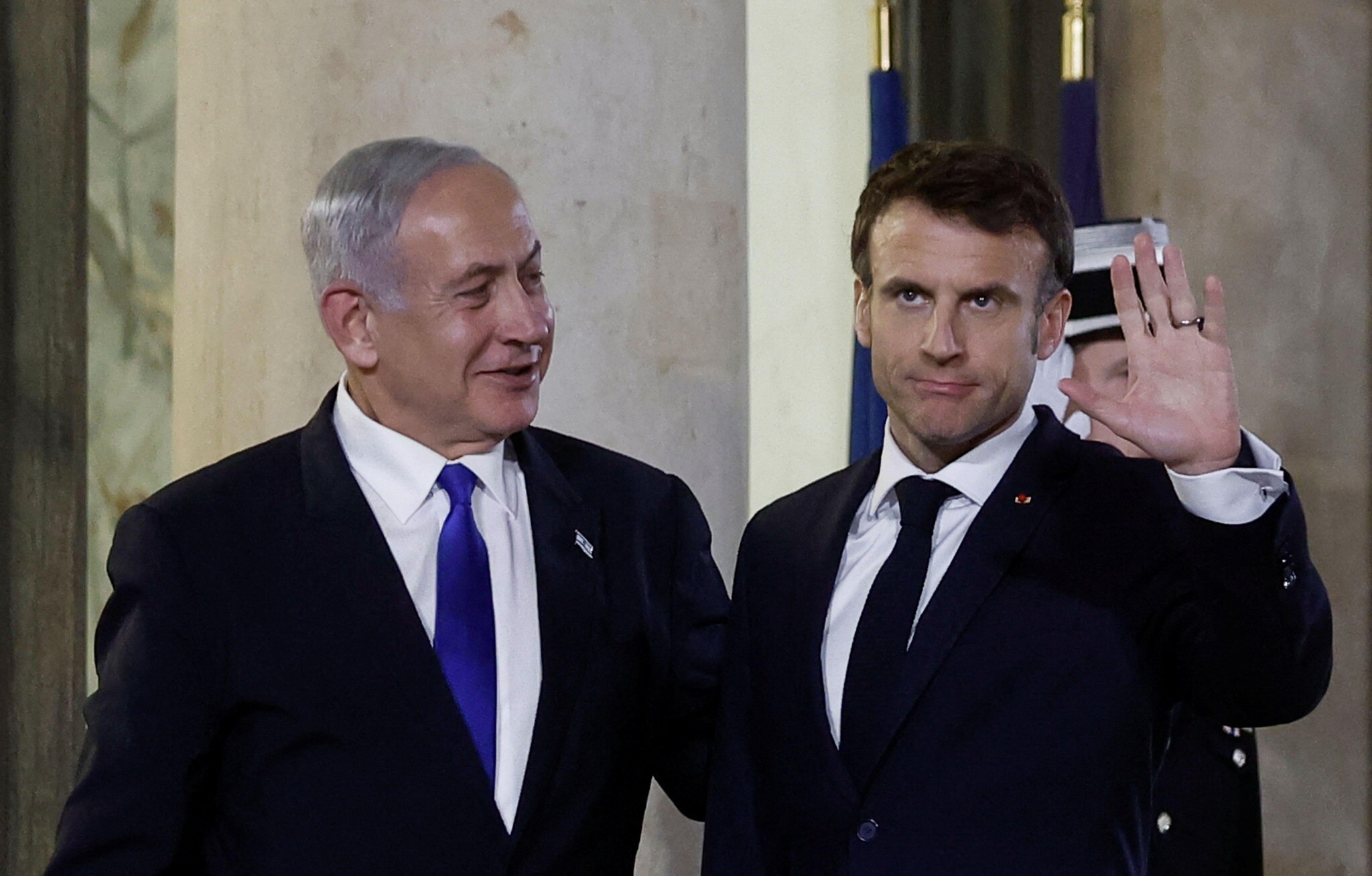
But days later President Macron’s annoucement on recognition reportedly took the UK by surprise as it had not been flagged in advance. But it came as French diplomats decided the could not persuade President Trump to make any move to halt Israel’s military action in Gaza.
The UK then moved to announce its own recognition proposal, followed later by the other E3 nation member Germany.
As the Prime Minister wrote in an op-ed for Jewish News, he has also been encouraged by the response of diplomatic efforts that saw several Arab states back his call for Hamas to disband, and also support a two-state solution for Israel and Palestine.
In talks with Arab leaders the PM referenced the road map outlined in Powell’s document, including the disarmament of Hamas and, according to the New York Times the creation of a potential U.N.-led force to keep the peace after the war ended.
“Hamas must end its rule in Gaza and hand over its weapons to the Palestinian Authority, with international engagement and support,” a statement signed by the Arab League said.
Starmer has also continued to repeat his message to Jewish News readers, insisting he is “really clear on my position on Hamas.”
“They are a terrorist organisation,” he stressed. “They should release the hostages straight away and they should play absolutely no part in the governance of Palestine at any point – this is a really important point because this is nothing to do with recognition. ”
But despite working closely with France, Germany and other allies on attempting to gain momentum for the peace plan, there is a realisation that only America can put the sort of pressure on Netanyahu that would see him engage with anything resembling a plan for peace, that involved a two-state solution.
The Israeli PM has now committed to a plan to “take control” of Gaza City insisting it was the “best way” to end the war, seemingly without any objection from the United States.

Visiting the UK last week US Vice-President JD Vance also said his country “have no plans to recognise a Palestinian state.”
“I don’t know what it would mean to really recognise a Palestinian state – given the lack of a functional government there,” he added, while accepting “the United Kingdom is going to make its decision.”
Australia became the latest member of the G20 after France, the UK and Canada to declare it will recognise a Palestinian state if certain conditions are met earlier this week.
But with Israel and Hamas showing no sign of accepting any of the conditions or demands placed on them as part of the UK’s peace plan, the most likely scenario seems the recognition of a Palestinian state by the UK as a symbolic move that does little to change the situation on the ground.

Keep community journalism free.
Jewish News is free for everyone. No paywall. No barriers. Just trusted journalism for anyone who wants to stay connected to Jewish life in Britain.
If you value that, please support us.
From as little as £5 a month, you can help keep our journalism free and accessible to all.
Every day, we report on the issues that matter to our community. We celebrate achievements, support charities, challenge antisemitism and ensure Jewish voices are heard more widely.
From as little as £5 a month, you can help us continue to:
- Report on the stories shaping Jewish life in the UK and beyond
- Bring our community together through shared stories, events and campaigns
- Celebrate the people, culture and moments that define our community
- Support organisations doing vital work across Jewish Britain
You can make a one-off donation or become a regular supporter. Every contribution helps keep our journalism free, independent and accessible to all.
If everyone who values Jewish News gave a small amount, it would make a real difference to our future.