Prefer Jewish News on Google
Leading philanthropist reveals she has withdrawn funding from human rights groups over antisemitic rhetoric
Sigrid Rausing says her trust had to cut grants to organisations that mixed calls for social justice with apologies for October 7
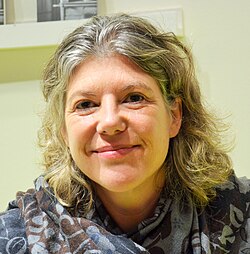
One of the country’s biggest philanthropists has revealed she withdrew funding from organisations that appeared to justify the October 7 Hamas attacks in Israel.
The Sigrid Rausing Trust, led by philanthropist Sigrid Rausing, announced that it has cut grants to several human rights groups after reviewing public statements made in the aftermath of the attacks.
“We have strong clauses in our grant contract requiring grantees to abstain from incendiary language that may promote violence,” Rausing said, referencing Charity Commission guidance in an article published by The Times.
According to the Trust, five out of approximately 400 grantee organisations posted what it described as “disturbing material.”
One group in Tunisia expressed “pride” in the Hamas action.


Another called for “support for the guerrilla Palestinian people in their war against the Zionist entity,” stating that Israel “was shaken due to the action of the Palestinian resistance…invading the occupied lands and Zionist settlements.”
A Lebanese media group characterised the Hamas attacks as “resistance” to “colonisation,” referred to murdered civilians as “settlers,” and dismissed Israeli reports of atrocities as “lies.”
A Canadian group, also funded by the Trust, labeled Israel’s actions “genocidal” and described the country as a “settler colonialist white-supremacist state.”
The Trust said that, in context, this language appeared to condone the attacks.
Rausing commented, “Atrocities against civilians are obviously contrary to human rights and international humanitarian law, and we cancelled our contracts with the groups in question.
“It wasn’t a hard decision to make, but it drew criticism from activists in the US who seemed to have wilfully misunderstood what we did and why.”
The decision has sparked criticism from some activists.
Philanthropy critic Vu Le wrote on LinkedIn: “Defunding organisations that are speaking up against gen@cide is the worst of all crappy funding practices. I hope The Sigrid Rausing Trust will find its moral compass and courage to stand with grantees who are speaking for Palestinians’ human rights and liberation.”
Another women’s rights activist said the Trust seemed to have become “a funding organisation that is actually unclear about what it means to stand up for human rights.”
The episode has raised broader questions about the direction of the human rights field.
Observers note increased entanglement between traditional advocacy and anti-Zionist rhetoric.
Rausing reflected, “How did the field become entangled with the sort of anti-Zionism we see playing out on certain university campus protests or in hard-left factions in politics?”
In the early 1990s, human rights organisations were “informed primarily by law and by evolving methods of collecting and recording evidence and testimony,” Rausing recalled, emphasizing impartiality.
After September 11, the “war on terror” saw human rights lawyers defending the due process rights of terror suspects.
“Some of the detainees were innocent while others were clearly not, but for human rights lawyers the point was more to do with defending the principles of due legal process and a ban on torture than it was defending the innocent,” she said.
In 2014, President Obama “blandly admitted that ‘we tortured some folks,’ and nothing much was said about CIA transgressions after that.”
Some analysts argue that the human rights community’s advocacy for terror suspects, while essential for upholding legal standards, may have inadvertently contributed to a narrative that blends the language of social justice with apologies for terrorism and anti-Zionist slogans.
Political attitudes have also shifted.
“The right has rejected the human rights movement, associating it with judicial over-reach and global-elite media control, and parts of the left have appropriated it, without fully signing up to all its principles, not least that of political impartiality,” Rausing wrote.
She further criticised the current media landscape, adding: “The BBC version of impartiality, placing broadcasters in the artificial centre of every argument with reference only to vague ideas of ‘British values’, has degraded the very idea of impartiality.”
Terms such as “settler colonialist white-supremacist state” or “Zionist entity” were described by Rausing as “slogans, a form of propaganda,” which she compared to the “meaningless” language of late Soviet Union politics.
The debate, she noted, highlights the power and pitfalls of political language within the human rights sector.
Rausing, a Swedish philanthropist, anthropologist and publisher married South African-born TV, film and theatre producer Eric Abraham in 2003.
In February 2013, Rausing was judged to be one of the 100 most powerful women in the United Kingdom by Woman’s Hour on BBC Radio 4, and she is an Honorary Fellow of the London School of Economics.
Rausing set up the charitable trust the Sea Foundation in 1988. In 1996, she transferred the funds to the Ruben and Elisabeth Rausing Trust, named after her grandparents; the trust was renamed the Sigrid Rausing Trust in 2003, and by 2014 had distributed approximately £208.3 million to human rights organisations globally.

Keep community journalism free.
Jewish News is free for everyone. No paywall. No barriers. Just trusted journalism for anyone who wants to stay connected to Jewish life in Britain.
If you value that, please support us.
From as little as £5 a month, you can help keep our journalism free and accessible to all.
Every day, we report on the issues that matter to our community. We celebrate achievements, support charities, challenge antisemitism and ensure Jewish voices are heard more widely.
From as little as £5 a month, you can help us continue to:
- Report on the stories shaping Jewish life in the UK and beyond
- Bring our community together through shared stories, events and campaigns
- Celebrate the people, culture and moments that define our community
- Support organisations doing vital work across Jewish Britain
You can make a one-off donation or become a regular supporter. Every contribution helps keep our journalism free, independent and accessible to all.
If everyone who values Jewish News gave a small amount, it would make a real difference to our future.