Prefer Jewish News on Google
Leap of faith: The age of division
Our task is to be agents of posititve encounter
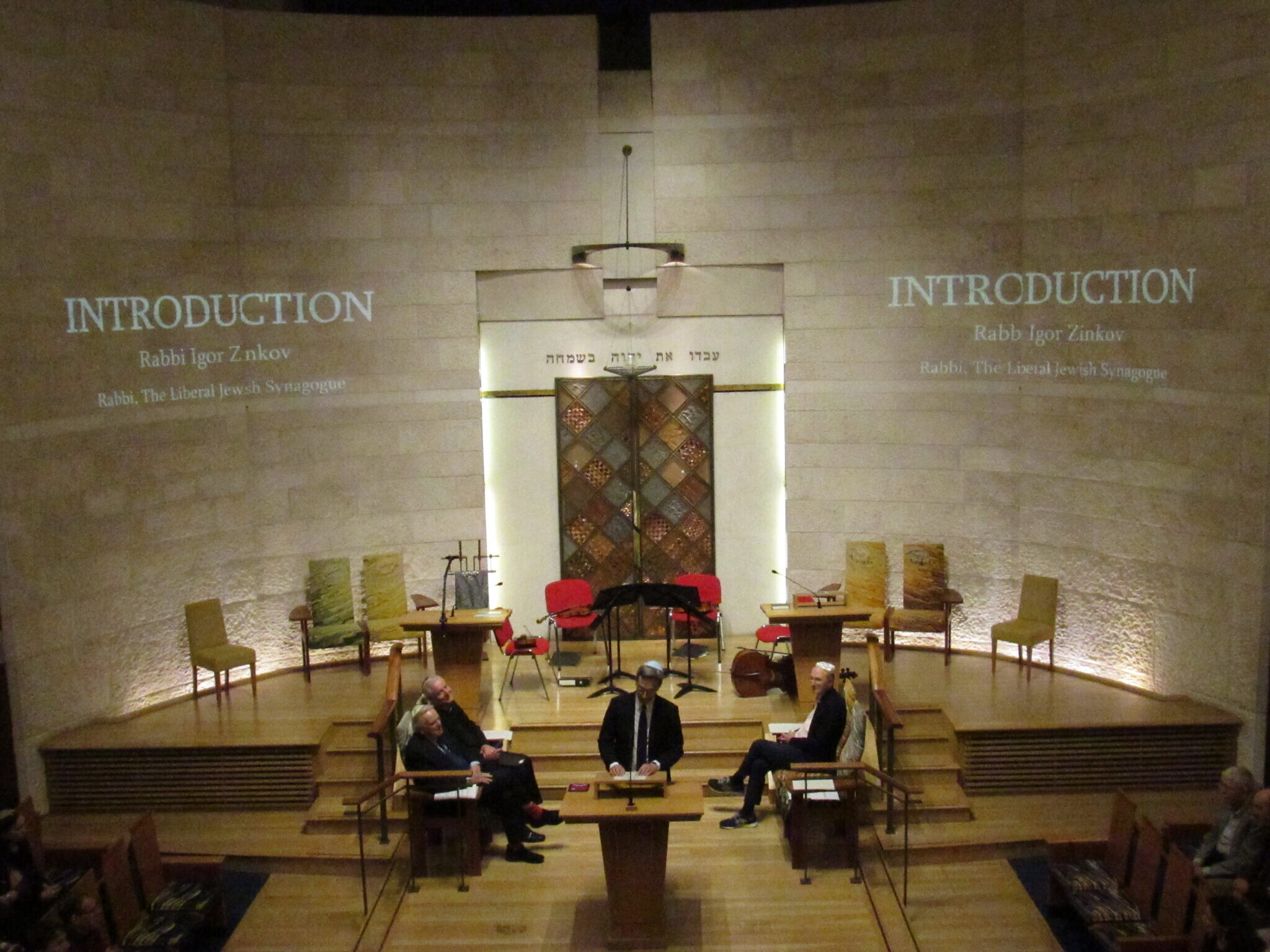
Last week we dedicated the main foyer of The Liberal Jewish Synagogue (LJS) to the memory of Rabbi Dr David Goldberg, the late Emeritus Rabbi of the LJS, who served the synagogue for nearly 30 years.
In preparation for the event, I re-read his sermons. In one, delivered on Saturday 26 November 2000, he reflected the meeting between Abraham and the Hittites, connecting it to a modern theory of civilisational conflict.
Rabbi Goldberg cited Samuel P Huntington, a Harvard scholar, who argued that in the post-Cold War era, cultural differences, rather than ideology or economics, would be the primary source of conflict globally. He identified several major civilisations, notably noting the rising influence of Islamic and Confucian civilisations and the decline of Western civilisation.
Huntington suggested that as civilisations interact more, they will clash over differences in language, religion, values and social structures.
Reflecting on this theory, Rabbi Goldberg said: “We don’t have to agree with Huntington’s thesis. Indeed, we can robustly refute it. Nevertheless, when the religion, language, customs, literature, institutions and claimed territorial home of one civilisation come into direct conflict with the same accoutrements of another civilisation, what follows is the situation that we have in the Balkans, in Kashmir, and least soluble of all for the last hundred years, in the Middle East.
“We must continue to put our faith in negotiation, not war, and to press for compromise on both sides… If only, we might sigh, the positive experience of Abraham with the Hittites 4,000 years ago could be duplicated in our own time.”
Rabbi Goldberg’s words feel as urgent now as when he wrote them. Many forces in our world use our differences to divide us. Some forces present our world as a clash of civilisations. We don’t have to agree with this worldview.
In that ancient meeting between Abraham and Hittites, each side recognises the humanity of the other. They speak with courtesy, they listen, and they reach an agreement. Their encounter is marked not by suspicion or dominance, but by mutual respect.
In our own fractured world, where cultural, political and religious differences are often weaponised, the vision of respectful co-existence remains relevant. Encounters of civilisations need not mean collision, division and conflict.
The ‘fault lines’ and tensions on the world map may still run across our world. Still, Rabbi Goldberg’s sermon offers another kind of map: one that creates the possibility of meeting, understanding, and shared dignity. It is a map that points us not toward the clash, but toward the conversation, the space where we can still recognise one another as b’tzelem Elohim, made in the image of God.
As Rabbi Goldberg put it, if only the positive experience of Abraham with the Hittites could be duplicated in our own time. Perhaps the task of all liberal, progressive and open-minded Jews in the Age of Division is to do exactly that – to be agents and examples of positive encounter with others.
Rabbi Igor Zinkov is at The Liberal Jewish Synagogue

Keep community journalism free.
Jewish News is free for everyone. No paywall. No barriers. Just trusted journalism for anyone who wants to stay connected to Jewish life in Britain.
If you value that, please support us.
From as little as £5 a month, you can help keep our journalism free and accessible to all.
Every day, we report on the issues that matter to our community. We celebrate achievements, support charities, challenge antisemitism and ensure Jewish voices are heard more widely.
From as little as £5 a month, you can help us continue to:
- Report on the stories shaping Jewish life in the UK and beyond
- Bring our community together through shared stories, events and campaigns
- Celebrate the people, culture and moments that define our community
- Support organisations doing vital work across Jewish Britain
You can make a one-off donation or become a regular supporter. Every contribution helps keep our journalism free, independent and accessible to all.
If everyone who values Jewish News gave a small amount, it would make a real difference to our future.