Prefer Jewish News on Google
Legal constraints likely to prevent deportation of Egyptian ‘extremist’ who called for Zionist killings
No.10 rejects claims Keir Starmer has lost trust of UK Jews after his handling of the issue
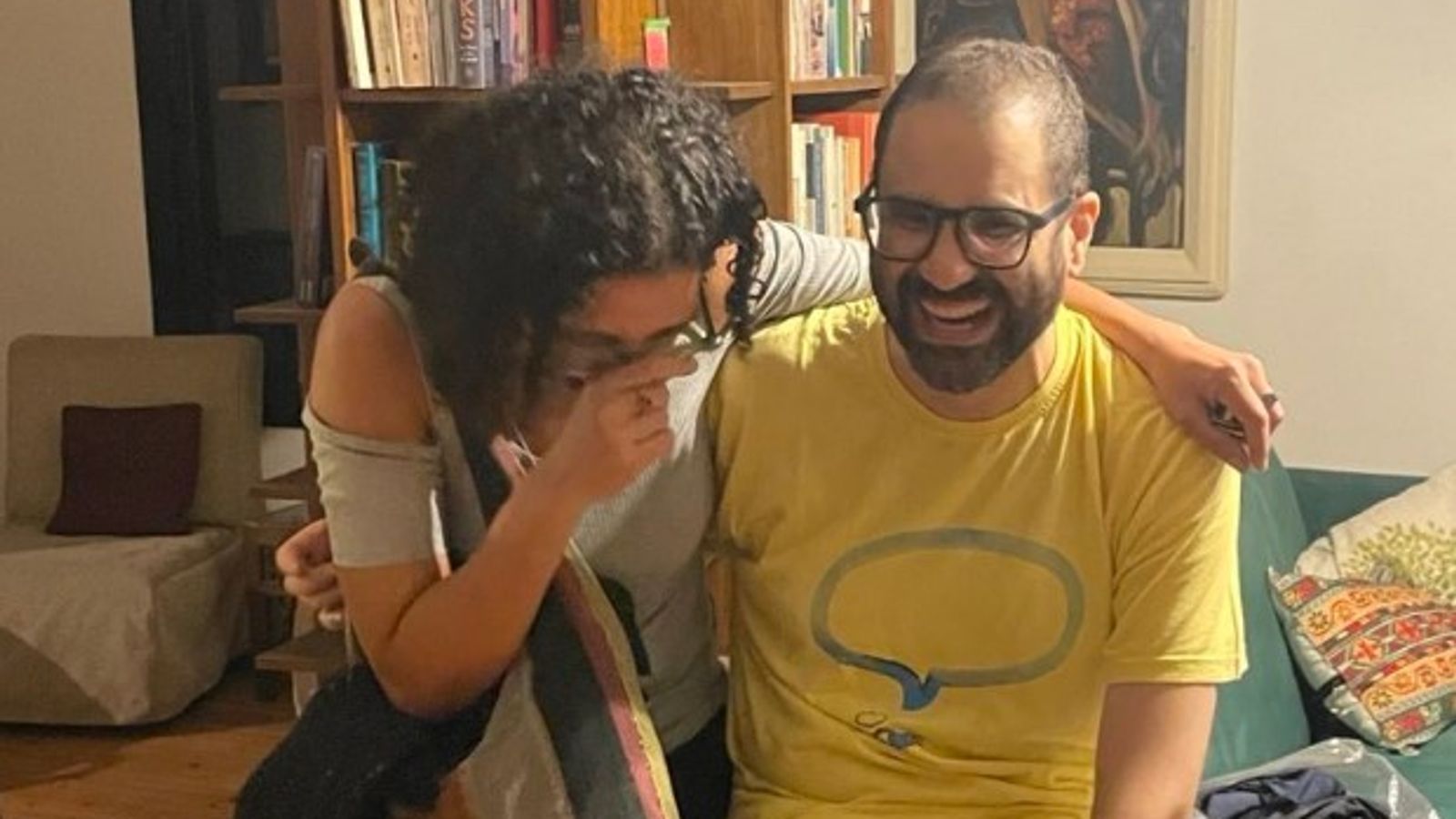
Egyptian activist Alaa Abd el-Fattah is unlikely to face deportation from the UK, despite historic social media posts supporting violence against Zionists and derogatory remarks about British people.
Jewish News understands government officials believe that his actions do not meet the legal threshold required for revoking citizenship or initiating deportation proceedings.
Officials within the Government appear to believe there are no grounds for removing Fattah’s citizenship, as case law has established this can only be done in cases of fraud, or against dangerous criminals and terrorists.
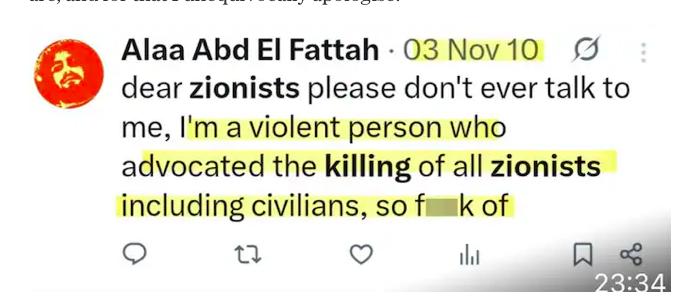
But Jewish News understands the Foreign Office is looking into issues raised by the handling of the case, which are believed to include the failure by civil servants to pick up on numerous inflammatory historic social media posts made by Fattah since 2010, including support for the killing of Zionists, and of police.
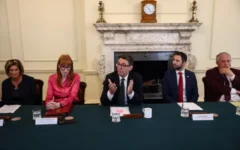
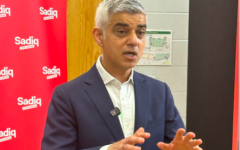
Downing Street also rejected claims that Keir Starmer had lost the trust of British Jews over his handling of the issue, following criticism from the Board of Deputies and Jewish Leadership Council.
A No.10 spokesperson said the PM had publicaly condemned Fattah’s tweets and continues to engage closely with the Jewish community over “a range of measures to tackle the scourge of antisemitism in society.”
“There are strong channels of communication with the Jewish community at various levels across government,” added the spokesperson.
Apologising for the posts in a statement on Monday, the Egyptian, who flew to the UK last Friday after his release from prison in Egypt last September, he said:”They were mostly expressions of a young man’s anger and frustrations in a time of regional crises (the wars on Iraq, on Lebanon and Gaza), and the rise of police brutality against Egyptian youth.
“I particularly regret some that were written as part of online insult battles, with the total disregard for how they read to other people. I should have known better.”
Conservative and Reform UK have both called for Home Secretary Shabana Mahmood to initiate the process to strip him of his citizenship in the aftermath of a furious response from Jewish organisations and other bodies to the multitude of social media posts made by Fattah ahead of his arrival in the UK.
But under the terms of the British Nationality Act, individuals born abroad before January 1st 1983 to a British mother have the right to apply for citizenship.
Following the case of Johnson v Secretary of State for the Home Department, removing someone’s UK citizenship can only be used against someone who has obtained it through fraud, or against dangerous individuals such as terrorists, extremists, and serious criminals.
In the case of Fattah, citizenship was granted in 2021, and it is understood there are no grounds to reject an application on character requirements as a result of the 2016 case, and a Supreme Court ruling.
On Monday, Downing Street defended Fattah’s entry into the UK, saying the Government would welcome the return of any citizen “unfairly detained abroad”.
The Prime Minister’s official spokesman defended the Government’s approach in the case, telling reporters: “We welcome the return of a British citizen unfairly detained abroad, as we would in all cases and as we have done in the past.”
He continued: “That is central to Britain’s commitment to religious and political freedom.
“That said, it doesn’t change the fact that we have condemned the nature of these historic tweets, and we consider them to be abhorrent, and we’ve been very clear about that.”
Fattah’s decision to apologise was “the right thing to do”, Downing Street has said.
The Prime Minister’s official spokesman described his apology as “fairly fulsome”.
He continued: “That’s clearly the right thing to do.”
He said No 10 felt the activist’s past posts on Twitter, now known as X, were “abhorrent in nature”.
A Foreign Office spokesman said: “Mr Fattah is a British citizen. It has been a long-standing priority under successive governments to work for his release from detention and to see him reunited with his family in the UK.
“The Government condemns Mr Fattah’s historic tweets and considers them to be abhorrent.”

Keep community journalism free.
Jewish News is free for everyone. No paywall. No barriers. Just trusted journalism for anyone who wants to stay connected to Jewish life in Britain.
If you value that, please support us.
From as little as £5 a month, you can help keep our journalism free and accessible to all.
Every day, we report on the issues that matter to our community. We celebrate achievements, support charities, challenge antisemitism and ensure Jewish voices are heard more widely.
From as little as £5 a month, you can help us continue to:
- Report on the stories shaping Jewish life in the UK and beyond
- Bring our community together through shared stories, events and campaigns
- Celebrate the people, culture and moments that define our community
- Support organisations doing vital work across Jewish Britain
You can make a one-off donation or become a regular supporter. Every contribution helps keep our journalism free, independent and accessible to all.
If everyone who values Jewish News gave a small amount, it would make a real difference to our future.