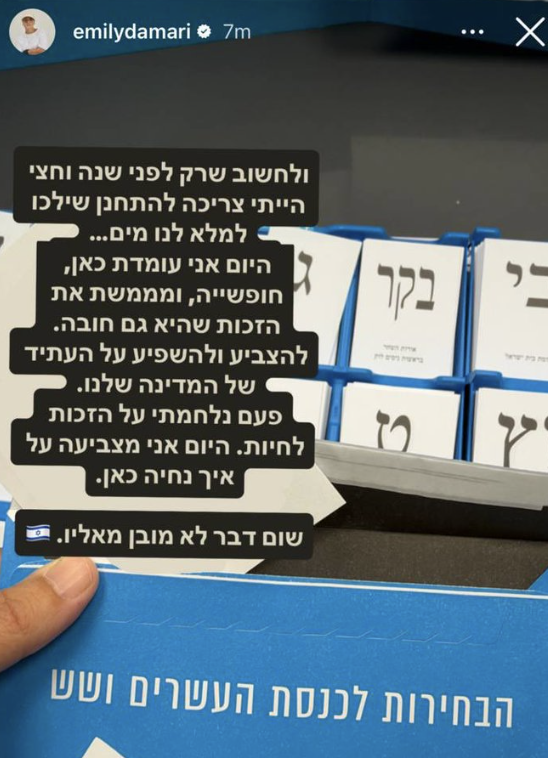
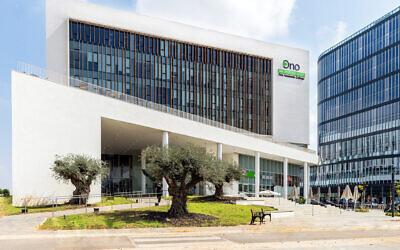
British-Israeli former Hamas hostage Emily Damari has cast her ballot in Israel’s general election, reflecting on the contrast between her time in captivity and her freedom today.
“Just think that just a year and-a-half ago I had to beg for water… Today I am free, and exercising my right to vote, which is also my duty,” she wrote on Instagram.
“To vote and influence the future of our country. I used to fight for the right to live, today I’m voting for how we live. Nothing should be taken for granted ????????”
Voter turnout across Israel’s major cities ranged from 46 percent in Haifa to 51 percent in Rishon LeZion, according to figures shared by Israeli journalist Amit Segal at 3.27pm.
Turnout stood at 50 percent in Tel Aviv, 48 percent in Jerusalem and 47 percent in Be’er Sheva.
Among cities traditionally associated with Netanyahu’s Likud party, Afula recorded 51 percent turnout, Ashkelon 49 percent and Tiberias 47 per cent.
Bat Yam had the lowest turnout among the cities listed, at 40 percent.
One of the more intriguing newcomers to Israel’s election is The Haredi Public, a new ultra-Orthodox party challenging the decades-long political dominance of Shas and United Torah Judaism.
Led by Moti Leitner, deputy mayor of Beit Shemesh, the party is breaking with the traditional Haredi establishment on several key issues. While advocating continued exemptions from military service for full-time yeshiva students, it supports IDF enlistment for ultra-Orthodox men who are not studying, the introduction of core subjects such as English and mathematics into Haredi schools, and greater participation in the workforce.
In a historic first for Israeli ultra-Orthodox politics, the party has included women on its Knesset list. Dr Nechumi Yaffe, a political psychology researcher at Tel Aviv University and visiting scholar at Harvard Business School, is ranked third, while Ziva Glantz holds fourth place.
Yaffe, a former adviser on Haredi affairs to Israel’s National Security Council who helped mobilise ultra-Orthodox volunteers following the 7 October attacks, has revealed that she was forced to move house after receiving threatening messages over her political activities. She told Israel’s Channel 12 that she no longer discloses her address, fearing further intimidation.
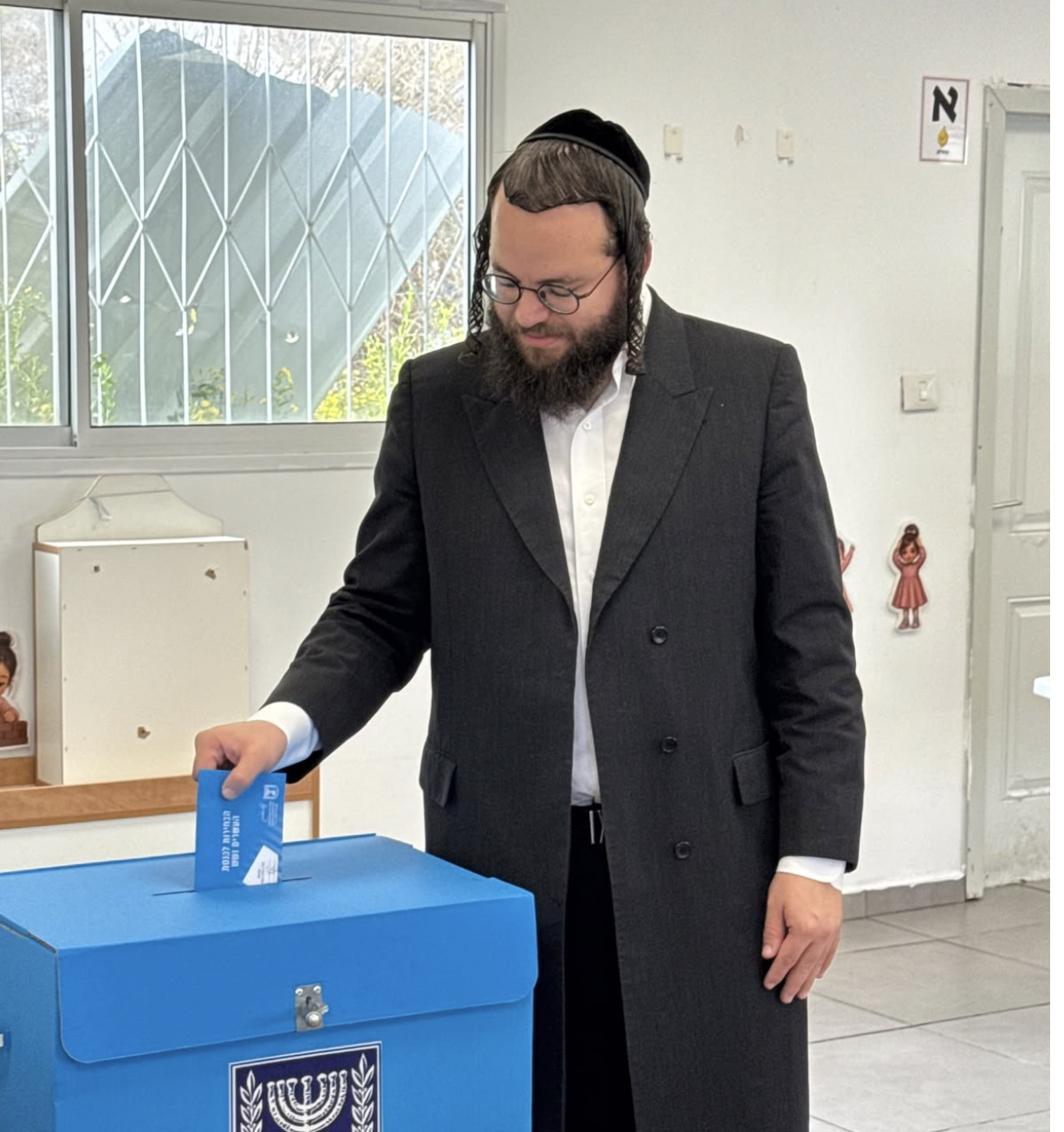
Moti Leitner, leader of the Charedi Public party, casts his ballot during Israel’s general election on 27 October 2026.
Other party supporters have also reported threats and bullying, including alleged threats of dismissal from their jobs and the expulsion of their children from ultra-Orthodox schools.
The intimidation allegations have continued into election day, with party activists reporting that campaign stalls were vandalised outside polling stations in several ultra-Orthodox cities, including Bnei Brak and Beit Shemesh.
Despite mounting pressure from Prime Minister Benjamin Netanyahu, who reportedly attempted to persuade Leitner to withdraw over concerns that his party could draw votes away from his political allies, Leitner has refused to abandon the race.
Although opinion polls have consistently placed The Haredi Public below the 3.25 percent electoral threshold, Leitner insists his party could deliver an election-night surprise. He argues that many potential supporters are reluctant to reveal their voting intentions for fear of social repercussions, creating a pool of so-called “shy voters” that traditional polls may be missing.
Whether those voters materialise at the ballot box remains to be seen. But the party’s emergence has already challenged some long-standing conventions of Israeli ultra-Orthodox politics.
Prime Minister Benjamin Netanyahu’s Likud party and its ultra-Orthodox coalition partner Shas have asked Israel’s Central Elections Committee to extend voting hours beyond 10pm.
Likud did not give a reason for its request, while Shas cited record voter turnout and concerns that people waiting in queues could miss out on voting.
However, election officials have already confirmed that anyone still queuing at 10pm will be allowed to cast their ballot.
The town of Timorim in central Israel has recorded the country’s highest voter turnout so far, with 91.6 percent of eligible residents casting their ballots by 4pm.
According to the Central Elections Committee, several other small communities have also reported turnout above 75 percent.
Among larger cities, turnout reached 60.7 percent in Modiin, 60.3 per cent in Rosh Haayin and 60.6 per cent in the Bedouin city of Rahat.
Ra’am leader Mansour Abbas has accused Prime Minister Benjamin Netanyahu of spreading false claims about election fraud to encourage right-wing supporters to vote.
“Benjamin Netanyahu is lying and inciting against Ra’am, using it as a scare tactic to mobilize right-wing voters and drive them to the polls,” Abbas said in a video message.
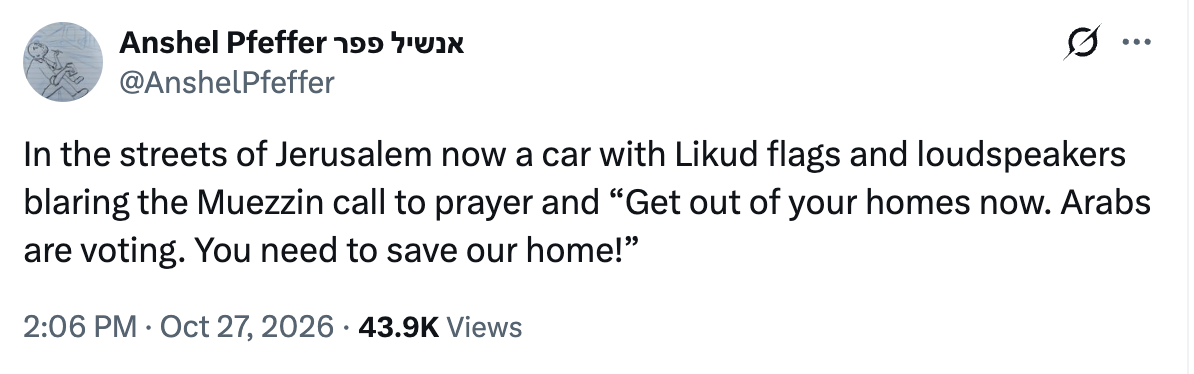
His comments follow Netanyahu’s claims that Arab voters were “trying to steal the election” as turnout continues to rise across Israel.
Voter turnout in Israel’s general election reached 55.7 percent by 4pm, the highest ever recorded at that hour, according to the Central Elections Committee.
The figure is up from 47.5 percent at the same point in the 2022 election, an increase of 8.2 percentage points.
It marks the highest turnout at 4pm since hourly records began in 1973, with polling stations remaining open until 10pm.
The Israeli shekel has risen more than 1.2 per cent against the US dollar, reaching its strongest level in three weeks as voting continues in Israel’s general election.
The currency was trading at 3.0419 shekels to the dollar, its highest level since 6 October, according to The Times of Israel.
The rise comes amid record voter turnout, with millions of Israelis casting their ballots throughout the day.
Support Jewish News. Keep community journalism free.
Jewish News is free for everyone. No paywall. No barriers. Just trusted journalism for anyone who wants to stay connected to Jewish life in Britain.
If you value that, please support us.
From as little as £5 a month, you can help keep our journalism free and accessible to all.
Every day, we report on the issues that matter to our community. We celebrate achievements, support charities, challenge antisemitism and ensure Jewish voices are heard more widely.
From as little as £5 a month, you can help us continue to:
Report on the stories shaping Jewish life in the UK and beyond
Bring our community together through shared stories, events and campaigns
Celebrate the people, culture and moments that define our community
Support organisations doing vital work across Jewish Britain
You can make a one-off donation or become a regular supporter. Every contribution helps keep our journalism free, independent and accessible to all.
If everyone who values Jewish News gave a small amount, it would make a real difference to our future.
One of the more intriguing newcomers to Israel’s election is The Haredi Public, a new ultra-Orthodox party challenging the decades-long political dominance of Shas and United Torah Judaism.
Led by Moti Leitner, deputy mayor of Beit Shemesh, the party is breaking with the traditional Haredi establishment on several key issues. While advocating continued exemptions from military service for full-time yeshiva students, it supports IDF enlistment for ultra-Orthodox men who are not studying, the introduction of core subjects such as English and mathematics into Haredi schools, and greater participation in the workforce.
In a historic first for Israeli ultra-Orthodox politics, the party has included women on its Knesset list. Dr Nechumi Yaffe, a political psychology researcher at Tel Aviv University and visiting scholar at Harvard Business School, is ranked third, while Ziva Glantz holds fourth place.
Yaffe, a former adviser on Haredi affairs to Israel’s National Security Council who helped mobilise ultra-Orthodox volunteers following the 7 October attacks, has revealed that she was forced to move house after receiving threatening messages over her political activities. She told Israel’s Channel 12 that she no longer discloses her address, fearing further intimidation.
Moti Leitner, leader of the Charedi Public party, casts his ballot during Israel’s general election on 27 October 2026.
Other party supporters have also reported threats and bullying, including alleged threats of dismissal from their jobs and the expulsion of their children from ultra-Orthodox schools.
The intimidation allegations have continued into election day, with party activists reporting that campaign stalls were vandalised outside polling stations in several ultra-Orthodox cities, including Bnei Brak and Beit Shemesh.
Despite mounting pressure from Prime Minister Benjamin Netanyahu, who reportedly attempted to persuade Leitner to withdraw over concerns that his party could draw votes away from his political allies, Leitner has refused to abandon the race.
Although opinion polls have consistently placed The Haredi Public below the 3.25 percent electoral threshold, Leitner insists his party could deliver an election-night surprise. He argues that many potential supporters are reluctant to reveal their voting intentions for fear of social repercussions, creating a pool of so-called “shy voters” that traditional polls may be missing.
Whether those voters materialise at the ballot box remains to be seen. But the party’s emergence has already challenged some long-standing conventions of Israeli ultra-Orthodox politics.

 Prefer Jewish News on Google