For a full round-up of the results so far, the latest developments and what happens next, read our election summary
Israel’s Central Elections Committee has confirmed it is reviewing allegations of voter fraud made by Benjamin Netanyahu’s Likud party following Tuesday’s election.
Likud claimed the vote had been “stolen” by Arab parties and called for an investigation into alleged bribery, threats and other irregularities.
The committee said it had received Likud’s complaint and was examining it as part of its normal election checks, which also cover complaints from other parties.
The review does not mean that any fraud has been established.
Arab parties are currently projected to win a record 19 seats, leaving them in a potentially important position in talks over Israel’s next government.
Benjamin Netanyahu’s Likud party has accused Arab parties of stealing Israel’s election through alleged voter fraud and intimidation.
The party has demanded an investigation by police and Israel’s Shin Bet security agency, claiming to have evidence of bribery, threats and double voting.
Arab parties are projected to win a record 19 seats in the Knesset, leaving neither Netanyahu’s bloc nor the Jewish-led opposition with enough seats to form a government on their own.
However, an official from Israel’s Central Elections Committee dismissed claims of election fraud in an interview with Channel 12 earlier on Wednesday.
Balad leader Sami Abou Shahadeh has accused Israeli opposition parties of racism for refusing to form a government with Arab parties following Tuesday’s election.
Speaking to Qatari broadcaster Al-Araby Al-Jadeed, he argued that Benjamin Netanyahu would have lost power if Jewish-led opposition parties were willing to work with Arab politicians.
“If we lived in a normal, democratic, non-racist country, Netanyahu would have lost the election,” he said.
Netanyahu’s bloc is currently projected to win 53 seats, while Jewish-led opposition parties have 48 and Arab parties 19, giving Netanyahu’s opponents a combined 67 seats.
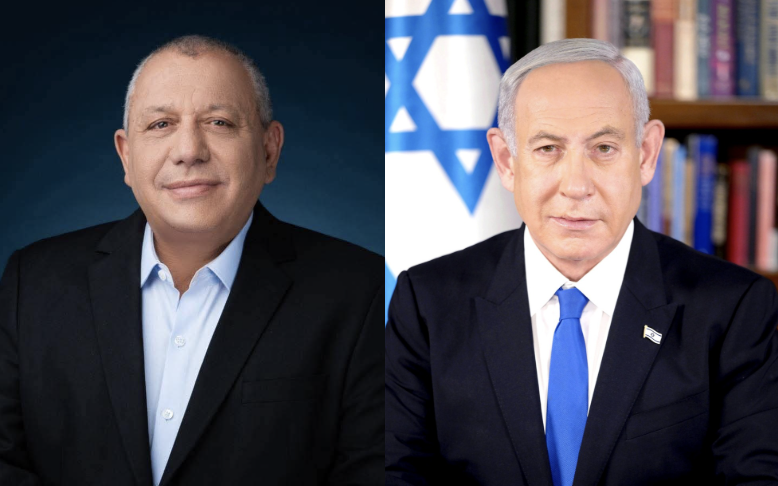
However, Gadi Eisenkot and several other opposition leaders have ruled out forming a coalition with Arab parties.
Abou Shahadeh, who was barred from standing in the election, accused Eisenkot of preventing a change of government because of his refusal to work with them.
Israeli Defence Minister Israel Katz has accused opposition leader Gadi Eisenkot of making an “undemocratic” statement after he urged security chiefs to resist political pressure from Benjamin Netanyahu.
In his election night speech, Eisenkot, a former army chief, warned military leaders against allowing Netanyahu to use Israel’s security for political purposes.
“Remember that you serve the state and the interests of Israel’s citizens alone. Stand firm against any attempt to pressure you,” he said.
Katz responded on X, calling the remarks “an undemocratic and detached statement” and accusing Eisenkot of spreading false claims about disagreements between political and military leaders over Iran.
The row follows reports that Israel’s military chief had opposed a possible attack on Iran ahead of Tuesday’s election.
Katz insisted that the military was fully involved in security discussions and would carry out any necessary decisions.
Up to 480,000 votes cast by soldiers, police officers, diplomats and others have yet to be counted in Israel’s election, with the outstanding ballots potentially affecting the final distribution of around 12 Knesset seats.
Israel’s Central Elections Committee said between 430,000 and 480,000 votes were cast using special “double envelopes”, fewer than the 600,000 previously reported.
These votes are counted separately to ensure nobody has voted twice.
The full vote count is expected to be released on Thursday afternoon, with the final official results due on 4 November.
The outstanding ballots could be particularly important as neither Benjamin Netanyahu’s bloc, currently on 53 seats, nor Gadi Eisenkot’s bloc, on 48, has secured the 61 seats needed for a parliamentary majority.
The European Union has congratulated Israelis following Tuesday’s election, praising the country’s high voter turnout as a sign of its “vibrant democracy”.
Nearly 78 percent of eligible voters took part in the election, which has left uncertainty over who will form the next government.
In a statement, an EU spokesperson said Brussels looked forward to working with Israel’s next government and maintaining “frank and open dialogue” to strengthen cooperation and address disagreements.
The positive remarks come after years of strained relations between Israel and the EU over the war in Gaza and Israeli policies in the West Bank.
The EU also expressed hope for progress towards regional stability, security and a “just and lasting peace”.
Israeli President Isaac Herzog has called on political parties to work together to avoid another election, after Tuesday’s vote left no clear path to forming a government.
“We must do everything we can, certainly after yesterday, to avoid another round of elections. So I expect everyone who comes here to come with an open mind,” Herzog said at the President’s Residence in Jerusalem.
He said he expects to receive the official election results next week, after which he will begin talks with each party about forming a new government.
Herzog also praised the high voter turnout, calling it a “badge of honour for Israeli society” and saying it reflected Israelis’ commitment to democracy.
Prime Minister Benjamin Netanyahu’s bloc has fallen to 53 seats as the latest election results show Arab parties rising to a record 19 seats.
According to Israel’s Central Elections Committee, Gadi Eisenkot’s bloc now stands at 48 seats, down from 49 in the previous update.
The Arab parties have gained two seats, rising from 17 to 19, while Netanyahu’s bloc has lost one.
Around 93 percent of ordinary ballots have now been counted, representing 85.6 percent of all votes.
However, some 600,000 votes, including those cast by soldiers, have yet to be counted and are expected to be added over the next couple of days.
Neither Netanyahu nor Eisenkot’s bloc currently has the 61 seats needed for a parliamentary majority.
Standing Together, an Israeli Jewish-Arab peace movement, has launched a petition urging opposition leaders to form a government with Arab parties following Tuesday’s election.
The group is calling on Gadi Eisenkot, Naftali Bennett and other opposition figures to work with Arab political leaders to replace Benjamin Netanyahu.
“This is the need of the hour – to translate the Jewish-Arab majority that voted for change into a Jewish-Arab government of change,” the movement said on X.
It added that the votes of Palestinian citizens of Israel should carry equal weight to those of Jewish citizens.
The petition comes as neither Netanyahu’s bloc nor Eisenkot’s bloc has secured enough seats to form a government alone, leaving Arab parties potentially crucial to the outcome.

 Prefer Jewish News on Google