Prefer Jewish News on Google
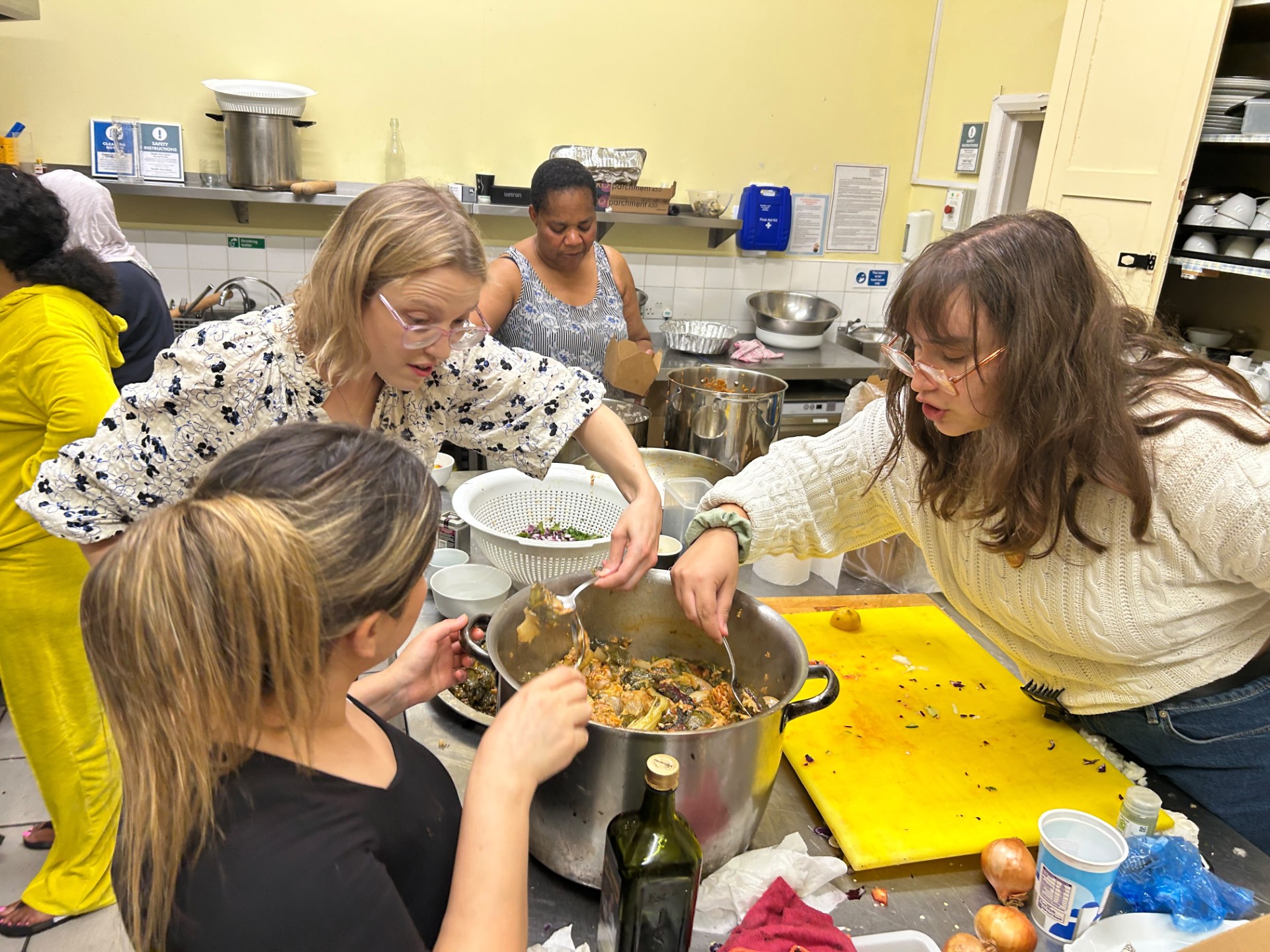
A London synagogue has launched a new project bringing Jewish members together with refugees and asylum seekers to cook, eat and build relationships around the same table.
Westminster Synagogue has launched A Place at the Table, a monthly initiative designed to make refugees and people seeking asylum participants in synagogue life rather than simply recipients of support.
The project revives an earlier initiative, Open Kitchen, which began at the synagogue before moving to JW3.
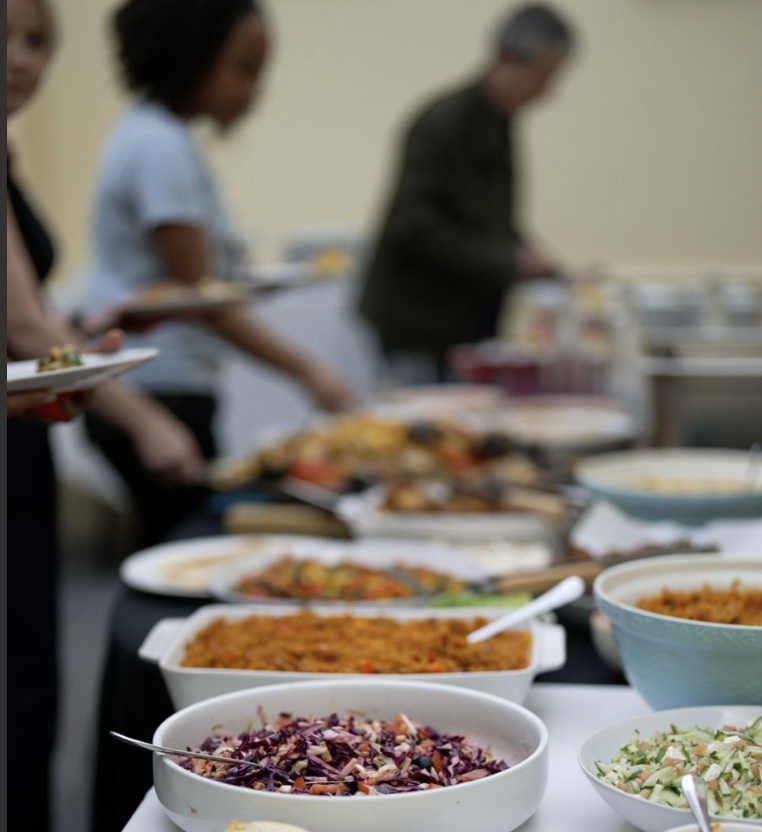
Around seven refugees and asylum seekers joined the launch last week, preparing dishes including Kurdish, Nigerian and Argentinian food alongside members of the community.
Sarah Abdoo, Westminster Synagogue’s community and outreach manager, told Jewish News that food was the starting point, but the aim was to create lasting connections.
“For me, A Place at the Table is about much more than cooking. Food gives us a reason to come together, but it’s the relationships we build around the table that make the project meaningful,” she said.
“It feels particularly important at a time when refugees and asylum seekers can so easily be spoken about as an issue or a statistic, rather than simply as people with stories, skills, traditions and food they are proud to share.”
Participants will be asked ahead of each session what they want to make, with the synagogue buying the ingredients before everyone cooks and eats together.
Extra meals can be taken away by participants to share with friends and family, as well as people living in refugee accommodation and other community settings where appropriate.
Abdoo said the emphasis on cooking together was deliberate.
“We wanted to create something where people could come together as equals, with everyone having something to give and something to receive,” she said.
“We aren’t simply saying, ‘Here is something we can give you.’ We’re saying, ‘Come and show us something too.’”
The synagogue is working with refugee organisations and networks across London, including HIAS+JCORE, as it looks to grow the initiative.
Rabbi David Mason, executive director of HIAS+JCORE, said the project puts Jewish teachings about welcoming others into practice.
“Our community’s history shows the importance of welcome. So I’m delighted that Westminster Synagogue is putting Jewish values of solidarity and responsibility into action through its new ‘A Place at the Table’ project,” he told Jewish News.
“At a time of rising hostility towards refugees and people seeking asylum, projects like this are vital. We can learn so much together around the table and forge the relationships needed for stronger, better-connected local communities.”
The initiative was launched with a dinner in the synagogue’s sukkah, including a discussion between Mason and Rabbi Kamila Kopřivová on Jewish perspectives on migration, refuge and belonging.
Abdoo said she hoped the project could offer a human encounter at a time when the national debate around immigration and asylum has become increasingly divided.
“We’re not trying to solve the immigration debate around a kitchen table,” she said. “We’re trying to create a space where people can meet the human being behind the debate.”

Keep community journalism free.
Jewish News is free for everyone. No paywall. No barriers. Just trusted journalism for anyone who wants to stay connected to Jewish life in Britain.
If you value that, please support us.
From as little as £5 a month, you can help keep our journalism free and accessible to all.
Every day, we report on the issues that matter to our community. We celebrate achievements, support charities, challenge antisemitism and ensure Jewish voices are heard more widely.
From as little as £5 a month, you can help us continue to:
- Report on the stories shaping Jewish life in the UK and beyond
- Bring our community together through shared stories, events and campaigns
- Celebrate the people, culture and moments that define our community
- Support organisations doing vital work across Jewish Britain
You can make a one-off donation or become a regular supporter. Every contribution helps keep our journalism free, independent and accessible to all.
If everyone who values Jewish News gave a small amount, it would make a real difference to our future.