Prefer Jewish News on Google
Lords committee blames stalled Mid East peace on ‘politics and policies of Israel’
The body, which advises the government on foreign policy, warned ministers not to go along with Donald Trump's 'peace negating' approach
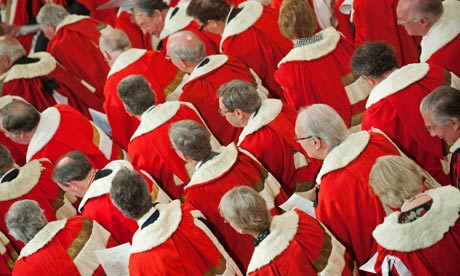
A House of Lords committee advising the Government on foreign policy has blamed the stalled peace process on the “politics and policies of Israel” and told ministers not to go along with Donald Trump’s “peace-negating” approach to the conflict.
In a report published this week, called ‘The Middle East: Time for New Realism,’ peers warned that the new U.S. president “mercurial and unpredictable nature” of policy-making should not affect the UK’s position.
Members of House of Lords International Relations Committee (IRC) wrote: “The politics and policies of Israel diminish the possibilities of peace, specifically the rapid expansion of settlements.”
They said that settlement-expansion was due to the policies of Israeli Prime Minister Benjamin Netanyahu, and noted a new bill in February to “allow the expropriation of privately owned Palestinian land”.
Noting Trump’s promise to relocate the U.S. embassy to Jerusalem, and his choice of a pro-settlement ambassador, they warned of diverging UK-US interests, since Trump had now abandoned the long-standing commitment to a two-state solution.


The report, published on Tuesday, said “the U.S. president has taken positions that are unconstructive and could even escalate conflict”.
In evidence given to the Committee, Daniel Levy, director of the MENA programme at the European Council on Foreign Relations, had earlier said that if the U.S. took a “meandering, erratic, unhelpful, unconstructive, peace-negating position … Britain would be ill advised to align with it”.
The report’s authors, led by Tory former Foreign Office minister Lord Howell of Guildford, said that – in contrast to Trump’s approach – “making progress on the Israeli-Palestinian dispute and supporting the Iran nuclear deal… should be pursued”.
Noting a new “disregard for international institutions” in the role of the Israeli-Palestinian conflict, the peers said the conflict was dealt with “at multilateral level with US support, but ad hoc groupings are now more the norm than the exception”.
The report added that whilst the Israeli-Palestinian conflict “may appear less salient at the moment, it has wider consequences for the sense of Sunni anger and regional stability”.

Keep community journalism free.
Jewish News is free for everyone. No paywall. No barriers. Just trusted journalism for anyone who wants to stay connected to Jewish life in Britain.
If you value that, please support us.
From as little as £5 a month, you can help keep our journalism free and accessible to all.
Every day, we report on the issues that matter to our community. We celebrate achievements, support charities, challenge antisemitism and ensure Jewish voices are heard more widely.
From as little as £5 a month, you can help us continue to:
- Report on the stories shaping Jewish life in the UK and beyond
- Bring our community together through shared stories, events and campaigns
- Celebrate the people, culture and moments that define our community
- Support organisations doing vital work across Jewish Britain
You can make a one-off donation or become a regular supporter. Every contribution helps keep our journalism free, independent and accessible to all.
If everyone who values Jewish News gave a small amount, it would make a real difference to our future.