
 Prefer Jewish News on Google
Love is in the app – or maybe not
If you’re looking for love should you try modern dating methods or traditional matchmaking?

There is a quiet assumption that once a certain birthday passes, love is something you should have already figured out or stopped hoping for. Yet for many people later in life, especially after divorce or bereavement, the desire for companionship, connection and romance doesn’t disappear. Self-proclaimed psychic Bev Mann has written a candid account of starting again as an older Jewish woman in a modern dating world.
“With Valentine’s Day approaching and its promises of romance, it’s easy to feel left out if you’re facing a quiet night in with Countdown rather than dinner for two” says Bev. “In my work as a self-styled psychic I have helped to guide others to their ‘one’, but when it comes to my own relationships, there’s no crystal ball — just trial, error and a fair amount of humility.”
After her marriage ended, she stepped back into dating for the first time since the 1980s. “Back then, you met people face to face, spoke on landlines and knew exactly where you stood if the phone didn’t ring. Today’s dating world — with its apps, ghosting and strange new language — can leave even confident women feeling unsure of themselves.”
Add Jewish dating into the mix — with communal expectations, unsolicited advice and a shortage of suitable introductions — and it becomes even more complicated.
She wrote Swipe Right to tell the truth about what dating later in life actually looks like. Not the polished version, but the real one — where faith, tradition and self-worth collide with modern reality. “One date arrived at a restaurant looking far older than his photos, wearing a mask and plastic gloves — two years after Covid — before sanitising the table and demanding a highly specific three-course order. Another man, charming on the phone and full of promise, chose Mother’s Day morning to send me an unsolicited and deeply unwelcome photo.”




Beneath the humour is something more serious: the courage it takes to begin again in a community that values family, continuity and shared faith, while still searching for your beshert. “In an era driven by curated perfection, Swipe Right challenges the idea that love must follow a neat timeline or end in a flawless fairytale. It’s about resilience, self-respect and staying open-hearted even when things don’t go to plan.”
If you thought dating apps had put paid to matchmakers, think again. They are very much thriving in the Jewish community, as London-based Dassy Miller, matchmaker on hit Israeli TV dating show Vort, can confirm.
“More and more people are turning to matchmakers for help,” says Dassy. “In many ways it is harder than ever to meet a partner. It used to be that people lived in a tight-knit community and everyone knew each other but now people have jobs, they travel all over for work and there is very little chance to meet new, like-minded people.”
A kosher caterer, when her work dried up during the pandemic, she decided to use the time to do something different. Realising that people were finding it hard to meet and socialise because of the lockdown, trained social worker Dassy, who had worked in Israel counselling divorced couples, decided to try her hand at matchmaking. She felt that her own life experiences gave her an insight. Aged 18, she had an arranged marriage which ended in divorce. “I then tried dating apps, blind dates and singles events and I realised that they are not really any good. How can you tell what someone is like from a picture and a few words? I thought there had to be a better way to find love and I could try to make it happen.”
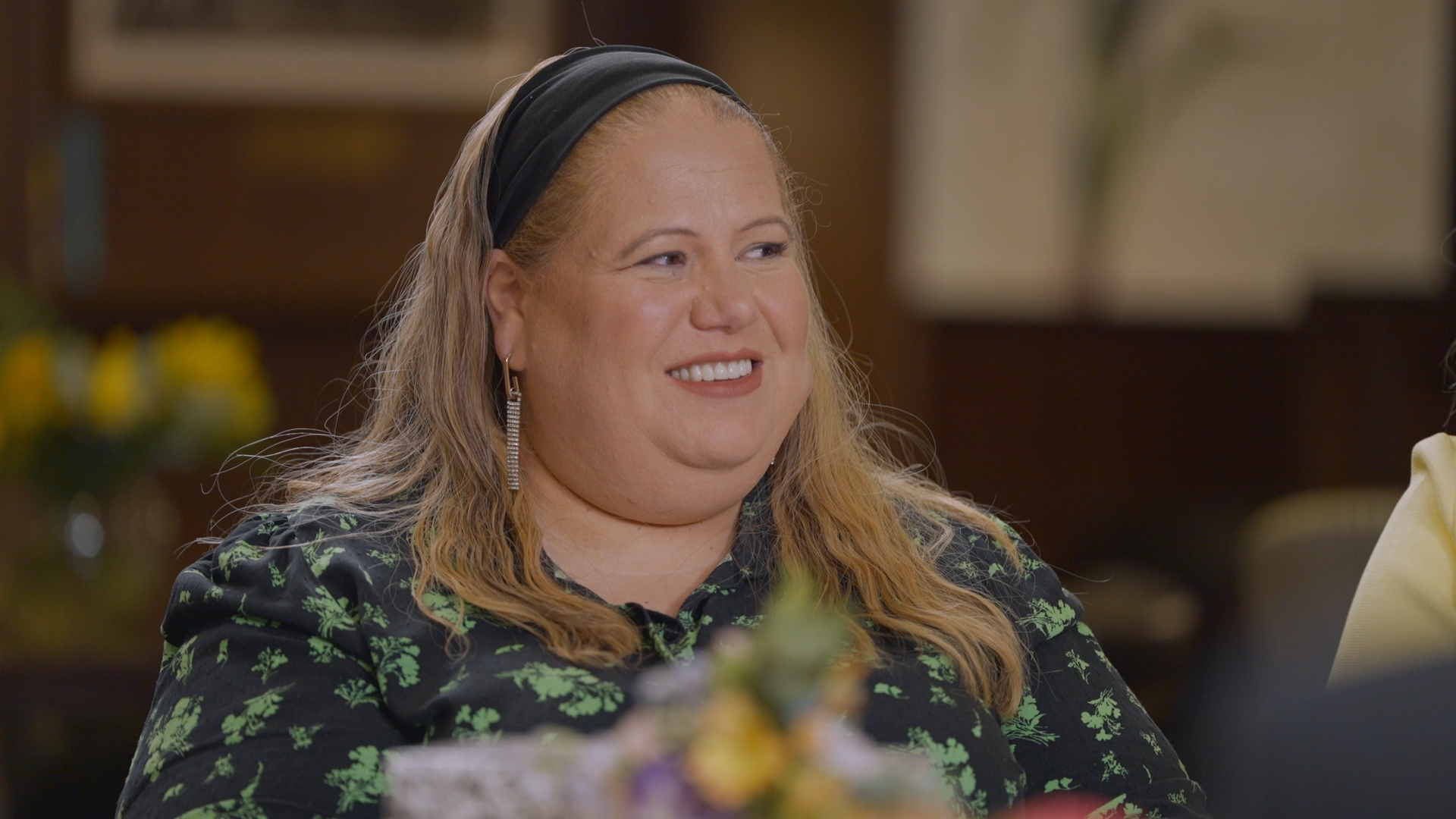
Dassy charges £150 for her services and then nothing more unless there is an engagement, which prompts a fee of a further £1,500. So far she has arranged more than 60 marriages. “I see people of all ages from all over the world,” says Dassy, who speaks seven languages. People send her their résumé and photo on WhatsApp and she meets or Face Times them. “I don’t take on every client. There was one man in his 70s who wanted a young bride in her 20s or 30s. I told him I would not be helping him! And some people are timewasters.”
There are approximately 20 Jewish matchmakers in London and they will sometimes reach out to each other if they do not have the right person on their database. Dassy’s clients span the full spectrum of religious, secular, Sephardi Ashkenazi, single, never married, divorced and widowed people aged from 18 to 70.
“We find there are lot of women in their 30s and 40s – very successful with good careers who want to meet someone but simply don’t have the chance to socialise. Also there are patterns. For example, divorced women tend to want to meet someone new, whereas the men are happy to stay single.”
Traditional matchmaking where the parents contacted the matchmaker has changed. “I like to deal with the actual person looking for a match,” says Dassy. “After all, if you aren’t mature enough to deal with this, then possibly you aren’t mature enough to be thinking about marriage. And the parents’ idea of the perfect partner for their child is not necessarily the right one.”
Dassy’s approach is very pragmatic. “If someone is not attractive it does not mean they are not a good catch. I may not be able to change their physical appearance but I can help them to make the best of themselves. And people must be honest and open about themselves. It just doesn’t work to hide anything!”
Swipe Right – The Kosher Medium Goes Dating is available on Amazon, £9.99

Keep community journalism free.
Jewish News is free for everyone. No paywall. No barriers. Just trusted journalism for anyone who wants to stay connected to Jewish life in Britain.
If you value that, please support us.
From as little as £5 a month, you can help keep our journalism free and accessible to all.
Every day, we report on the issues that matter to our community. We celebrate achievements, support charities, challenge antisemitism and ensure Jewish voices are heard more widely.
From as little as £5 a month, you can help us continue to:
- Report on the stories shaping Jewish life in the UK and beyond
- Bring our community together through shared stories, events and campaigns
- Celebrate the people, culture and moments that define our community
- Support organisations doing vital work across Jewish Britain
You can make a one-off donation or become a regular supporter. Every contribution helps keep our journalism free, independent and accessible to all.
If everyone who values Jewish News gave a small amount, it would make a real difference to our future.





















