Prefer Jewish News on Google
Making sense of the sedra: Toldot
A new generation
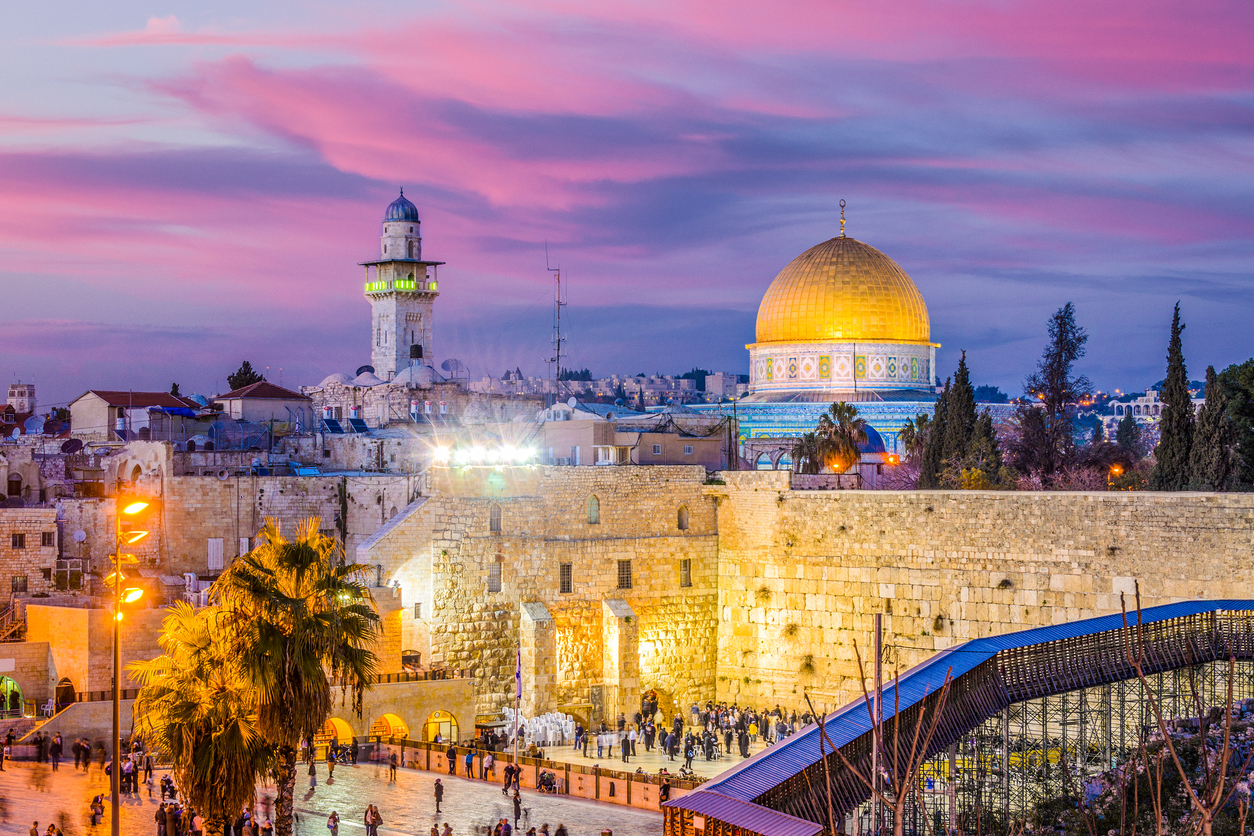
As I write, our community is on the cusp of departing for a mission to Israel that has been more than two years in the making. We will spend a week travelling the country, but more significant than the places we will visit are the people we will meet and the strengthening of our shared commitment to Israel, its people and values at this defining moment.
With that journey in mind, I have found myself reading this week’s sedra, Toldot, through a different lens, one focused on legacy, identity and the task of carrying forward values into an uncertain future.
The sedra opens with a seemingly repetitive statement: “These are the generations of Yitzchak, son of Avraham; Avraham fathered Yitzchak.” If the verse has already said Yitzchak is Avraham’s son, why repeat that Avraham fathered him? Rashi, building on a Talmudic midrash, explains that some doubters questioned Yitzchak’s lineage, claiming he might have been fathered by Avimelech after Sarah was taken into the Philistine king’s palace. To dispel this rumour, Hashem caused Yitzchak to resemble Avraham so closely that no one could deny their connection. Hence the double emphasis.
Yet this solution creates a different tension. If father and son looked identical, where was Yitzchak’s own identity? Rabbi Jonathan Sacks z”l notes a further textual redundancy later in the sedra that offers a solution: “Avraham was old, advanced in years.” The Talmud teaches that until Avraham prayed for the visible signs of ageing, people did not appear older. His request ensured that generations could tell themselves apart, a subtle acknowledgement that children are not meant to be duplicates of their parents but rather to grow into their own distinct roles and character.
This message plays out throughout Yitzchak’s story. Much of his early life closely parallels Avraham’s: famine leads him to the land of the Philistines just as it did his father; he describes his wife as his sister under similar circumstances; and he disputes with the Philistines over wells, just as Avraham had done. It is as though Yitzchak’s journey begins in the long shadow of a towering parent.



But at a key moment, the Torah signals a shift. After Yitzchak’s encounter with Avimelech, Hashem blesses him directly, not as a continuation of Avraham’s covenant, but as an individual. And his first act is deeply symbolic: he re-digs his father’s wells, which the Philistines had blocked. Haketav VehaKabbalah explains this as more than restoring water sources – it represents Yitzchak reopening the flow of his father’s teachings and values, as a custodian bringing them anew into his own world.
This theme feels especially resonant now. We are living through a moment that has reshaped Jewish consciousness, a new chapter forged in the wake of October 7, the ongoing trauma, and the extraordinary return of hostages. We are, in many ways, a generation stepping into terrain whose pathways have not yet been drawn. We cannot simply replicate the past; we must interpret its values afresh.
Like Yitzchak, we inherit a powerful legacy. But our task is to uncover it for our time, to redig the wells of faith, resilience, peoplehood and moral clarity, and allow them to flow into the present moment.
As our community embarks on this mission to Israel and all of us embark on this new chapter of Jewish history, we do so not only as inheritors of history but as shapers of its next chapter. May we carry forward the values passed to us, and may we find the courage to express them with integrity and purpose in the uncharted landscape ahead.
Rabbi Elchonon Feldman is Chairman of the Rabbinical Council of the United Synagogue and Senior Rabbi of Bushey United Synagogue

Keep community journalism free.
Jewish News is free for everyone. No paywall. No barriers. Just trusted journalism for anyone who wants to stay connected to Jewish life in Britain.
If you value that, please support us.
From as little as £5 a month, you can help keep our journalism free and accessible to all.
Every day, we report on the issues that matter to our community. We celebrate achievements, support charities, challenge antisemitism and ensure Jewish voices are heard more widely.
From as little as £5 a month, you can help us continue to:
- Report on the stories shaping Jewish life in the UK and beyond
- Bring our community together through shared stories, events and campaigns
- Celebrate the people, culture and moments that define our community
- Support organisations doing vital work across Jewish Britain
You can make a one-off donation or become a regular supporter. Every contribution helps keep our journalism free, independent and accessible to all.
If everyone who values Jewish News gave a small amount, it would make a real difference to our future.