Prefer Jewish News on Google

Making sense of the sedra: Toldot
What does the Torah say about unity governments?
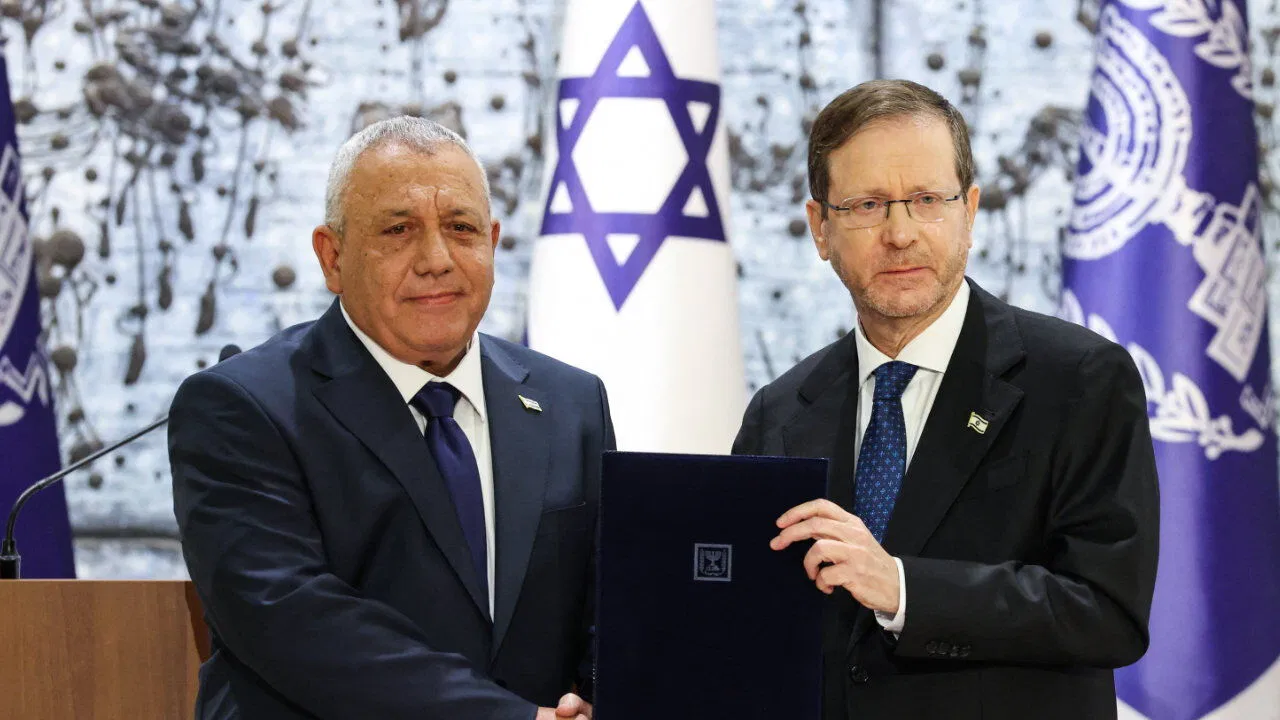
Israel’s election on 27 October left neither Benjamin Netanyahu nor Gadi Eisenkot with a clear path to power. President Isaac Herzog has turned to Eisenkot to try to form a government, and a broad coalition remains part of the public debate. Behind the politics and parliamentary arithmetic lies a question for the student of Torah. From a Torah perspective, what deserves greater weight: seeking reconciliation across divides or consolidating the power of one’s own camp?
This week’s reading, Toldot, begins with Yitzhak and Rivka praying for children. Rivka conceives twins, who struggle within her. She is told that two nations will emerge from her womb. Later rabbinic tradition identified Esau with Rome and, in time, with Christian Europe, while Jacob became Israel. Yet before they represented peoples and civilisations, they were brothers.
Esau became a hunter, while Jacob dwelt in tents. When Esau came home famished, Jacob offered him stew in exchange for his birthright. The Torah says Esau despised the birthright. Years later, at Rivka’s urging, Jacob dressed in Esau’s clothes and received from his blind father the blessing intended for his brother. When Esau discovered what had happened, he cried bitterly and pleaded for a blessing of his own. He then resolved to kill Jacob, who fled to their mother’s family.
More than ten years ago, I asked a predominantly Christian group of academics what troubled them most about the Hebrew Bible. Their answer came almost in unison: Jacob’s treatment of Esau over the birthright. They remembered the wrong they saw in the story. I wondered how many also factored in the reunion between the brothers, about which we read this week.
When the brothers meet again, as told of in Genesis 33, Jacob’s family shows respect and deference to Esau. Esau runs to embrace his brother Jacob, and they weep. Esau initially politely refuses Jacob’s gift, saying that he has enough. Jacob insists, calling it birchati, which is traditionally understood as meaning “my gift” but normally means “my blessing” (Genesis 33:11). Both gifts and blessings given with deep respect involve genuflection, which is a third meaning of the root beracha – “bending at the knee”. Hence, I read the gift Jacob offered to Esau as an apology for, or even return to, his brother of the birthright he had taken from him. The earlier blessing had placed Jacob above his brother. At their reunion, it is Jacobs camp who bow before Esau. In word and in gesture, Jacob yields to his brother, averts conflict and achieves the most he can towards reconciliation.



The brothers then go their separate ways. That detail matters. Their reconciliation leaves room for different lives and loyalties. Esau’s embrace and Jacob’s willingness to bow achieve something neither could secure by insisting, each one, on his claim. They can now part in peace, and the Torah later records them coming together to bury their father.
Pirkei Avot distinguishes between a dispute for the sake of Heaven and one pursued for lesser moral ends. A democracy can serve the public honourably by offering stability through good governance. Unity in governance can serve once rivals agree on what they can do together and remain answerable for their decisions. The spiritual question is what each side seeks through its use of power. One could call that: transitioning from a Jacob-Esau rift, to a United House of Isaac.
For leaders, the challenge is to seek enough common ground to work with and explain to their own supporters what that cooperation both costs and gains.
The Torah gives reconciliation a higher place than the pursuit of power for its own sake. Whatever can be achieved through unity is the highest calling a leader has. Jacob and Esau still had separate roads to travel. The achievement was that, when they took those roads, neither needed the other to remain an enemy.
Rabbi Ariel Abel is a rabbi, solicitor and British Army chaplain rabbiabel@gmail.com

Keep community journalism free.
Jewish News is free for everyone. No paywall. No barriers. Just trusted journalism for anyone who wants to stay connected to Jewish life in Britain.
If you value that, please support us.
From as little as £5 a month, you can help keep our journalism free and accessible to all.
Every day, we report on the issues that matter to our community. We celebrate achievements, support charities, challenge antisemitism and ensure Jewish voices are heard more widely.
From as little as £5 a month, you can help us continue to:
- Report on the stories shaping Jewish life in the UK and beyond
- Bring our community together through shared stories, events and campaigns
- Celebrate the people, culture and moments that define our community
- Support organisations doing vital work across Jewish Britain
You can make a one-off donation or become a regular supporter. Every contribution helps keep our journalism free, independent and accessible to all.
If everyone who values Jewish News gave a small amount, it would make a real difference to our future.