Prefer Jewish News on Google

Marc Bloch died for France. Where is our own patriotism today?
His extraordinary life and sacrifice prompts a challenge to British Jews contemplating whether their future still lies in Britain
Which famous person, dead or alive, do you most admire? My wife asked me this question recently, and I found it surprisingly difficult to answer, probably because I’m a cynic by nature and a journalist by trade.
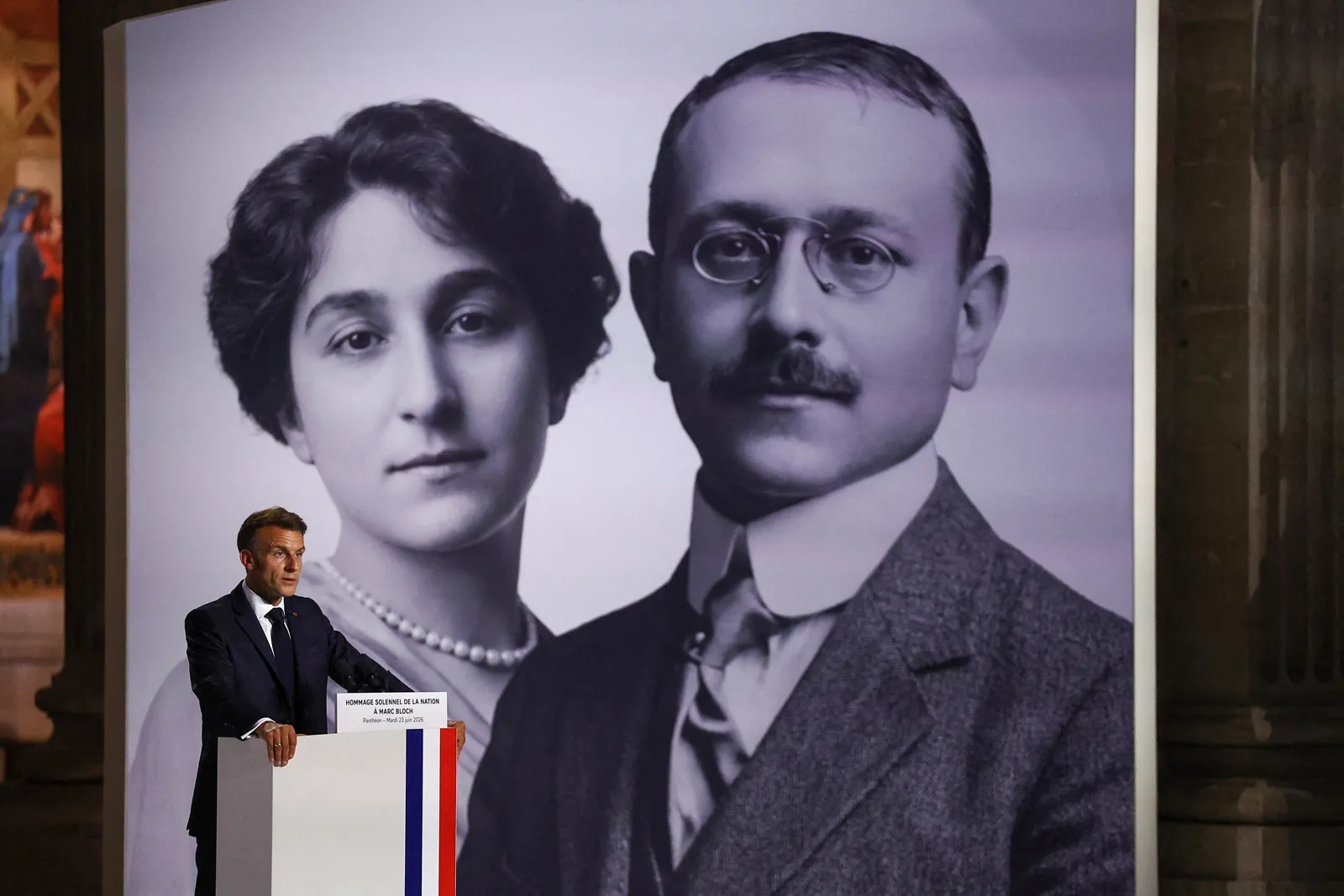
But a few days later, I saw footage of the historian Marc Bloch being inducted into the Panthéon in Paris, home to France’s heroes. I sent it to my wife. “I admire him.”
I admire Bloch because he was a rare combination of great scholar and great warrior. More than that, however, I admire Bloch’s patriotism, his deeply felt sense that his nation was a thing of merit and worth. That even in the age of Vichy, France was something worth dying for. In this, I think, his life offers a lesson for the Jews of Britain today.
Who was Marc Bloch?
Outside of France and academic history, Bloch is less well known than he deserves to be. Born into an assimilated bourgeois Jewish family in 1886, the son of a prominent ancient history professor, Bloch is famous among historians for co-founding the hugely influential Annales school of history, which was built around a journal he published with his friend Lucien Febvre and sought to refocus history away from high politics and onto the economics of everyday life. Bloch summarised his theory of history in The Historian’s Craft, a book that still appears on undergraduate reading lists today.



And yet, of course, if this were the entire story, Bloch would not be in the Panthéon, and I would not be writing about him now.
Bloch also fought heroically for his country three times. He was 28 when Germany invaded France in 1914 and endured the entire campaign, fighting at the Marne and the Somme. He was wounded twice, nearly died of typhoid and was awarded the Croix de guerre and the Légion d’honneur for acts of courage and daring.
Post-war, he returned to the archives and academe, founding the Annales journal, until another war came. Bloch was 53 but immediately volunteered for service, working to maintain petrol supplies on the frontline. He was rescued at Dunkirk, spent one night in England and then returned to France to carry on the fight.
Post-surrender, he avoided capture in Rennes by slipping back into civvies and retreated to Vichy France, where he wrote Strange Defeat, a withering chronicle of France’s humiliation at the hands of the Nazis, arguing that his country had misread its enemy, its own people and history itself.
In antisemitic Vichy, Bloch found it increasingly difficult to hold onto an academic position. The regime became increasingly Nazified, and a worried Bloch sought and received a parachute posting at the New School in New York. Yet he never went. Obtaining wartime travel visas for his large family, including an ailing mother and increasingly unwell wife Simone, proved an insurmountable challenge. Yet, as his biographer Carole Fink speculates in Marc Bloch: A Life in History, perhaps he also didn’t truly want to leave France.
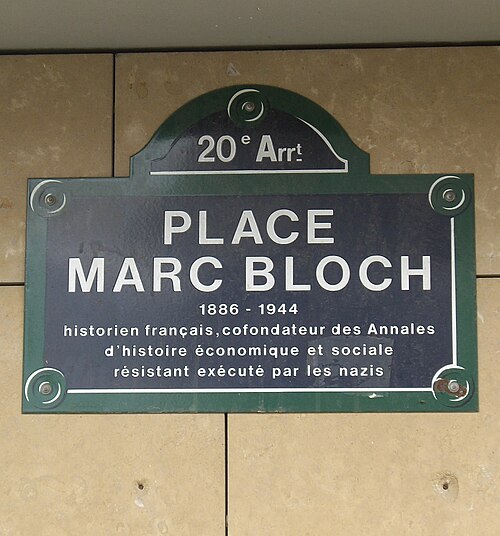
And so, in 1943, as the Nazis dismantled the Vichy regime, Bloch went to war for the last time. He moved to Lyon, whose Jews were suffering under the terror of Klaus Barbie, and joined the resistance, quickly rising to become a regional director. The resistance was, as Fink writes, an opportunity for Bloch to reclaim his “maimed citizenship”.
It was difficult, dangerous work, and Bloch was good at it. But by the end, as the Nazis sought to crush the resistance ahead of the impending D-Day invasion by the allies, Bloch’s eventual capture became all but inevitable. He was tortured repeatedly by Barbie’s Gestapo thugs. All indications are that he did not crack.
Eventually, he was put in a truck with some of his comrades, taken to a field outside Lyon and machine-gunned to death. Two prisoners somehow survived that massacre. One of them reported Marc Bloch’s final words: “Vive la France”.
It gives me chills to write those words. France had failed Bloch, collapsing and collaborating under Nazi pressure. But he fought anyway because he could not allow evil to go unchecked and because he still believed in an enduring idea of his country.
Bloch was not a practising Jew and rejected the idea of tribal solidarity or Jewish nationalism. His country was France. But he never sought to deny his heritage. In 1938, he applied for a job as director of the prestigious École Normale Supérieure. His friend Febvre expressed fear that the backlash against Bloch’s candidacy, coming as it did from a Jewish man, might be too painful. “Acknowledging both the existence of antisemitism and the danger of ignoring it, Bloch declared that ‘courage’ was the best response,” writes Carole Fink. Courage was not something he lacked.
What lessons should we draw from Bloch’s life?
The obvious lesson is that he was wrong about the importance of Israel and the conditionality of Jewish life in the diaspora. What the Holocaust taught us, or perhaps reminded us, was that for Jews all welcomes can be outstayed and warning signs should always be heeded.
But is there not another lesson to be learned? Bloch was not given to irrational jingoism, but he clung onto a sense that France at its best embodied essential values of liberty and the Enlightenment. He loved his country with the kind of unalloyed patriotism that is difficult to grasp in a post-Holocaust age. Yet I don’t view this patriotism as a naive anachronism; Bloch truly felt there was something left in France worth fighting for. His six children survived to inherit that sacrifice.
Few of us believe this in Britain today. ‘Patriotism’ is an unfashionable word, and a recent poll found that just six percent of people say they would defend their country in the face of an invasion. Our sense of nationhood has been corroded by technological anomie, economic decline and mass migration. Our country seems to be self-inflicting its own form of strange defeat.
Bloch truly felt there was something left in France worth fighting for.
As British Jews, we reflect these general trends, but many also feel personally let down by Britain and worried by its direction of travel. We talk of leaving this country. Just last week, Vanessa Feltz told an interviewer that she doesn’t know a single Jew who hasn’t considered leaving.
These are understandable sentiments. But I wonder if for a moment we might consider Bloch’s example. Where, I wonder, when we in Britain talk casually of leaving, is our own patriotism? Where is our love of country?
I don’t just mean a conditional patriotism, a sense that Britain has been good for the Jews; therefore, the Jews must do what they can for Britain. Nor do I mean the patriotism of the scoundrel, allying with bigots and waving the Union Jack to unite the right against Islam. I’m talking about a deep Blochian patriotism, one that espouses loyalty to king and country as an essential fact of being British, undimmed by circumstance, just as my fealty to Manchester United is undimmed by a 2-0 loss to Hull.
Such sentiment has limits, of course. It is not unconditional or blind to Britain’s many flaws. If this country turned on me because of my ethnicity, endangering my family or me, I would of course strongly consider leaving, as Bloch tried to. But are we really saying these limits have already been reached? I’m not sure we’re even close. Bloch lived through the Dreyfus affair, the Antisemitic League and the Vichy regime. Yet still he fought for France.
If, God forbid, I ever found myself in similar circumstances to Bloch, I hope I would also be brave enough to fight for what I love about Britain. Its grandeur and beauty and wit. Its liberty and decency. My friends and my family, Jew and gentile alike.
I can think of few things more admirable.
• Josh Glancy is associate editor of the Sunday Times

Keep community journalism free.
Jewish News is free for everyone. No paywall. No barriers. Just trusted journalism for anyone who wants to stay connected to Jewish life in Britain.
If you value that, please support us.
From as little as £5 a month, you can help keep our journalism free and accessible to all.
Every day, we report on the issues that matter to our community. We celebrate achievements, support charities, challenge antisemitism and ensure Jewish voices are heard more widely.
From as little as £5 a month, you can help us continue to:
- Report on the stories shaping Jewish life in the UK and beyond
- Bring our community together through shared stories, events and campaigns
- Celebrate the people, culture and moments that define our community
- Support organisations doing vital work across Jewish Britain
You can make a one-off donation or become a regular supporter. Every contribution helps keep our journalism free, independent and accessible to all.
If everyone who values Jewish News gave a small amount, it would make a real difference to our future.