Prefer Jewish News on Google
Met Police ‘has not ruled out’ asking Home Secretary for ban on Al Quds Day march
The event, due to take place this year on Sunday 15 March, is notorious for its support of the Iranian regime
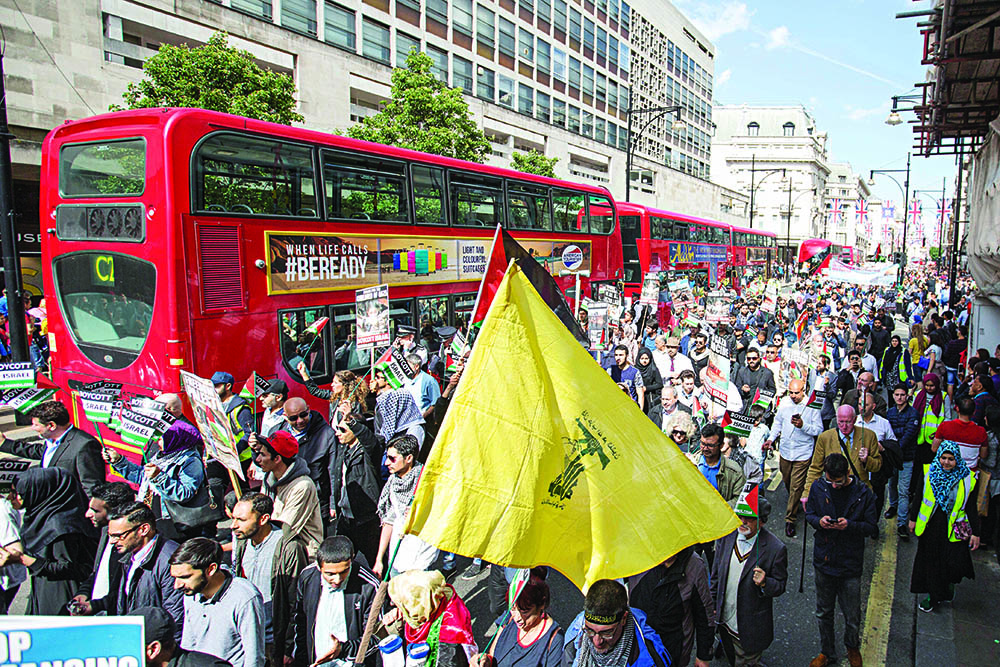
The Met police has said it has not ruled out any policing options with regards to a forthcoming march traditionally associated with the Iranian regime – including potentially applying to the Home Secretary for an outright ban if there is deemed to be a risk of serious disorder.
The annual “Al Quds Day” march is set to take place this weekend in central London. It is organised by the ‘Islamic Human Rights Commission’, a group described in the 2023 Shawcross Review of Prevent as “an Islamist group ideologically aligned with the Iranian regime”. As reported by the IHRC, Sunday’s march is due to start outside the Home Office, before proceeding part the Houses of Parliament and ending outside Downing Street.
In response to a query from Jewish News, the Met police said: ““We recognise that there is more attention on this protest given the ongoing conflict in the Middle East. We understand that in the current context it is likely numbers of protestors will be increased and the possibility of counter protest is greater. We are keeping this matter under careful review on a daily basis and will confirm the details of our policing plan in due course.
“In response to the question of a ban, the police can apply to the Home Secretary for a ban if there is a risk of serious disorder that cannot be managed by the use of police tactics or the imposition of Public Order Act conditions alone. That is a high threshold. However, at this stage in our planning no policing options have been ruled out as we prioritise public safety and the prevention of serious disorder.
“At any protest we police, our officers will take a zero-tolerance approach to crime, including hate crime and support for proscribed organisations. They will intervene decisively where they see people crossing the line from lawful protest to criminality.”



The statement from the police came after a cross-party group of MPs and Peers urged the Home Secretary, Shabana Mahmood, to ban the demonstration, describing how the annual event has “repeatedly been marked by arrests for racial hatred and open displays of support for proscribed terrorist organisations such as Hezbollah”.
Al-Quds day was an initiative created by Ayatollah Khomeini in 1979, shortly after the Iranian revolution. Fixed towards the end of the month of Ramadan, it was intended to be a day when Muslims worldwide would unite against Israel.
Since the proscription of Hezbollah as a terrorist organisation in the UK, Al Quds Day marchers have generally preferred to hold pictures of the now-deceased Iranian regime supreme leader, Ayatollah Khamenei, sometimes with the wording: “be on the right side of history”.
In the past, speakers at the Al Quds Day Parade have made highly inflammatory statements. Perhaps the most notorious was in 2017, when the Al Quds Day March took place a week after the Grenfell Tower fire. Nazim Ali, then the director of the ‘Islamic Human Rights Commission’, gave a speech in which he railed against “Zionists who give money to the Tory Party, to kill people in high rise blocks”. A policewoman observing the speech at the time and asked about the lack of action in response to the comment said “it’s just an opinion.”
Ali also told the crowd: “We are fed up of the Zionists. We are fed up of their rabbis. We are fed up of their synagogues. We are fed up of their supporters.”
In December 2017, the CPS said that it was not ready to prosecute Mr Ali for offences of inciting racial or religious hatred, or a public order offence. Campaign Against Antisemitism subsequently brought a private prosecution against Ali. However, in July 2018, a week before the court case was due to begin, the CPS announced that it was taking over the prosecution – which it had a legal right to do – before promptly announcing that it was dropping the case entirely.
In a recent statement, Campaign Against Antisemitism described the annual Al Quds Day march as “notoriously sympathetic to the Islamic Republic of Iran and its proxies.
“The Al Quds Day marches have been banned in some European countries”, a spokesperson for CAA said.
“There is no excuse for them still being permitted in the UK. Enough of being a soft touch on extremism.”

Keep community journalism free.
Jewish News is free for everyone. No paywall. No barriers. Just trusted journalism for anyone who wants to stay connected to Jewish life in Britain.
If you value that, please support us.
From as little as £5 a month, you can help keep our journalism free and accessible to all.
Every day, we report on the issues that matter to our community. We celebrate achievements, support charities, challenge antisemitism and ensure Jewish voices are heard more widely.
From as little as £5 a month, you can help us continue to:
- Report on the stories shaping Jewish life in the UK and beyond
- Bring our community together through shared stories, events and campaigns
- Celebrate the people, culture and moments that define our community
- Support organisations doing vital work across Jewish Britain
You can make a one-off donation or become a regular supporter. Every contribution helps keep our journalism free, independent and accessible to all.
If everyone who values Jewish News gave a small amount, it would make a real difference to our future.