Prefer Jewish News on Google
Netanyahu: ‘Trump plan for Gaza emigration is condition for ending war’
Israel’s prime minister rebuffed calls to end the war, step down or take responsibility for failing to prevent Hamas’ 7 October, 2023, attack
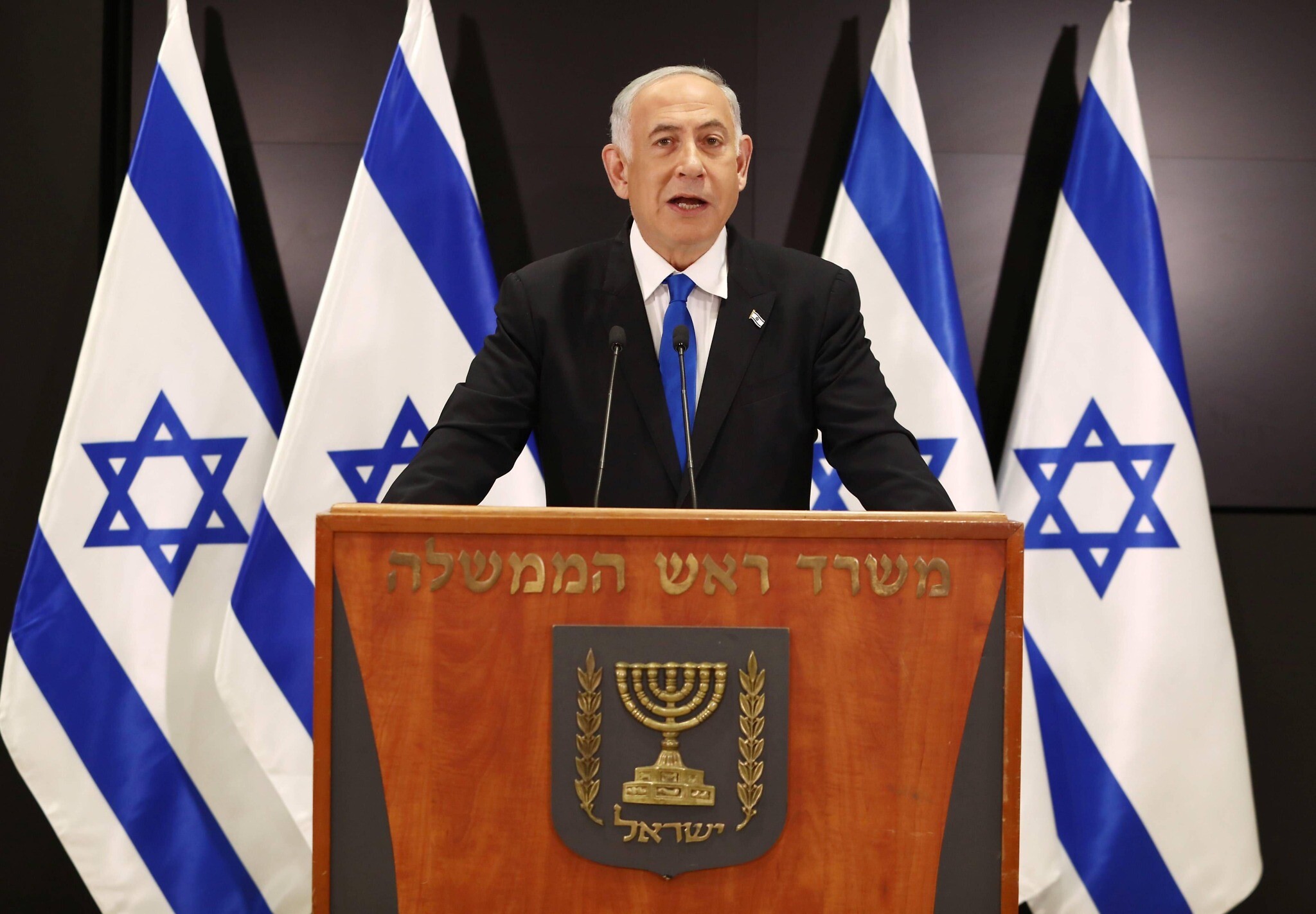
Benjamin Netanyahu said Israel is taking complete control of Gaza and that he would not end the war there without the implementation of what he called the “Trump plan” to encourage voluntary migration from the territory.
In his first press conference in months, the Israeli prime minister also said for the second time this week that Israel would allow aid to enter Gaza in order to avert a humanitarian crisis. But he rebuffed calls to end the war, to step down or to take responsibility for failing to prevent Hamas’ 7 October, 2023, attack. He denied reports of a split between Israel and the United States, calling such reports “fake” and that the two countries were in “full alignment” on U.S. talks with Iran.
The press conference came as Netanyahu has been buffeted by pressures foreign and domestic. Within Israel, the Supreme Court ruled against the prime minister shortly before he spoke, saying that he had inappropriately fired the head of the Shin Bet security service.
Meanwhile, international anger is increasing over starvation in Gaza, which has grown more dire as Israel blocked the entry of aid for more than two months. U.S. President Donald Trump is reportedly eager for the war to be brought to a close. And polls show that most Israelis want to end the war with a deal that frees the nearly 60 remaining hostages, of whom at least 20 of whom are alive.
This week, Netanyahu’s government proceeded in the opposite direction and escalated the war in Gaza, launching an operation to conquer and occupy the enclave. Netanyahu defended the operation, saying it would lead to an Israeli victory.



“At the end of this move, all of the territories of the Gaza strip will be under Israeli security control and Hamas will be completely defeated,” he said.
Netanyahu added that he would agree to a “temporary” ceasefire in order to free some of the hostages. But he said the war could only come to a complete end after a series of conditions were met, many of which Israel has pursued over 19 months of war since the 7 October attack:
- The hostages are released to Israel
- Hamas lays down its weapons and surrenders
- Its leaders are expelled from Gaza
- Gaza is demilitarised
- The “Trump plan” is implemented
“I am ready to end the war with clear conditions that will ensure the security of Israel,” he said, adding that he was under “tremendous pressure” to end the war sooner.
He said the “Trump plan” was “such a correct plan — and so revolutionary. It says something simple: Residents of Gaza who want to leave can leave.”
In fact, Trump has at various times called for Gaza to be completely depopulated and for the United States to “take over” the territory. In recent weeks, Trump hasn’t emphasized the plan, instead calling for the war to end and reaching a deal, without Israeli involvement, to free American-Israeli hostage Edan Alexander.
Netanyahu claimed that ending the war now would position Hamas to attack in the future, “in striking distance” of Israel.
“Everyone calling on us to end the fighting before these goals are met is essentially calling to leave Hamas in power,” he said. “And what does that mean? It means all of our achievements and all of the sacrifice of our brave fighters will come to nothing.”
Netanyahu also said his decision to let humanitarian aid into Gaza, after months of shutting it out, was motivated by international pressure and a desire to continue the war.
He outlined a three-part plan that would see aid enter Gaza immediately, followed by a system in which American companies would distribute aid directly to Gaza civilians under Israeli protection. He said Israel would then create a “sterile area” in southern Gaza where civilians could enter and receive full humanitarian assistance.
“In order to maintain our freedom of operation and allow our closest friends to keep supporting us, we need to prevent a humanitarian crisis,” he said. He said supporters of Israel in the U.S. Senate had encouraged him to continue the war, but added that they said, “We cannot accept a situation of a humanitarian crisis in Gaza.”
Humanitarian groups have criticized the new Israeli aid plan as woefully inadequate to meet the needs of the 2 million residents of Gaza. Three allies of Israel — the United Kingdom, France and Canada — said they would take “concrete actions” if Israel did not start allowing aid into the territory.
Reporters at the press conference quoted back to Netanyahu previous instances when he had said Israel was on the verge of winning the war. The prime minister refused to give a timeline for the end of the war, saying only, “It won’t take a year and a half, I promise you.”
Netanyahu also drew criticism after the press conference for having said that “nothing” had happened on 7 October at Kibbutz Ein Hashlosha, where the IDF was relatively successful in repelling Hamas. Four members of the kibbutz were killed while fighting with terrorists that day, and the kibbutz called for a correction as well as a state inquiry into the events of the day. Netanyahu’s office soon said that he “regrets that his comments regarding Kibbutz Ein Hashlosha were misunderstood.”

Keep community journalism free.
Jewish News is free for everyone. No paywall. No barriers. Just trusted journalism for anyone who wants to stay connected to Jewish life in Britain.
If you value that, please support us.
From as little as £5 a month, you can help keep our journalism free and accessible to all.
Every day, we report on the issues that matter to our community. We celebrate achievements, support charities, challenge antisemitism and ensure Jewish voices are heard more widely.
From as little as £5 a month, you can help us continue to:
- Report on the stories shaping Jewish life in the UK and beyond
- Bring our community together through shared stories, events and campaigns
- Celebrate the people, culture and moments that define our community
- Support organisations doing vital work across Jewish Britain
You can make a one-off donation or become a regular supporter. Every contribution helps keep our journalism free, independent and accessible to all.
If everyone who values Jewish News gave a small amount, it would make a real difference to our future.