Prefer Jewish News on Google
New report on antisemitism at European universities shows ‘environment of hatred’
Across multiple borders, often with the active help of those teaching at academic institutions, organisations with links to Palestinian terror groups have exerted pressure

A new report on antisemitism at universities across Europe shows a “normalisation of antisemitic narratives at universities across national borders… anchored in almost all countries under the guise of anti-colonial, anti-imperialist or human rights narratives” – with the hesitance of university authorities to confront this identified as a “common feature”.
The report, titled “A climate of fear and exclusion”: Antisemitism at European universities, was published today, co-written by B’nai B’rith International, the German think tank Democ and the European Union of Jewish Students. It analyses the situation for Jewish students on campuses in nine different countries, including the UK, Germany, France, Belgium, Italy and the Netherlands. Examples of techniques used by so-called “anti-Israel” groups include “threats and physical violence directed towards individual Jewish students or staff”, with multiple examples provided of Jewish students targeted or physically assaulted, “calls to violence and legitimisation of violence as appropriate protest action”, and “solidarity with Hamas and its violent massacre on October 7, 2023, portrayed as “liberation” or righteous resistance”.
In multiple countries, student groups driving the aggression and protests were linked to Palestinian terrorist organisations – Samidoun, for example, is directly connected to the Popular Front for the Liberation of Palestine (PFLP) – while “a recurring element is the involvement of Communist groups and party branches”. Across all the countries, the report also identified how “the prominent participation of professors in demonstrations, or their vocal support and unequivocal solidarity with the protest movement has further contributed to an environment of tension and exclusion of Jewish students.”
The report also sets out a series of recommendations for higher education institutions, including the adoption and use of the IHRA definition of antisemitism, the need for a clear reporting procedure for victims of antisemitism, building trust with Jewish organisations and Jewish students, and stepping up security, including the vetting of groups allowed on campus.
In her foreword to the report, Katharina von Schnurbein, the European Commission Coordinator on Combating Antisemitism and Fostering Jewish Life, said:


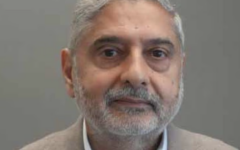
“Debate, even heated disagreement, protest and other political manifestations are a part of university life. An important part. Yet protest should never veer into hatred, ostracization, discrimination and even violence.
“However, this has been the experience of many Jewish students in university spaces both in Europe and around the world. European Jewish students have at times opted to hide their identity or in some cases abandon in-person learning altogether due to the environment of hatred that has surrounded them.”
Commenting on the report, B’nai B’rith International Director of EU Affairs Alina Bricman, said: “When Jewish students fear being violently harassed on campus, when in the most prestigious European universities Jewish students might find swastikas or death threats on their personal property, when they are not allowed access to spaces and events due to their presumed Zionism—the free speech argument is a canard. The lack of action on the part of academic institutions is shameful.”
Democ co-executive director Grischa Stanjek said: “What we are seeing on individual campuses are not isolated incidents of student protest. The documentation gathered in this report makes it clear that we are dealing with highly coordinated, transnational networks that operate as part of a global movement. They strategically disguise an antisemitic agenda in the language of human rights to gain legitimacy. University leaders are making a grave mistake if they treat these events as local flare-ups instead of what they are: calculated manifestations of a global, anti-democratic campaign.”
The full report can be read here.

Keep community journalism free.
Jewish News is free for everyone. No paywall. No barriers. Just trusted journalism for anyone who wants to stay connected to Jewish life in Britain.
If you value that, please support us.
From as little as £5 a month, you can help keep our journalism free and accessible to all.
Every day, we report on the issues that matter to our community. We celebrate achievements, support charities, challenge antisemitism and ensure Jewish voices are heard more widely.
From as little as £5 a month, you can help us continue to:
- Report on the stories shaping Jewish life in the UK and beyond
- Bring our community together through shared stories, events and campaigns
- Celebrate the people, culture and moments that define our community
- Support organisations doing vital work across Jewish Britain
You can make a one-off donation or become a regular supporter. Every contribution helps keep our journalism free, independent and accessible to all.
If everyone who values Jewish News gave a small amount, it would make a real difference to our future.