Prefer Jewish News on Google
New York Times removes line saying Israelis ‘view themselves’ as 7 October victims
Newspaper admits “editing error” days after rejecting claims that its Gaza war reporting was skewed against Israel
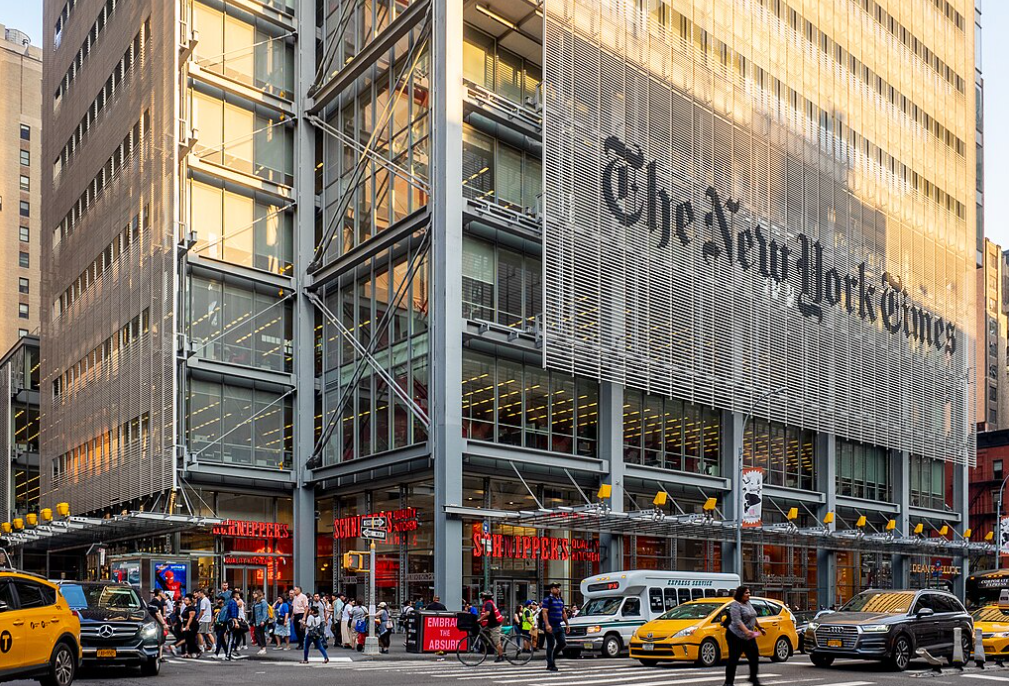
The New York Times has removed a line from an article saying Israelis “still largely view themselves as the victims of 7 October”, admitting it wrongly suggested their experience as victims of the Hamas-led attack was a matter of perception.
The US newspaper deleted the sentence from an article about NAZA, a documentary by Israeli filmmakers Yuval Abraham and Rachel Szor focusing on Palestinian civilian deaths during the war in Gaza.
Discussing divisions within Israel over the war, the original article said: “Israelis are deeply divided over how to apportion blame for the policy, military and intelligence failures that preceded the attack and the war. But Israelis still largely view themselves as victims of 7 October.”
It immediately went on to state that the attack killed about 1,200 people in Israel and around 250 others were taken hostage, describing 7 October as “the deadliest day in the country’s history”.
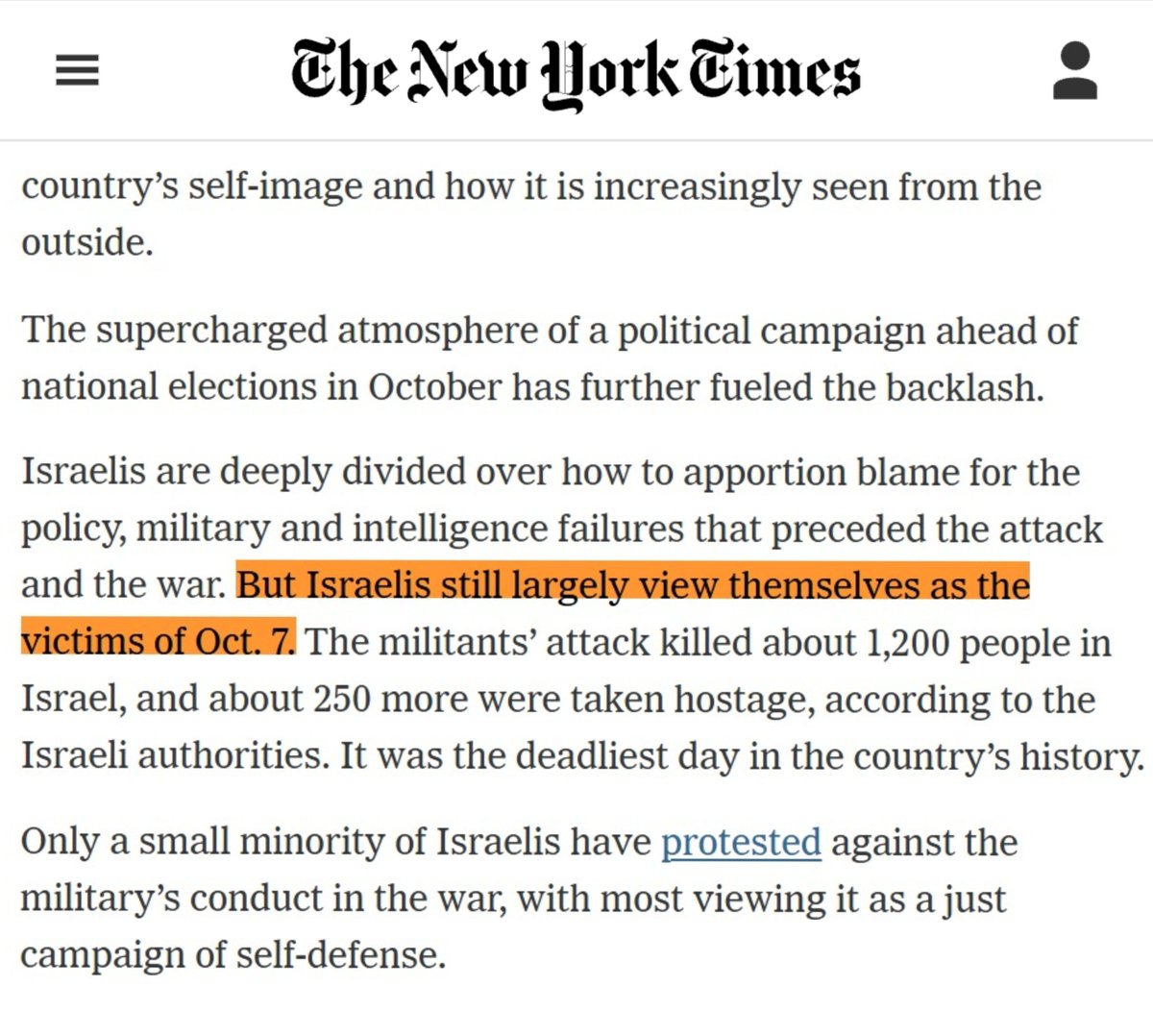
The wording drew criticism after freelance researcher and writer Eitan Fischberger highlighted it on social media, where his post was widely shared. CNN commentator Scott Jennings described the line as an “abomination”, while Fox News political analyst Brit Hume also criticised the wording.



The New York Times has now removed the sentence about Israelis viewing themselves as victims and added an editor’s note.
The newspaper said: “Because of an editing error, an earlier version of this article included a statement that was intended to convey Israelis’ perception of the government’s military response to the 7 October terror attack in relation to the attacks, but inadvertently suggested that Israelis’ experience as terror victims was a matter of perception. It has been removed from the article.”
The correction comes just days after the newspaper rejected claims that its reporting on the Gaza war was skewed against Israel.
As Jewish News reported this week, a peer-reviewed study by Yale School of Management professor Edieal Pinker analysed 1,559 New York Times articles published during the first eight months of the war.
It found Israel was mentioned 27,205 times across the articles, compared with 8,499 mentions of Hamas.
Pinker argued that the coverage created a “dominant narrative” which placed responsibility on Israel while diminishing Hamas’s role in sustaining the conflict.
Responding to the study, a New York Times spokesperson told Jewish News: “The advocates behind multiple studies on media bias cherry-pick data that supports their beliefs while ignoring evidence to the contrary.”
The newspaper added: “Our role is to seek the truth, even when it includes inconvenient or uncomfortable facts. We remain open to good-faith disagreement, but we will not let critics or advocacy campaigns move us away from independent reporting.”
The corrected NAZA article remains online with the editor’s note attached.

Keep community journalism free.
Jewish News is free for everyone. No paywall. No barriers. Just trusted journalism for anyone who wants to stay connected to Jewish life in Britain.
If you value that, please support us.
From as little as £5 a month, you can help keep our journalism free and accessible to all.
Every day, we report on the issues that matter to our community. We celebrate achievements, support charities, challenge antisemitism and ensure Jewish voices are heard more widely.
From as little as £5 a month, you can help us continue to:
- Report on the stories shaping Jewish life in the UK and beyond
- Bring our community together through shared stories, events and campaigns
- Celebrate the people, culture and moments that define our community
- Support organisations doing vital work across Jewish Britain
You can make a one-off donation or become a regular supporter. Every contribution helps keep our journalism free, independent and accessible to all.
If everyone who values Jewish News gave a small amount, it would make a real difference to our future.