
 Prefer Jewish News on Google

Ninety years after my family fled to Britain, Jews are asking where next?
New polling shows half of British Jews no longer see a future here. The numbers may be small, but the moral collapse they reveal is vast
There is a statistic so chilling, so historically resonant, that it should dominate every front page, every political speech, every national conversation in Britain. Instead, it appeared quietly in The Telegraph on Sunday and then slipped, with barely a ripple, into the bloodstream of a country that has learnt to shrug at Jewish fear.
According to new polling by the Campaign Against Antisemitism, 61 percent of British Jews have considered leaving the UK. Last year it was 50 percent. This year, 51 percent say they no longer believe they have a long-term future in this country, and an overwhelming 96 percent feel less safe than before October 2023.
Read that again.
A minority community, deeply woven into the fabric of this country for centuries, now asking itself, seriously, openly, fearfully, whether Britain is still home.
History teaches us one clear truth: when Jews begin eyeing their suitcases, the whole of society is already in deep trouble. Because whatever corrodes the safety of Jews corrodes the nation that houses them.


And yet here we are.
A story that should never have needed repeating
This is the country my mother’s family ran to in 1935 when escaping Nazi Germany. Most of the family stayed behind, and most of them died in the camps. Those brave or lucky enough to seek an early escape route found refuge in Britain, and for nearly a century we have called this place home.
On the other side of my family, it was the pogroms of Eastern Europe in the late 19th century that drove them here. Two branches of one Jewish story, one fleeing Cossacks, the other fleeing Nazis, converging in a nation that offered shelter, identity and possibility.
Like so many Jewish families, across both sides we have contributed greatly to the society that took us in. We have played our part, proudly, in building the Britain we believed in. We have fought for this country, helped rebuild this country, and contributed financially, civically and emotionally.
And yet here we are, 100 years on, having the same conversation our ancestors prayed their children and grandchildren would never need to have again. Where do we go next? Where is the next safe haven?
How quickly the world turns, in the blink of an eye, a handful of generations, and yet another refuge becomes infected by the world’s oldest hate.
The warning our grandparents carried and we ignored
The generation of Holocaust survivors often spoke of a truth they hoped their children and grandchildren would never need to confront. A warning whispered across kitchen tables and was handed down like an heirloom.
Be aware. Be alert. The same hatred that brought us here could one day rise again, and if it does, you must be ready to leave. With this in mind, many kept suitcases packed under their beds from the moment they arrived in Britain until the day they died.
We told them it was irrational, a trauma response, a relic of another era. We told them that here, in the UK, they were safe. We insisted that we were safe. Safe because we were integrated, because Britain was civilised, because its institutions would surely guard against the forces that once hunted us.
How desperately naïve we were.
I thank God every day since 7 October, 2023, that my grandmother is no longer here to see what this country has become: the marches, the excuses, the indifference, and the cowardice. She survived history’s darkest chapter only to build a life in a place she believed would never betray her.
And now, it is not their suitcases that lie waiting beneath the bed; it is ours.
They may not be packed, not yet, but for the first time in generations, we know exactly where they are and how quickly we could reach them if the moment ever came.
Anger at Israel has become hatred of Jews because leaders let it
It is not complicated. People can feel anger at Israel’s actions and debate policy, morality, and strategy. That is the nature of democratic life. But what we have seen since 7 October is not “debate”. It is a transmutation: anger at Israel alchemised into open hatred of Jews.
I have said it again and again: words have impact, and actions have consequences.
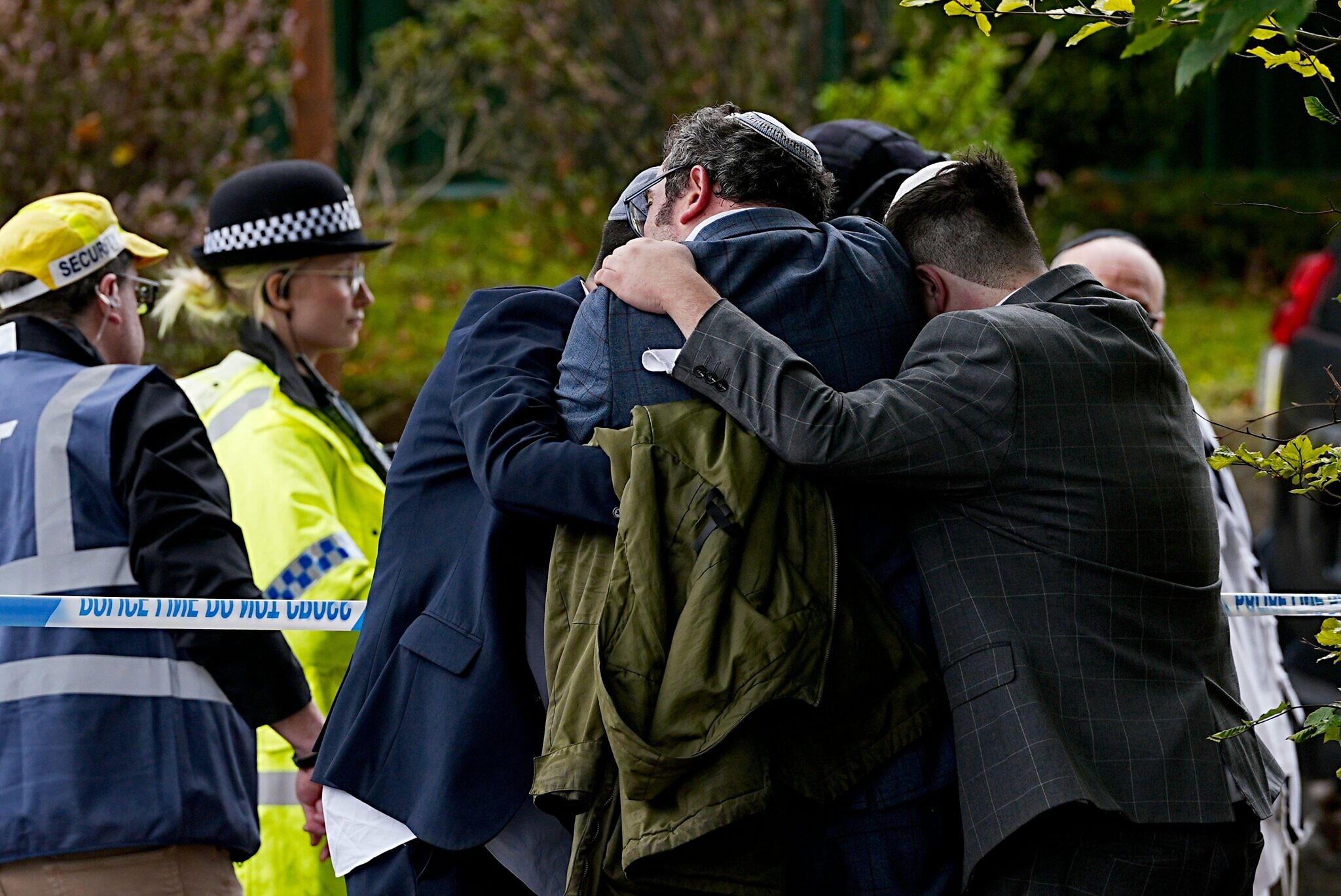
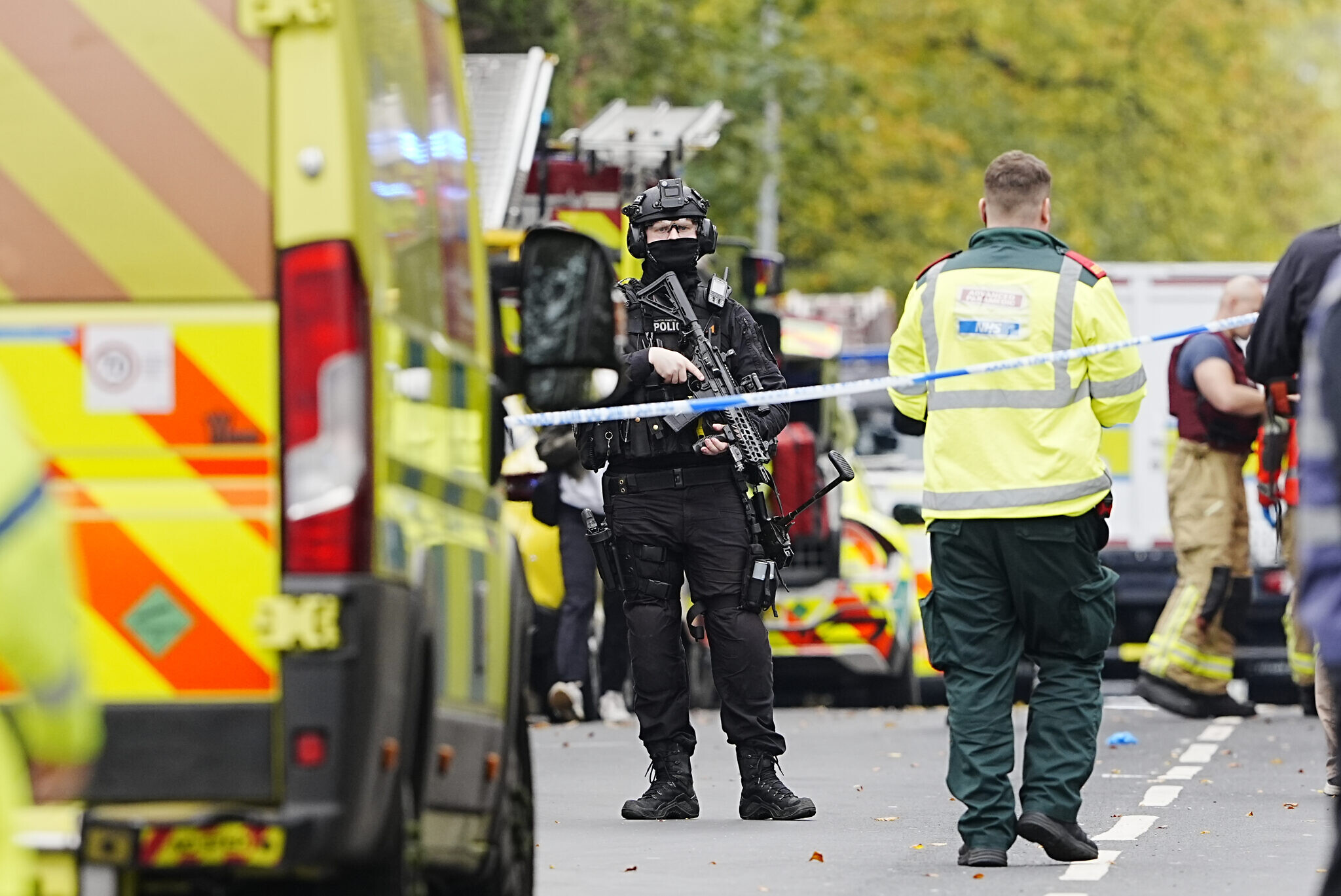
And the consequences have been lived in Manchester, where Jews were murdered on the doorstep of a synagogue on the holiest day of the year. They have lived in Bondi, where Jews were hunted down at a Chanukah lighting. They have lived in DC, at Brown University, in Amsterdam, Birmingham, Zurich, Berlin, Paris, and on and on it goes. They have lived every weekend on the streets of London and across the Western world, where marching for Palestinian freedom somehow never requires condemning Palestinian fascism.

This rising tide is not accidental. It is the direct result of leaders, institutions and gatekeepers refusing to do the most basic thing: draw a clear line between political criticism of Israel and racial hatred of Jews.
When they blurred that line, others gleefully took the opportunity to erase it entirely.
At the heart of this new hatred lies the greatest lie of all
The lie of genocide.
The lie that the Jewish people, survivors of the genocidal project that defined the 20th century, have become the perpetrators of the very crime committed against them. It is a lie that, once unleashed, was carried across the world by a perfect storm of forces; social media rage merchants, mainstream outlets chasing clicks, complicit celebrities, useful idiots and explicit antisemites who no longer bother to hide.
A lie so potent that it has created an atmosphere in which Jews can once again be dehumanised. Not as vermin this time, but as exterminators. Once a people is cast in that role, anything done to them becomes permissible. Even noble, even necessary.
This is the psychological architecture behind every attack, every threat, every chant.
And while Jews quietly plan escape routes, our communal leaders take selfies with the very institutions that failed us
If more than half of British Jews no longer see a future here, if six in ten are actively considering their options elsewhere, then at what point do our communal leaders stop managing decline and start preparing for reality?
Where is the framework for an honest conversation about our future? Where is the courage to speak to the numbers as they are, not as we wish them to be?
Because many of us are tired of watching leadership cosy up to institutions that have failed us time and again; tired of the photo ops, the polite statements, and the desperate desire to be liked by people who have made it abundantly clear that Jewish wellbeing is negotiable. Perhaps, between the thirsty selfies, they could also provide something we actually need.
A contingency plan, a roadmap, an escape route.
If British Jews ever have to pull the emergency slide, who has prepared the community for that reality? It won’t be the ones performing reassurance into microphones. And no — this is not a call to jump. It is simply the recognition that it’s far better to possess a plan you never use than to find yourself needing one that no one bothered to write.
Britain must now confront itself
A country in which half of its Jews no longer see a future is not a healthy country. A country in which 96 percent feel less safe than two years ago, less safe than the day on which more Jews were murdered than on any other since the Holocaust, is not a stable country.
A country in which the accusation of Jewish genocide can be shouted from national monuments without consequence is not a morally serious country. A country in which Jewish parents debate whether to keep their children’s identity visible is not a confident country.
This is the Britain we are living in right now.
A final truth, measured in numbers, felt in the soul of a nation
There are roughly 300,000 Jews in the UK. A community smaller than the population of a medium-sized town. A stitching thread in the national tapestry, thin but bright.
If half of that community were to leave, if 150,000 Jews quietly packed their bags and slipped away, Britain’s GDP would not collapse. Its infrastructure would not buckle. Its cities would not fall silent. On paper, in the cold arithmetic of census tables, the impact would be negligible.
But nations are not kept alive by arithmetic.
A Britain that loses half its Jews is not a Britain that “stays the same”. It is a Britain that has failed morally, spiritually, and historically.
Because when a people who have contributed so disproportionately to science, culture, medicine, law, philanthropy, business, public service, literature and national life look at the country they helped build and conclude, ‘We are no longer safe here,’ that is not an indictment of them. It is an indictment of you. It is an indictment of all of us.
A society that watches its Jews shrink, not through assimilation but through fear, is a society that has forfeited its claim to being tolerant, open or civilised. A country that drives out its Jews does not become less Jewish; it becomes less British.

And here is the truth that should chill every person in this country. If 150,000 Jews walked out tomorrow, Britain would not just lose a number. It would lose part of its moral centre of gravity, the canary in the coal mine, walking out of the mine.
A society that forces its Jews to consider the door is a society already halfway through it; it might well be a society for which the door cannot now be shut.
Numbers show what is happening; only courage decides what happens next. Because the packed suitcases under the bed aren’t a metaphor anymore; they’re a warning.
- Leo Pearlman is a TV and film producer

Keep community journalism free.
Jewish News is free for everyone. No paywall. No barriers. Just trusted journalism for anyone who wants to stay connected to Jewish life in Britain.
If you value that, please support us.
From as little as £5 a month, you can help keep our journalism free and accessible to all.
Every day, we report on the issues that matter to our community. We celebrate achievements, support charities, challenge antisemitism and ensure Jewish voices are heard more widely.
From as little as £5 a month, you can help us continue to:
- Report on the stories shaping Jewish life in the UK and beyond
- Bring our community together through shared stories, events and campaigns
- Celebrate the people, culture and moments that define our community
- Support organisations doing vital work across Jewish Britain
You can make a one-off donation or become a regular supporter. Every contribution helps keep our journalism free, independent and accessible to all.
If everyone who values Jewish News gave a small amount, it would make a real difference to our future.





















