Prefer Jewish News on Google
REVIEW: The Assembled Parties, Hampstead Theatre
Tracy-Ann Oberman steals the table in Richard Greenberg's compelling Christmas tale for dysfunctional Jews
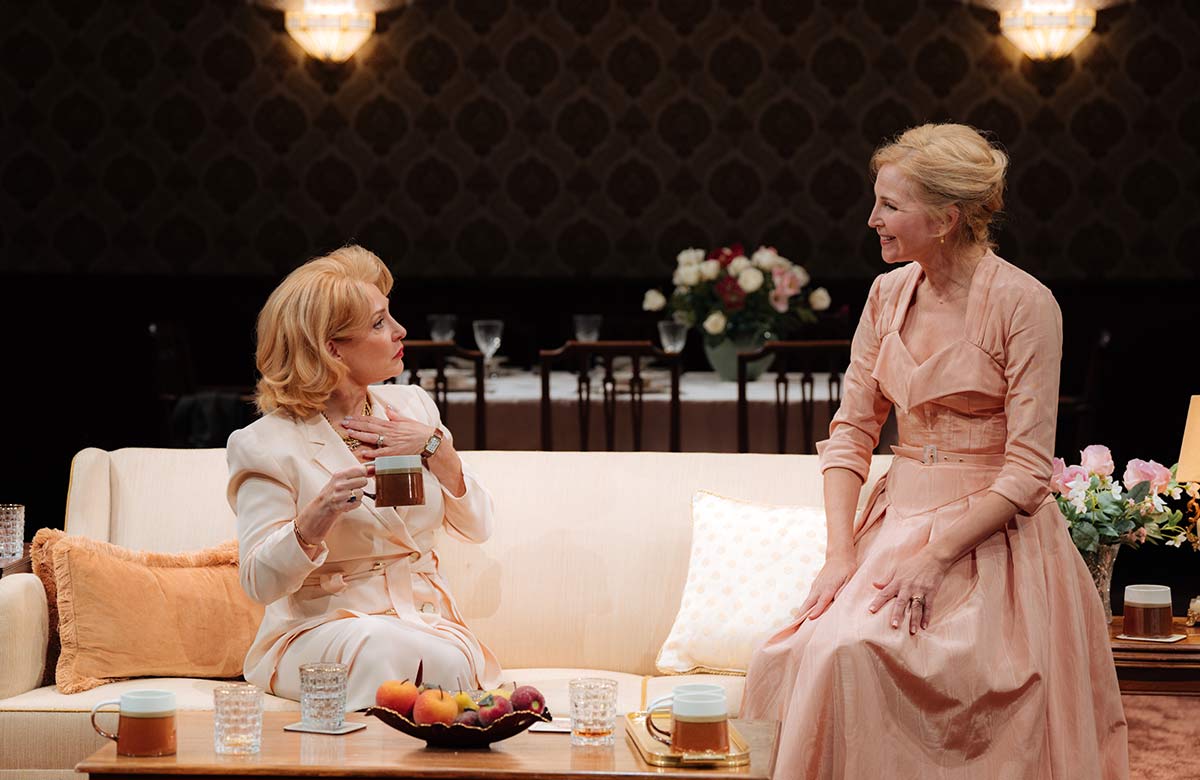
Richard Greenberg’s The Assembled Parties unfolds across two Christmases — one in the glittering 1980s, the other twenty years later — charting the slow unravelling of an Upper West Side secular Jewish family. It’s a play about memory, loss and the illusion of having it all: how time rearranges relationships until even the grandest apartment feels too large for what’s left of the people inside it. Prepare to laugh and tear up – all the more so when you learn that the playwright died this year.
The first act centres on Christmas Day in 1980. The setting – comfy lounge and long table dressed with your mum’s floral china plates – reminded me of Joan Rivers. Fortunate enough to do one of the last UK interviews with the comic genius before she died in 2014, she told me how much she loved Jewish holidays because they gave her the opportunity to display her many dinner services. But the table in Greenberg’s play is dressed by Julie, once a rising screen star until she settled down with husband Ben (Daniel Abelson) and it seems that she did the settling, if you get my drift.
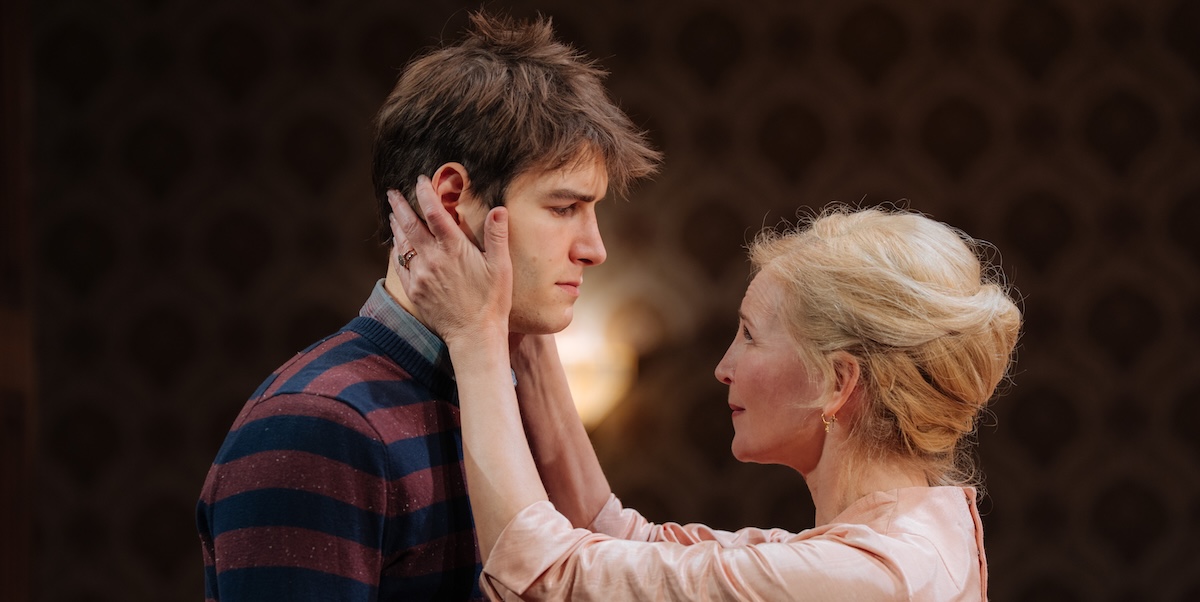
Julie is of German Jewish heritage which crudely made her a shikse in the eyes of her late mother-in-law, at least that is what Faye says. Yes, Faye Ben’s sister — the hurricane who blows through the apartment and steals every scene she’s in. Tracy-Ann Oberman embraces the role with the arms of a balaboosta and the attitude of aforementioned Rivers. TAO (as friends fondly refer to her) is dynamite as Faye from her first entrance and never loses her charge. With her halo of big hair, trigger timing and unstoppable energy, she’s the comic lifeblood of the evening.
Married to a blunt, overbearing man and mother to a socially awkward daughter who must be on the spectrum, she’s permanently caught between fury and barbism. Faye takes all the oxygen in the room, and when she’s gone, it’s like a balloon deflating — not a reflection on the fine cast, who more than hold their own, but a tribute to Oberman’s irresistible presence. Yet beneath the armour of one-liners and Yiddishisms Faye bears emotional scars inflicted by a mother who made her feel unseen. Too Freudian? Then forgive me. This is a play built on laughter and boy is it good to see a character who is Jewish with a capital J.
Julie’s J on the other hand, is written in watercolour and actress Jennifer Westfeldt who has a voice one pitch above that of Mia Farrow is a perfect fit. Fragile, elegant and fey, Julie seems incapable of cruelty — which makes it all the more delicious when her tongue turns diamond-sharp (accidentally). Julie has two sons — Scotty and much younger Timothy. Alexander Marks, in an impressive debut, plays Scotty in Act One and reappears in Act Two as older Tim, haunted by the absence of a brother who is one of the family members who has left the party and Marks handles the transition with delicacy, giving the production one of its most poignant through-lines.


It’s a very American play, arriving at a time when all eyes are on the US – when they’re not on Israel, but Greenberg barely dips a toe into politics with his mentions of Women’s Lib, Republicans, and President Trudeau the first. To be fair only Faye is interested in the Bushes -while insisting she isn’t political. All other cultural references chime only with those who are old enough (me) to remember e.e Cummings or heart throb Armand Assante without asking Alexa.
Packed with great lines I was particularly taken by “water is a garnish” as Faye dry-swallowed Valium and then “I’m not mocking you. I’m dismissing you,” from Julie. But the killer quip: “You always see the best in everyone. It’s not helpful” will be repeated by me ad infinitum.
Blanche McIntyre’s production glides from the glossy confidence of the Reagan era to the subdued melancholy of the early 2000s. Julie and Ben’s grand apartment, once a symbol of aspiration, becomes a mausoleum of memories. Time passes and the family that once reluctantly assembled scatter and even disappear.
For mothers, the play twangs on the heartstrings, showing how the years can either soften bonds or shatter them. It also reminds you that losing a mother — whether she was good or bad at the job — is always the biggest thing. And if Joan Rivers were here to see it, she’d probably lean over and say, “Julie, darling, you call that china?” before loudly scolding Faye for stealing the whole damn show.

Keep community journalism free.
Jewish News is free for everyone. No paywall. No barriers. Just trusted journalism for anyone who wants to stay connected to Jewish life in Britain.
If you value that, please support us.
From as little as £5 a month, you can help keep our journalism free and accessible to all.
Every day, we report on the issues that matter to our community. We celebrate achievements, support charities, challenge antisemitism and ensure Jewish voices are heard more widely.
From as little as £5 a month, you can help us continue to:
- Report on the stories shaping Jewish life in the UK and beyond
- Bring our community together through shared stories, events and campaigns
- Celebrate the people, culture and moments that define our community
- Support organisations doing vital work across Jewish Britain
You can make a one-off donation or become a regular supporter. Every contribution helps keep our journalism free, independent and accessible to all.
If everyone who values Jewish News gave a small amount, it would make a real difference to our future.