Prefer Jewish News on Google

From rising antisemitism to divisions over identity and Israel, President Isaac Herzog’s Voice of the People initiative brings together Jews from across the globe to bridge differences and turn difficult conversations into action
You’ve heard the saying: two Jews, three opinions.
So what could possibly go wrong when trying to bring together 150 Jews from Israel and the diaspora to tackle the pressing questions facing the future of the Jewish people? Add to that the pressure of rising antisemitism on Jewish communities around the world and Israelis in the throes of war, and the answer could easily be ‘a lot’.
But Israeli President Isaac Herzog said he was less concerned with what could go wrong than with what could go right when he launched Voice of the People.
A global initiative that brought together Jews from across the world to tackle some of the pressing issues facing Jewish communities today.
The only requirement for applicants was a “commitment to the future of the Jewish people”.

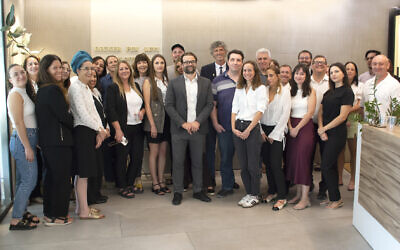
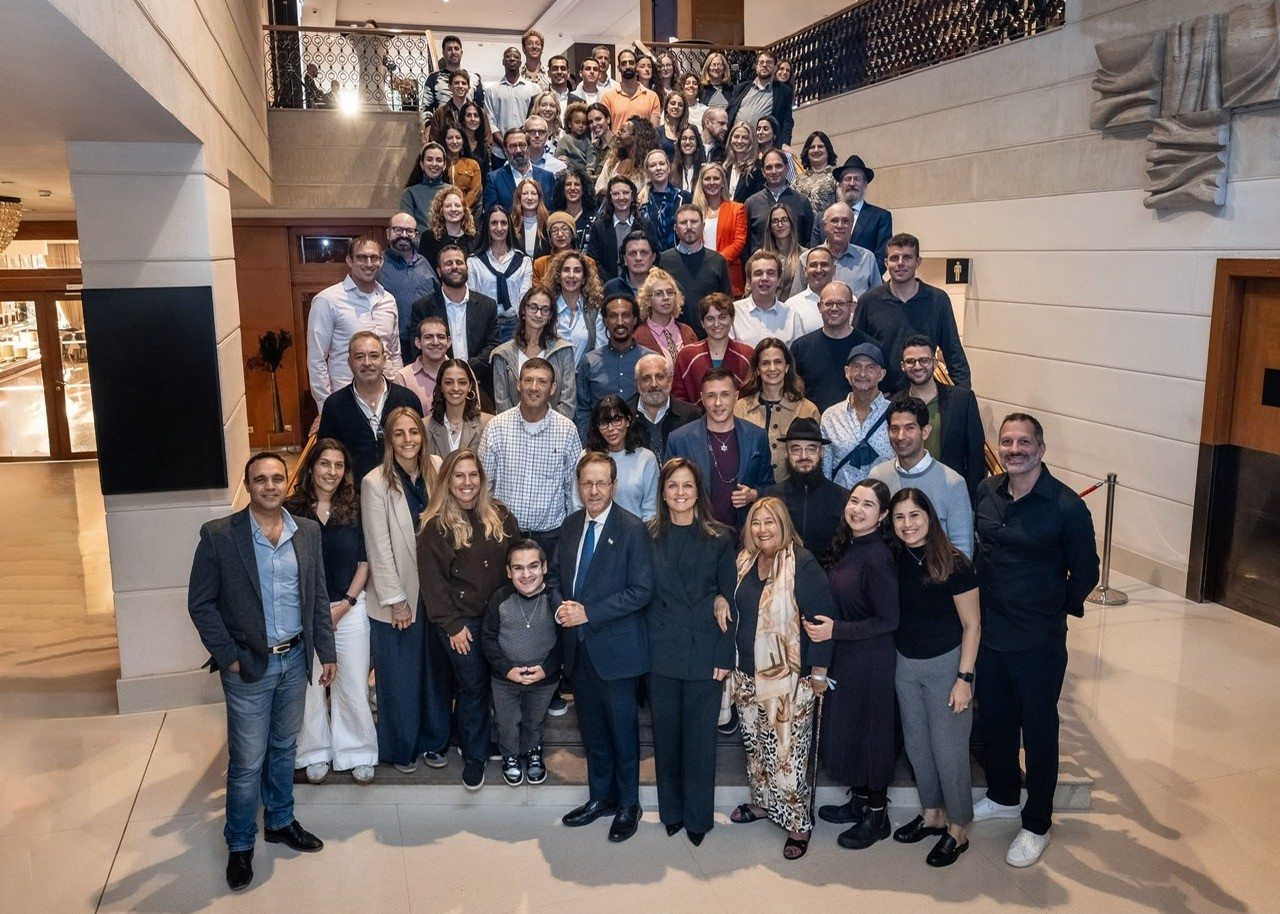
VOP’s first cohort has just concluded the inaugural term of its Council with a three-day conference in Budapest.
It brought together council members from across the Jewish world, from the Chief Rabbi of Azerbaijan, Zamir Isayev, to Naftali Aklum, whose late brother, Ferede Aklum, was the first Ethiopian Jew to make the journey to Jerusalem via Sudan.
Members came from worlds of tech and cybersecurity, artists, content creators and psychotherapists; their only challenge was to work together for the betterment of the Jewish people around the world.
Aklum said, “As a proud member of the Ethiopian Jewish community, I felt a deep sense of responsibility and pride in bringing our history, heritage, and experiences into these conversations.
“For me, the most powerful message was that despite our differences, we are one people with a shared history and a shared responsibility for our future.”
Over the last year, Jews from Latin America to Australia addressed issues ranging from antisemitism and polarisation within the Jewish community to Muslim-Jewish relations and politics.
Reflecting on his experience, Aklum, who represented one of the 50 members from Israel, said, “This experience reminded me that the Jewish world is much more diverse than we sometimes realise.
“We often speak about Jewish identity as though it means the same thing to everyone. But I encountered different perspectives on what it means to be Jewish, how people connect to Israel, and how communities preserve their identities.
“Coming from the Ethiopian Jewish community, which maintained its Jewish faith and traditions for centuries despite isolation from much of the Jewish world, I know how important it is to recognise and respect different Jewish experiences.
“I believe our diversity is not a weakness. It is one of our greatest strengths, provided we are willing to listen to and learn from one another”.
Shirel Dagan Levy, CEO of Voice of the People, said, “The events on 7 October raised profound questions for the Jewish people. Amid rising antisemitism, digital media battlefields and a generation of our future leaders grappling with the significance of their Jewish identity, there was an urgent call to action, and we responded to it.”
The 150-member Council comprised 50 members from Israel, 50 from North America and 50 from other regions around the world, including the UK and Europe. Since first convening in Haifa in March 2025, members have worked together to develop initiatives and partnerships, connecting individuals and communities who might otherwise never have encountered one another.
Dan Sacker is the founder of strategic communications and advisory firm EMEY Advisory and was one of the Council’s UK members.
Before joining Milltown in March 2022, he served as a senior adviser to Rabbi Lord Jonathan Sacks between 2011 and 2020, advising him on all aspects of his work, writing and online presence.
He said, “One of the things that really appealed to me and made me want to apply is the diversity of the council. You looked down the list of people, and it was not the usual suspects. It’s all these amazing people from so many different fields and parts of the world, and that was exciting.”
He said the experience had opened his world to an entire network of Jewish people “who can problem-solve and reach out to each other in ways we would never have been able to before”.
He added: “For me, coming up with initiatives was fun, but it was secondary to the network we have created and the power behind it. We need that now more than ever, and we can now support each other in all kinds of ways from across the world.”
Josh Aronson, another UK council member, was invited to deliver a session on disability and inclusion within the Jewish world.
Aronson, who is on the autism spectrum and a journalist, previously served as a coordinator for people with disabilities.
“For me, it has been interesting to hear that everyone has different trials and tribulations.”
His goal was to inspire others working in the Jewish community to make sure their workplaces were set up to employ people with disabilities.
He said: “When an organisation learns how to accommodate and empower someone who communicates differently, it actually becomes a more humane, efficient, and communicative workplace for every employer.”
I believe our diversity is not a weakness. It is one of our greatest strengths, provided we are willing to listen to and learn from one another
For Aklum, the willingness of organisers to address the division within the Jewish community globally was important.
He said “increasing division within the Jewish world, including disagreements between Israel and Diaspora communities and between different generations” was one of the key issues discussed by members over the last year.
“Another challenge is preserving Jewish identity, particularly among younger generations who may feel less connected to their history, traditions, and communities,” he said.
“I also believe we must do more to ensure that every Jewish community feels represented and included.
“The Ethiopian Jewish community, for example, has a remarkable history of faith, sacrifice, and resilience, yet its story is still not sufficiently known throughout the Jewish world.
“We cannot build a strong Jewish future without understanding and embracing the experiences of all parts of our people.”
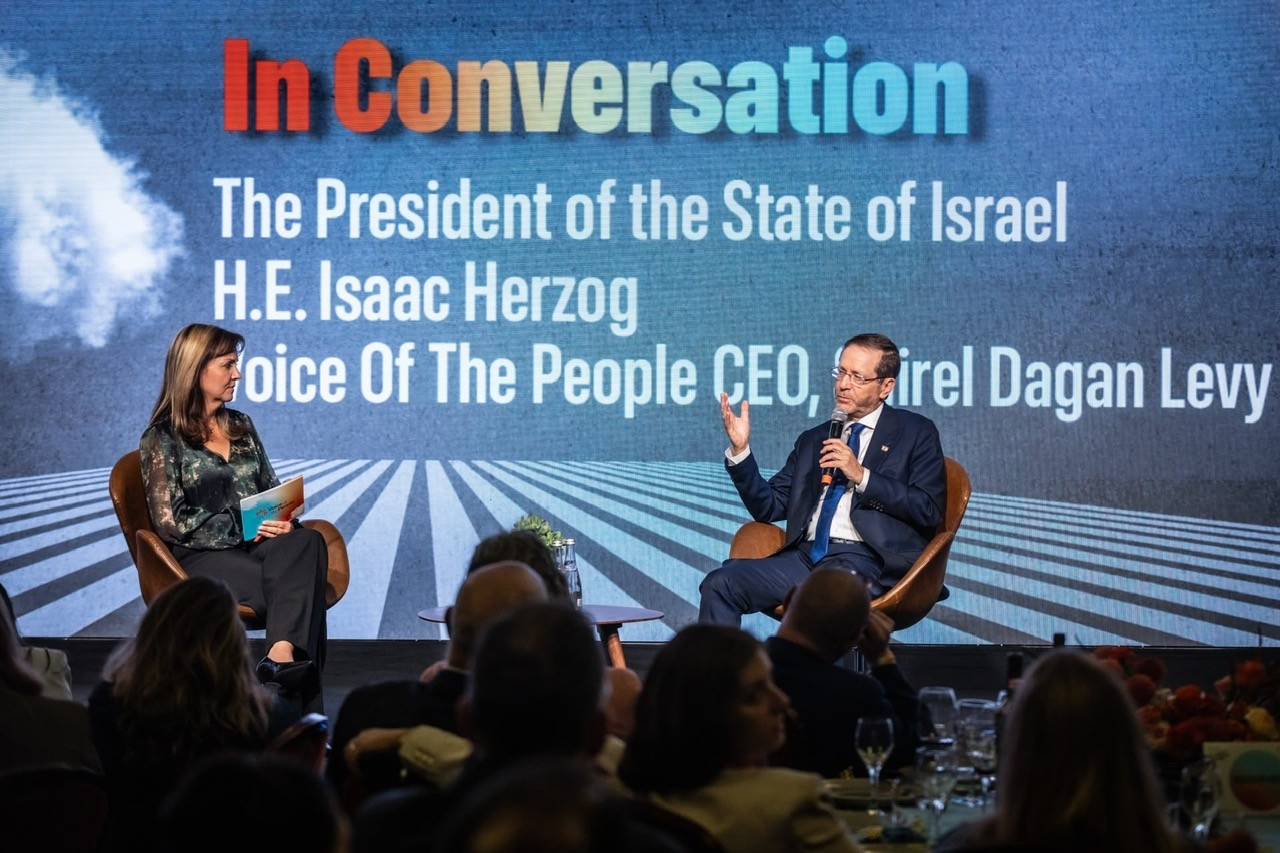
President Isaac Herzog, who joined Council members in Budapest for a dinner and conversation, said: “These gatherings are especially important in light of the disagreements and polarisation within the Jewish people.”
He told guests: “There have always been disagreements, and there always will be, but our responsibility is to create encounters and connection and to understand that we are in this together.”
He also said that Israel did not always sufficiently consider how events there and the actions of its government impact the diaspora.
He said, “We want the diaspora to know; we know what happens here impacts you, and we need to think about that more.”
As part of his visit, the president also met with his Hungarian counterpart and the new prime minister.
The Budapest conference also included a keynote interview with Rachel Goldberg-Polin.
Speaking at the conference, Goldberg-Polin reflected on the need for greater understanding between Jewish communities and the challenges of engaging across deep disagreements.
She said, “We were given this incredible inheritance. Every single one of us has the toolbox. What you choose to do with the toolbox is your business. Some people will put that toolbox in their attic. Some people will display it prominently in the middle of their dining room table. Some people will shove it under a bed, but you have it.”
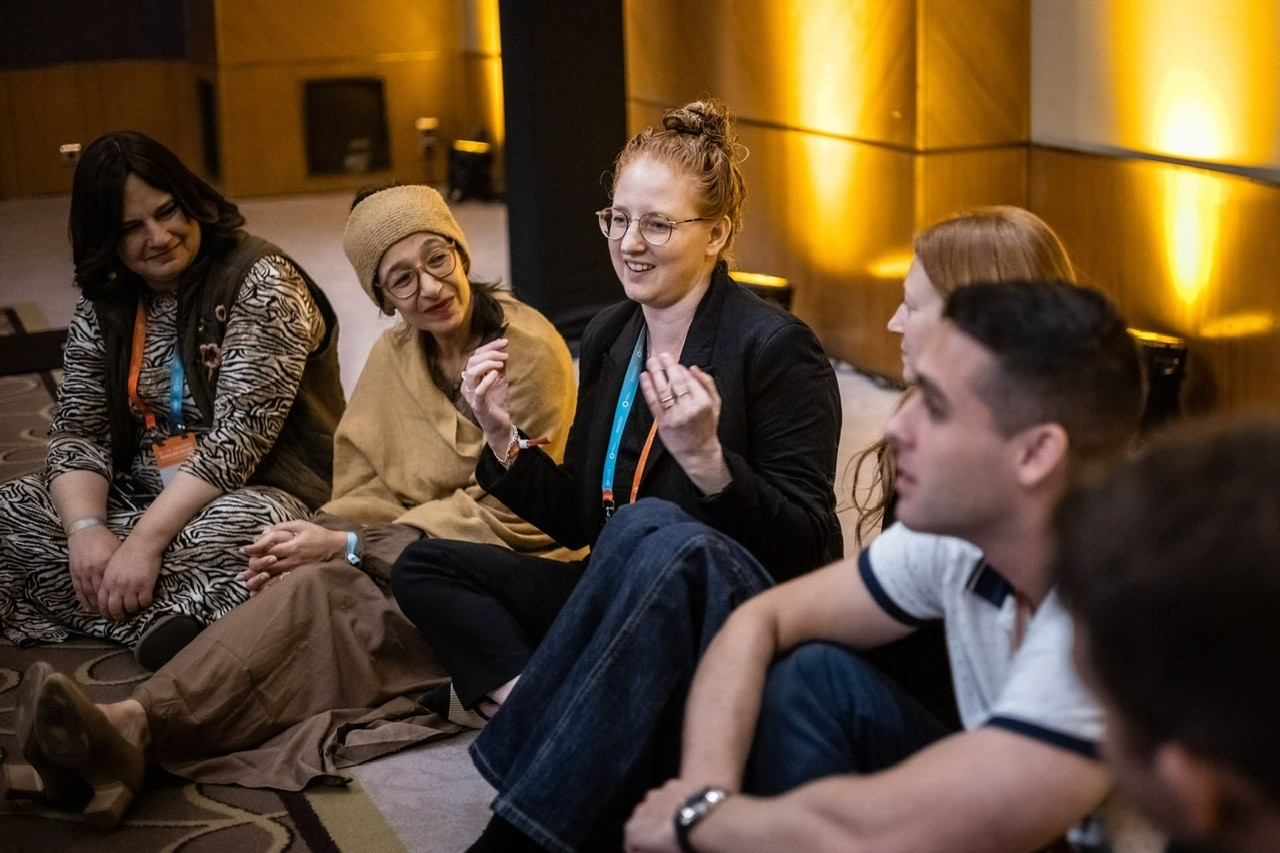
Nate Looney, the Jewish Federations of North America’s Director of Community Safety and Belonging on the Jewish Equity, Diversity and Inclusion (JEDI) Team, was one of this year’s Council members.
He said, “I think that the fact that we didn’t all run screaming afterwards is another sign of the success.
“I was a little apprehensive at the start, because I didn’t know what I was walking into. In my personal experience, there are often times when I get questions that I find offensive because I’m a Black man. I always get asked, ‘Well, how are you Jewish?’
“I have to pass a litmus test even to be accepted in a space. And it wasn’t lost on me that, in Haifa, during our opening convening, even though we were from all over the world and from all different backgrounds, I didn’t have a single person ask me how I was Jewish.
“I was like, ‘Wow, this is amazing’, because that doesn’t happen in any other space.
“So, to me, that said, ‘I’m in the right room,’ because these are folks who have evolved beyond that. Yeah.”
He said it was also “really interesting to see somebody who is Orthodox talking with someone who is secular and LGBT and speaking to each other with respect”.
“Those were the pieces where I was like, ‘Amazing.’ Really, it’s part of what kept me engaged.
“You have to expect that not all of the initiatives are going to go to the end. But the fact that some of the initiatives that have moved forward are really fantastic solutions to problems that we know exist — that’s check number one.”
Examples of initiatives that reached the presentation stage in Budapest included an interactive Jewish calendar designed to engage Jews with their identity, rather than being built solely around the religious calendar. Another initiative sought to tackle the exclusion of Jews from arts and cultural life by creating a global exhibition space and connecting Jewish artists from around the world.
There have always been disagreements, and there always will be, but our responsibility is to create encounters and connection and to understand that we are in this together.
Looney said, “Check number two: they’ve created a global network of Jews who care deeply about the future of our Jewish community and are cross-pollinating across a variety of industries and areas of expertise.”
He and his fellow Council members were in Group Three, which was tasked with focusing on polarisation within the Jewish community.
“What’s so funny is that, in Haifa, when we first came together as a group, we did an exercise where we took sticky notes and, as a group, wrote down all the issues polarising the Jewish community.
“When we were done, we laid out all the sticky notes across the table. The table was full. And it was like, ‘OK, so how are we going to solve this?’
“Some of the core issues are differences in religious observance. And there were some topics around, ‘Who is a Jew?’”
More than 20 initiatives reached the proof-of-concept stage with financial support from VOP.
Levy said, “The first Council has shown what becomes possible when Jews with different experiences and perspectives build trust and work together.”
The conference followed the close of applications for Voice of the People’s second cohort, which received approximately 2,500 applications, more than double the number received for the inaugural cohort.

Keep community journalism free.
Jewish News is free for everyone. No paywall. No barriers. Just trusted journalism for anyone who wants to stay connected to Jewish life in Britain.
If you value that, please support us.
From as little as £5 a month, you can help keep our journalism free and accessible to all.
Every day, we report on the issues that matter to our community. We celebrate achievements, support charities, challenge antisemitism and ensure Jewish voices are heard more widely.
From as little as £5 a month, you can help us continue to:
- Report on the stories shaping Jewish life in the UK and beyond
- Bring our community together through shared stories, events and campaigns
- Celebrate the people, culture and moments that define our community
- Support organisations doing vital work across Jewish Britain
You can make a one-off donation or become a regular supporter. Every contribution helps keep our journalism free, independent and accessible to all.
If everyone who values Jewish News gave a small amount, it would make a real difference to our future.