
 Prefer Jewish News on Google

OPINION: Diane Abbott’s wilful blind spot is dangerously wrong
By denying that antisemitism is racism, Abbott's hierarchy reopens wounds from Labour's darkest days under Corbyn
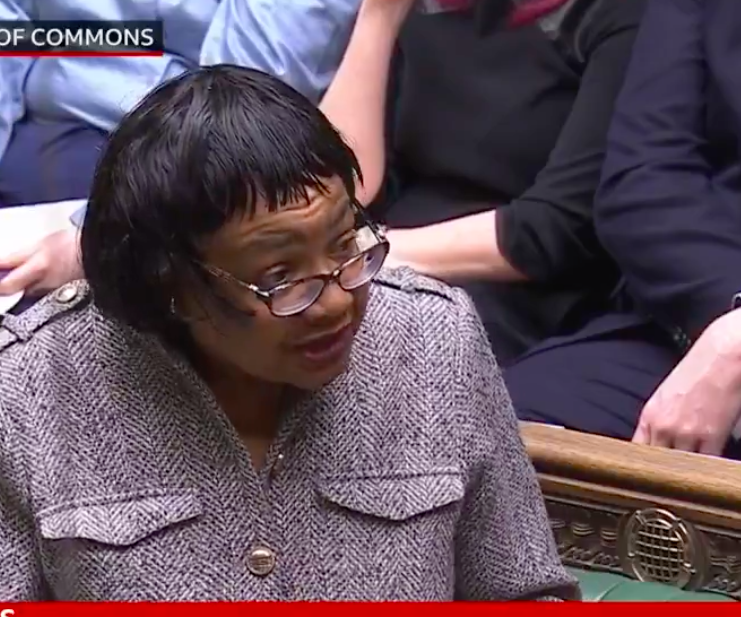
Diane Abbott has again proved herself to be completely tone deaf on the subject of antisemitism. In fact, it is worse, far worse. Hers is a case of wilful blindness caused, most likely, by the insidious ideology of identity politics with its hierarchy of victimhood, its anti-white politics and its sacralisation of race.
In her interview last week with the BBC’s James Naughtie, where she doubled down on comments made two years earlier in a letter for the Observer, Abbott said that ‘there must be a difference between racism which is about colour and other types of racism’.
Expanding on this, she said that a traveller or Jewish person walking down the street would not be easily identified as such, but ‘if you see a Black person walking down the street, you see straight away that they’re Black’. There are ‘different types of racism’, she declared.
This is true only to an extent. Many Jews, whether in Britain or elsewhere, can blend in with the rest of white society, as indeed can many travellers. But the idea that the community as a whole is not instantly recognisable would come as news to that sizeable percentage of religious Jews who suffer from hateful attacks on a regular basis.
They include a group of young ultra-orthodox boys who faced intimidating abuse when travelling on a bus in London in 2021 and several Jews attacked in Stamford Hill last year. Those victims were attacked precisely because they did not blend in with their gentile counterparts. They were visibly and undeniably Jewish.



In addition, there is a significant percentage of Jews around the world that one would hardly call ‘white’, including several million whose ancestors came from countries in the Middle East. They have no automatic ‘white privilege’ in any meaningful sense.

In her 2023 letter, Abbott said that Jews experienced prejudice, not racism. This is likely because racism is more about structural inequality imposed by a white-dominated society as opposed to purely nasty and hurtful comments directed at people who are mainly ‘white’.
One example of structural inequality emerged in the Jim Crow states of southern America, where Black people were forced to sit at the back of buses under strict segregation laws. Abbott is right that Jews did not suffer under Jim Crow laws any more than they were victims of South African apartheid. But it is only a half-truth.
For until recently, Jews did suffer structural inequality as well as prejudice in white-dominated societies. There were many places where Jews could not live and many places from which they were expelled. Jews often had to wear special clothing to mark them out from their gentile counterparts. They had to pay special taxes and faced a series of restrictions on where they could work.
Numerous European societies in the modern age limited the Jewish intake at universities via the so-called Numerus Clausus quota system. Jews experienced segregation in the 1930s in Polish universities and were heavily restricted from applying to Hungarian, Yugoslavian and Romanian ones. They faced discrimination at Harvard and Yale, as well as some Canadian institutions.
In prewar Britain, many newly qualified Jewish doctors had to Anglicise their names in order to gain advancement in their careers. After the war, it became very hard for Jews to obtain a senior surgical post in the Central London teaching hospitals.
Of course, in the history of antisemitism, cases of second-class treatment pale in insignificance to the horrors faced by European Jews in the Holocaust.
But Abbott is wrong about racism too. Race, far from corresponding to skin type, is a social construct in which negative traits are attributed to identifiable groups by those who wish to demean them. Racists believe that there is an immutable physical, cultural or ethnic essence to such racialised groups which, in turn, both explains their nefarious behaviour and justifies their exclusion or elimination from society.

In the same way, antisemites construct the image of the demoniacal Jew, a figure whose malevolence and cunning threaten gentile neighbours and portend harm to the world. As a result, Jews, like other groups, experience harm whether or not they can be visibly identified.
Abbott’s hierarchy of racism, her Olympics of victimhood, can only be understood by reference to the prevailing doctrine of identity politics. In this worldview, society is divided up into oppressors, who in Western societies are invariably dominated by white people, and the oppressed and discriminated against, made up of powerless minorities. True racism comes from the inequality that is imposed by the dominant class against the oppressed.
By seeing Jews as essentially white, and thus as part of a privileged elite, it is hard to see how they can experience racism, as opposed to prejudice. Of course, such a view itself plays into antisemitic tropes of Jews as powerful and controlling, tropes which are as old as time.
Abbott had no need to buy into this competitive victimhood. She is right to observe that racism manifests itself in different ways and that the tropes, cyphers, narratives and iconography pertaining to each form of racism deserve separate scrutiny. She has also experienced anti-Black racism throughout her life and deserves sympathy on that score. Doubtless too, she remains a role model for many aspiring Black leaders who admire her tenacity and years of public service.
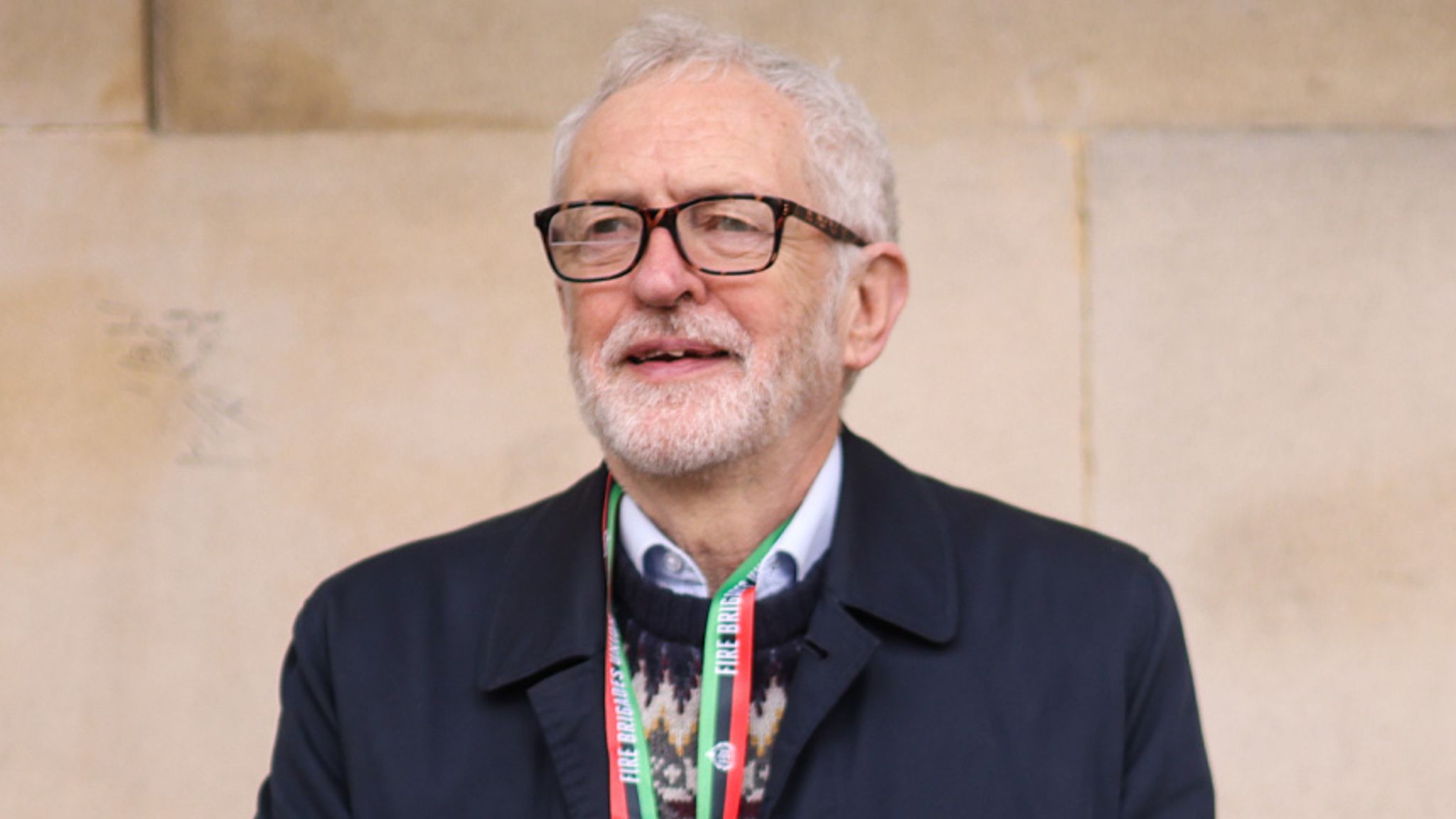
But by downplaying the relative seriousness of antisemitism, she has simply reopened wounds from the noxious years of Jeremy Corbyn, an era when Labour became an institutionally antisemitic party that gaslighted, abused and threatened the Jewish community. The scars of that era will only be reopened with these latest comments, and that is why Labour was right to suspend her.
- Jeremy Havardi is a freelance journalist and author

Keep community journalism free.
Jewish News is free for everyone. No paywall. No barriers. Just trusted journalism for anyone who wants to stay connected to Jewish life in Britain.
If you value that, please support us.
From as little as £5 a month, you can help keep our journalism free and accessible to all.
Every day, we report on the issues that matter to our community. We celebrate achievements, support charities, challenge antisemitism and ensure Jewish voices are heard more widely.
From as little as £5 a month, you can help us continue to:
- Report on the stories shaping Jewish life in the UK and beyond
- Bring our community together through shared stories, events and campaigns
- Celebrate the people, culture and moments that define our community
- Support organisations doing vital work across Jewish Britain
You can make a one-off donation or become a regular supporter. Every contribution helps keep our journalism free, independent and accessible to all.
If everyone who values Jewish News gave a small amount, it would make a real difference to our future.





















