Prefer Jewish News on Google

The scale of Trump’s betrayal is hard to contemplate
Israel, along with the rest of the region, will pay the price for the US President's vain and mercurial approach to world affairs
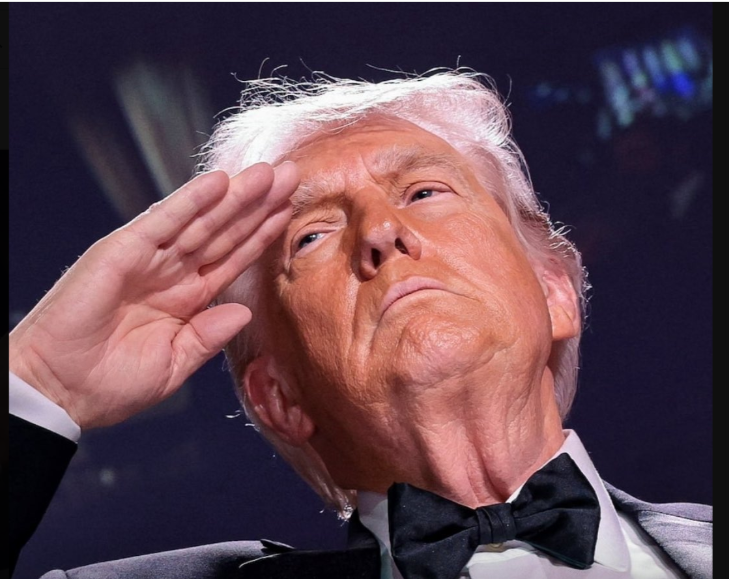
In a short matter of a few months, Trump has gone from being Cyrus the Great to Neville Chamberlain. The ‘guarantor’ of Israel’s security and the heroic defender of the West, the man touted as the ‘noble liberator’ of the Iranian people, has become just another cowed western leader who has been played viciously by the Islamic Republic’s theocracy.
Trump’s decision to sign the memorandum of understanding with Iran is all about short term benefits – avoiding inflation, calming the energy markets and winning the mid-terms. The Iranians sensed his desperation and, true to form, took full advantage. As Trump ought to know, they are masters of negotiation who know how to exploit their enemies’ weaknesses and play for time.
From Israel’s perspective, never mind that of the Iranian people, this is a monumental betrayal. Trump was the one leader willing to break with the political consensus and use force against the Iranian regime. He understood something his predecessors did not; that to destroy Iran’s nuclear ambitions, every option had to be on the table.
But the President’s failure to anticipate how the Iranians would weaponise the Strait of Hormuz was a political blunder of the highest order. It will come to be seen as the Alpha and Omega of strategic disasters and one that will be studied in war colleges for decades to come. Israel, along with the rest of the region, will pay the price for Trump’s vain and mercurial approach to world affairs.
Consider the key terms of the MOU, first leaked by Bloomberg and now other publications. In return for an ‘immediate and permanent end to the war on all fronts, including Lebanon’ and the lifting by both sides of the blockades in Hormuz, Iran will have massive injections of much needed cash.

The most eye watering component is a $300 billion fund for Iran’s ‘rehabilitation and economic development’ to pay for war damages. In addition, the US has committed to ending all types of sanctions on Iran, including those imposed by the UN and the IAEA. In addition, the US will immediately unfreeze billions of dollars in seized assets, money which can be ‘used for any final beneficiary payment determined by the Central Bank’ of Iran.
Naturally, one would be a fool not to see where this money will go. The Iranians can provide funds to their proxies, especially Hezbollah, who have been badly hit in recent months and rebuild their terror arsenal at home. Months ago, their battered country was in economic free fall, staggering under the weight of American and Israeli bombs. Now they are being thrown the greatest of all lifelines in a perverse turnaround.
Promises to rid Iran of its nuclear weapons programme should be met with some scepticism too. Under article 8, Iran ‘reiterates that it will never produce nuclear weapons’ and that the ‘fate of enriched material and the fate of all other mutually agreed nuclear-related issues’ will be discussed in a final agreement.
Yet the US’s red lines appear to have shifted recently, from insisting on zero enrichment and the external dilution of Iran’s highly enriched uranium to allowing Iran some enrichment (3.67%). It is also not clear what will happen to the stockpile of 20% enriched uranium, material which can be turned into weapons grade material in the future, or what sunset clauses and verification standards will be placed in any deal.
One thing is certain. A country that has a history of evasion, concealment and deception cannot be trusted to sign a deal based on promises and assurances. The infrastructure of enrichment needs to be dismantled, along with the Iranian stockpile.
The Israelis will also not be the only country worried that the MOU is silent about the Iranian ballistic missile program, an existential threat to the region if there ever was one.
The worst thing from an Israeli perspective is the tying together of the Iranian and Lebanese battlefronts. Iran is likely to demand the IDF’s withdrawal from Lebanon, including its security posts in the south, as the prelude to a wider settlement.
But such actions must be accompanied by the meaningful disarmament of Hezbollah and an end to the terror group’s presence in the south of Lebanon. That requires a grand political settlement with the Lebanese, whose president is amenable to achieving this aim. Yet Trump is so busy lashing out at Israel’s actions in Lebanon that he seems to have ignored the malevolent role played by Hezbollah and its Iranian patron altogether.
Worst, the ayatollahs know they can stall for time, stringing out these talks for weeks and months, as per article 1. They are making the rational calculation that intransigence will pay because the US will be highly unlikely to resume the war with the midterm election campaign in full swing.
Any resumption of US force would lead to another blockade of Hormuz which would, in turn, trigger further economic turmoil. Thus, Iran’s belief that it can pulverise the world economy at will has been spectacularly vindicated by the US.
Trump set out his stall on defying his predecessors, Barack Obama and Joe Biden. He was certainly right to do so on the issue of Iran, where both pursued a policy of appeasement. But if Trump does not change course, he may end up being the most egregious appeaser of them all.

Keep community journalism free.
Jewish News is free for everyone. No paywall. No barriers. Just trusted journalism for anyone who wants to stay connected to Jewish life in Britain.
If you value that, please support us.
From as little as £5 a month, you can help keep our journalism free and accessible to all.
Every day, we report on the issues that matter to our community. We celebrate achievements, support charities, challenge antisemitism and ensure Jewish voices are heard more widely.
From as little as £5 a month, you can help us continue to:
- Report on the stories shaping Jewish life in the UK and beyond
- Bring our community together through shared stories, events and campaigns
- Celebrate the people, culture and moments that define our community
- Support organisations doing vital work across Jewish Britain
You can make a one-off donation or become a regular supporter. Every contribution helps keep our journalism free, independent and accessible to all.
If everyone who values Jewish News gave a small amount, it would make a real difference to our future.