Prefer Jewish News on Google

The case for regime change in Iran
Military action by the US and Israel is justified by self-defence, Iranian aggression and the regime’s brutality
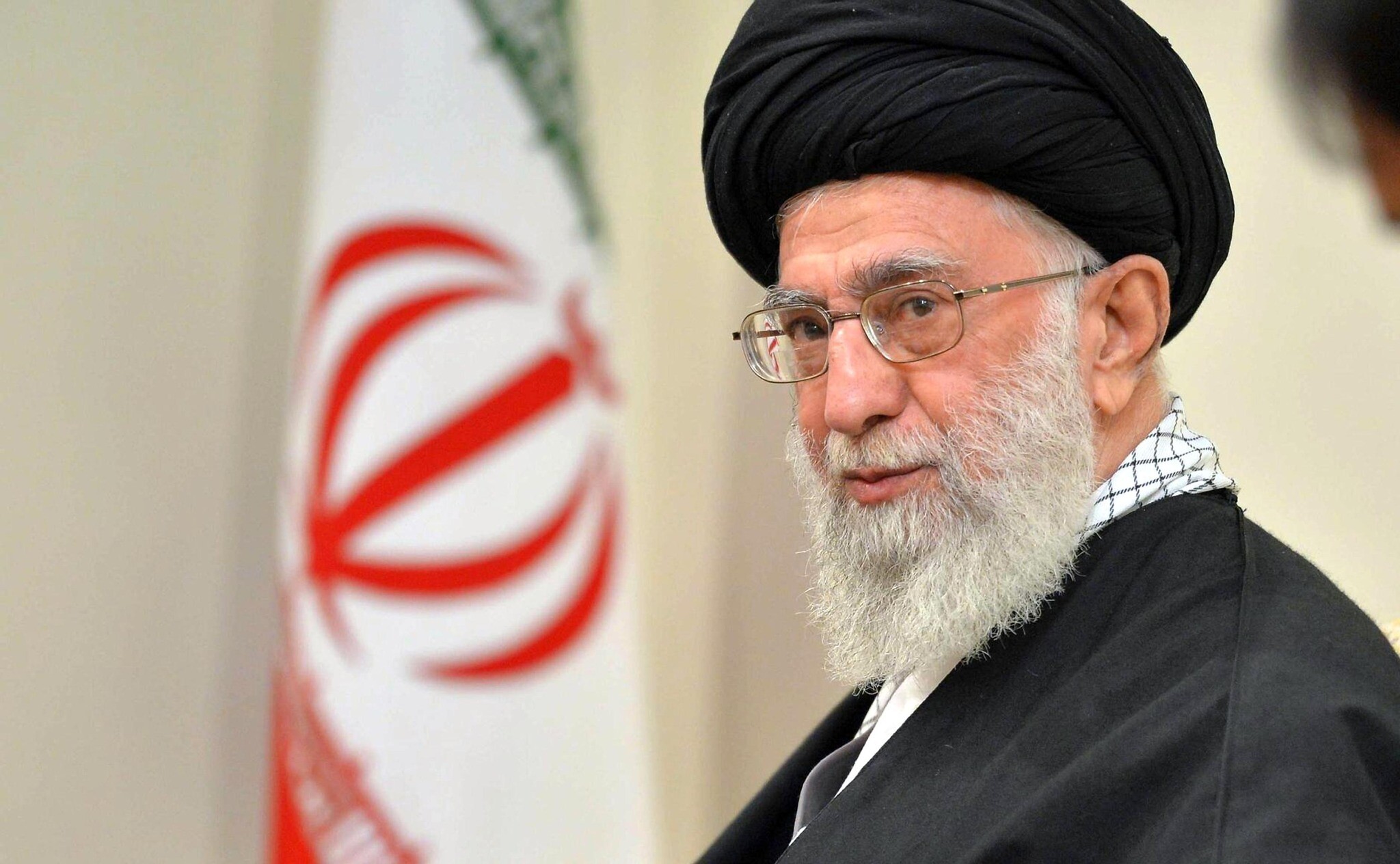
Ever since the US and Israel started bombing the Iranian regime over a week ago, the voices of condemnation have been ratcheting up. Charges of illegality have come thick and fast from across the world, with diatribes from many of the usual suspects (Vladimir Putin, the UN Secretary General, Pakistan, Brazil and Turkey) as well as an array of populist politicians from the left.
Labour MP Richard Burgon slammed an ‘illegal act of aggression which makes the world less safe’, while for Green Party leader Zack Polanski, this was ‘an illegal and unprovoked attack’ which showed that the US and Israel were ‘rogue states’. Meanwhile, America’s far-left ‘squad’ voted against reaffirming Iran as the ‘largest state sponsor of terrorism’, having already lashed out at the President for his ‘illegal regime change war’. This is puerile posturing masquerading as serious political analysis.
The war being pursued by America and Israel is both legally and politically justified, even if questions remain about the long-term strategy. Both America and Israel can claim the right to self-defence in the face of blatant Iranian aggression, a right safeguarded under Article 51 of the UN Charter. Neither country requires the approval of Russia and China to defend themselves from attack, not that such permission would be granted if they did ask.
In Israel’s case, the arguments are even more straightforward. Israel has been in a state of war with Iran since at least 13 April, 2024, when Tehran launched waves of ballistic and cruise missiles, as well as drones, at the Jewish state. Again, in October 2024, Iran launched another wave of attacks at Israel using the same weapons, ostensibly in response to the killing of Ismail Haniyeh on its soil.
In fact, the 7 October attacks could be considered an Iranian act of war, given that it had been arming and funding the central protagonist, Hamas, for years. Whatever timeline one takes, there has clearly been an ongoing armed conflict between the two countries, and the idea that Israel’s defensive actions have to be confined merely to its own territory is fanciful at best. It is entirely legitimate to take the war to an enemy state.

It is equally fatuous to deride Israel’s claim to be acting in self-defence against an imminent threat. Despite the massive destruction wreaked on Iran’s nuclear weapons industry during Operation Rising Lion and Operation Midnight Hammer, Iran is still believed to have possessed some 430 kg of highly enriched uranium before the start of this war. This was reportedly enough material to create nine nuclear weapons.
Iran has also been rapidly rebuilding its medium- to long-range ballistic missile capability, seen by Jerusalem as a major existential threat. Given that the regime is ruled by an elite of theocratic fascists who are dedicated to Israel’s destruction, such grave threats cannot be tolerated. It is unrealistic, even absurd, to ask a country to wait until it is attacked with weapons of mass destruction before taking the initiative.
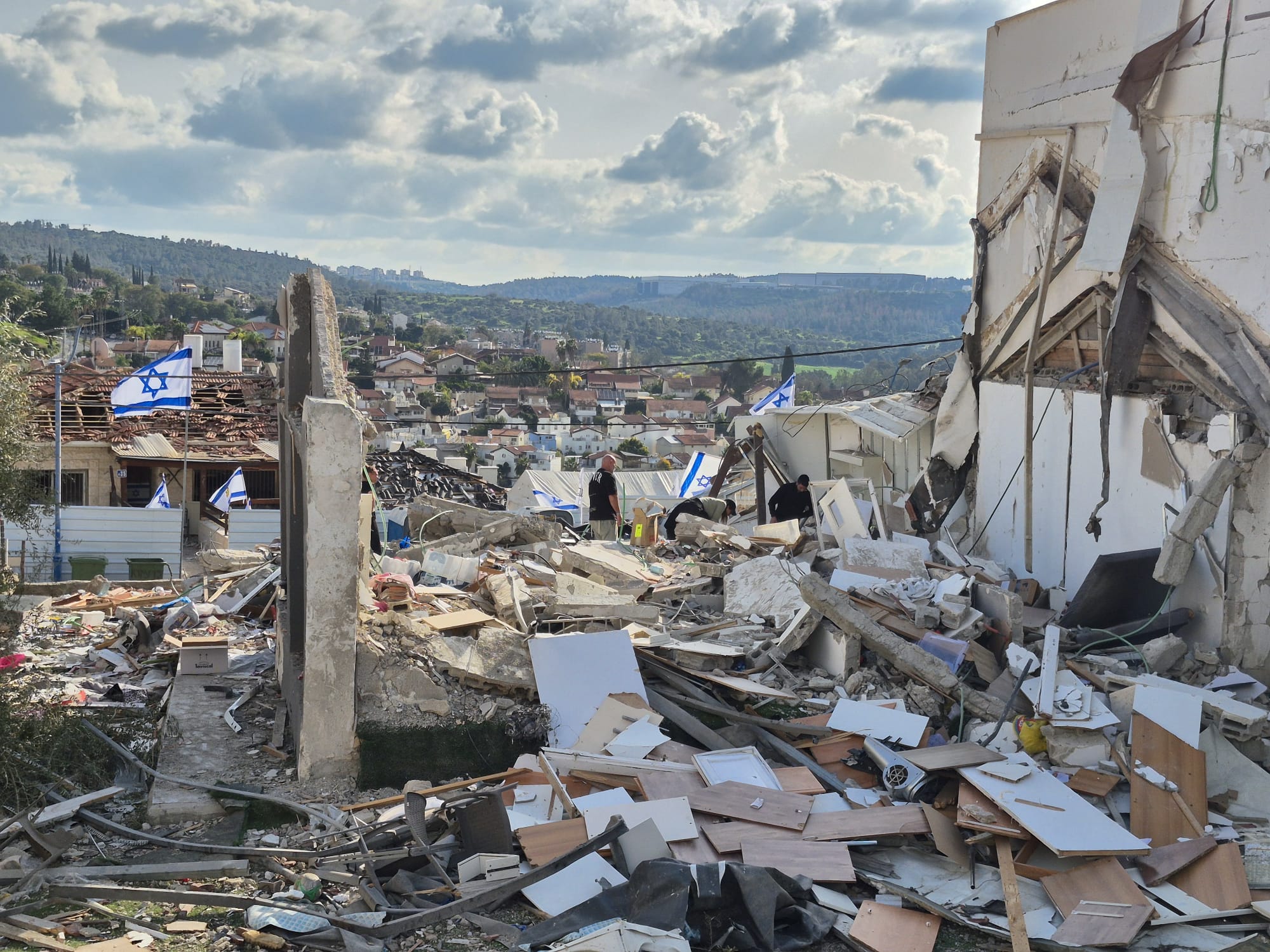
America, too, is justified in launching these attacks. It has the right to come to the aid of an ally that has been relentlessly bombarded by Iranian proxies since 7 October, never mind the years that preceded that crime. More importantly, Iran has the blood of hundreds of Americans on its hands from the 1980s to the present.
Iran-backed Hezbollah led the way in Lebanon, slaughtering 241 U.S. military personnel in the 1983 truck bombing in Beirut, as well as kidnapping and killing CIA station chief William Buckley. Iran-backed terror groups killed numerous Americans in suicide bombings in Israel and an estimated 603 troops in Iraq, according to the Pentagon. Moreover, 48 Americans were killed in the demonic savagery of 7 October.
The regime’s refrain of ‘death to America’ is not some idle piece of rhetoric but a violent call to arms in the region. From Trump’s point of view, the only viable way to remove this threat is to destroy the regime. That happens to be Israel’s view too.
There is an added layer of moral justification, sometimes called ‘the responsibility to protect’ (R2P). The R2P principle ensures that the international community protects populations from genocide, war crimes, ethnic cleansing and crimes against humanity.
During the January crackdown, it is estimated that tens of thousands of Iranians were murdered by the brutal thugs of the IRGC and Iraqi militias. They shot unarmed protesters, bystanders and children with live ammunition and have executed many more in recent weeks. While the UN Security Council would be required to intervene under R2P, this would be impossible due to Russian and Chinese vetoes. But there is still a moral case for intervening to protect the civilian population.
Moreover, this is no longer merely a US-Israeli war with Iran. Tehran’s response has been to launch missile and drone attacks against ten Arab neighbours in an attempt to set the region on fire and force it to pressure America into ending the war. Many of those countries happen to be allies of the UK, as well as America.
That partly explains why Sir Keir Starmer’s response to this crisis has been so disappointing. The UK government has many of the same reasons for regarding Iran as an abhorrent rogue regime that threatens British interests. Iranian weapons have killed British troops on the battlefield, its proxies have murdered British-Israelis, and it has kidnapped British citizens, such as Nazanin Zaghari-Ratcliffe. In 2025, MI5 Director General Ken McCallum revealed that his agency had tracked more than twenty potentially lethal Iran-backed plots in just one year.
From the start, Starmer should have allowed the US access to its air base in Diego Garcia, both in recognition of Iran’s regional threat and as a way of cementing the Special Relationship. Instead, Starmer’s initial refusal, followed by a half-hearted U-turn, has alienated the UK’s key ally and incurred the wrath of other nations, including Cyprus.

Of course, the campaign is still fraught with danger. Oil and gas prices are surging, and this is impacting the stability of the world economy. We have yet to see major defections from within the IRGC, the one factor that would allow the Iranian people space to rise up against their oppressors. It is not clear that there is a unified ‘government in waiting’ ready to take over from the ayatollahs. Thus, there are many imponderables and unanswered questions at this moment.
But while war with Iran entails grave risk and uncertainty, the rewards are huge too. Were the Islamic Republic to fall and be replaced by a pro-Western government, the boon for the region would be profound and long-lasting. It would crush the terror groups that have plagued that region for decades, creating space for an expansion of the Abraham Accords and even the chance for an Israeli-Palestinian accommodation.
Moreover, the fall of the ayatollahs would be a crushing blow to China and Russia, two autocracies vying for supremacy in today’s increasingly multipolar world. The demise of the Islamic Republic would be akin to the Berlin Wall’s collapse in 1989. That is why the West should stand with the US and Israel in demanding regime change in Iran, a demand which is both morally and legally justified.
- Jeremy Havardi is a freelance journalist and author

Keep community journalism free.
Jewish News is free for everyone. No paywall. No barriers. Just trusted journalism for anyone who wants to stay connected to Jewish life in Britain.
If you value that, please support us.
From as little as £5 a month, you can help keep our journalism free and accessible to all.
Every day, we report on the issues that matter to our community. We celebrate achievements, support charities, challenge antisemitism and ensure Jewish voices are heard more widely.
From as little as £5 a month, you can help us continue to:
- Report on the stories shaping Jewish life in the UK and beyond
- Bring our community together through shared stories, events and campaigns
- Celebrate the people, culture and moments that define our community
- Support organisations doing vital work across Jewish Britain
You can make a one-off donation or become a regular supporter. Every contribution helps keep our journalism free, independent and accessible to all.
If everyone who values Jewish News gave a small amount, it would make a real difference to our future.