Prefer Jewish News on Google
OPINION: Inside the mind of Yossi Cohen – reflections on ‘Sword of Freedom’
Leah Stern discusses a new work by a former Mossad spy chief
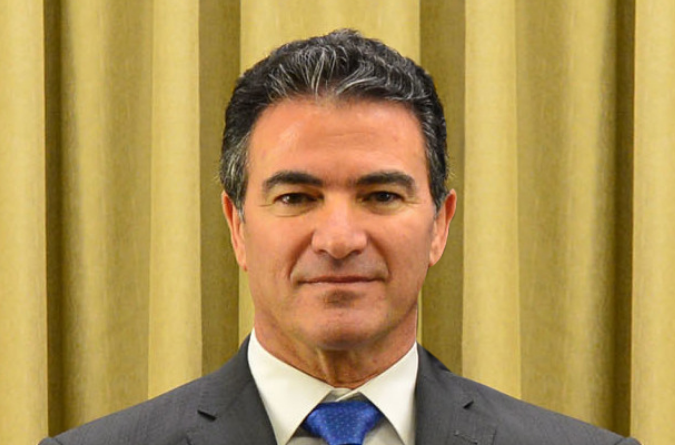
Walking past rows of police outside JW3 in London, it was clear this was no ordinary book talk. The heavy security was for Yossi Cohen, the former head of Mossad, who drew a packed audience to hear him in conversation with Telegraph editor Jake Wallis Simons about his new book, The Sword of Freedom.
Cohen has long been seen as more than an intelligence chief. Architect of Israel’s most daring operations, from spiriting away Iran’s nuclear archive to brokering the Abraham Accords, he has become both symbol and strategist. His book, and his candour on stage, underscored why his perspective matters now.
What struck me first was his frankness about Britain’s political shifts. He recalled that in 1947 the UK abstained from the UN vote on partition and quipped that “we miss the days when Britain didn’t have an opinion about us.” With London now formally recognising a Palestinian state, Cohen dismissed the move as “in-between unreliable and ridiculous,” arguing there is “no proper Palestinian authority” capable of governance. “We keep Abbas alive by fighting his enemies,” he said, “and that keeps him going.”
That mix of blunt realism and dry humour ran through the evening. Cohen, raised in an Orthodox family in Jerusalem, spoke about his early days as a young recruit. He described Mossad training as a process of being “recruited from within your heart” and “inventing yourself with only your instincts.” The cover story, he said, is your only shield: “When your heartbeat goes high — I love it. When you leave the airport, you’re no longer Yossi Cohen. But Jerusalem is always in your pocket.”
There were moments of vulnerability too. Recalling a source who discovered that two Israeli soldiers he admired had been killed, Cohen admitted stepping into the bathroom to cry. He later described weeping again, this time at the signing of the Abraham Accords. For a man known as the ultimate operator, those glimpses of emotion were perhaps the most humanising.



Cohen was equally compelling on the future. He argued that the next wave of intelligence will be shaped by artificial intelligence. “If AI had digested the intelligence before 7 October, the result would have been better,” he reflected, suggesting that the tragedy revealed not just gaps in human analysis but the urgent need for AI-driven reasoning.
He also spoke with conviction about Britain’s dependence on Israel’s security know-how, noting that while in office he worked closely with MI5 and counter-terrorism partners. “That creates fundamental trust,” he said, “something politicians don’t know.” In his view, intelligence cooperation is the real backbone of UK–Israel ties, even as political rhetoric drifts.
On regional affairs, Cohen was characteristically direct. He confirmed that Saudi normalization remains on track, with three stages: ending the war in Gaza, securing the US relationship, and confronting Iran. He recalled that Gulf leaders negotiating the Abraham Accords “don’t care about the Palestinians” in the way outsiders assume, but care deeply about their own security and interests. His trust in American leadership — even after political transitions — came through strongly.
Listening to Cohen, one could not help but contrast his pragmatism with the slogans dominating headlines. He is a man who has spent his life in shadows, yet insists on clarity: war is bad, but sometimes necessary; peace comes not from illusions, but from interests aligned; leadership means keeping professional distance, even from those you send on the most dangerous missions.
What does this mean for the UK audience that packed JW3 under police guard? Perhaps it is a reminder that intelligence and diplomacy are not abstractions but lived realities. Cohen’s stories, from crying in a bathroom in Jerusalem to watching Mossad operatives crack open safes in Tehran, brought home both the stakes and the humanity of those who defend Israel.
The Sword of Freedom is more than a memoir. It is a challenge to think seriously about leadership, resilience, and the future of the Middle East. In a time when Israeli and Jewish voices risk being “cancelled,” Cohen’s unapologetic clarity felt like a breath of fresh air and a call to have the difficult, necessary conversations that politics alone can’t resolve.
Leah Stern is Partner, Global Communications for Israel’s most active venture firm, OurCrowd. She heads their UK operations.

Keep community journalism free.
Jewish News is free for everyone. No paywall. No barriers. Just trusted journalism for anyone who wants to stay connected to Jewish life in Britain.
If you value that, please support us.
From as little as £5 a month, you can help keep our journalism free and accessible to all.
Every day, we report on the issues that matter to our community. We celebrate achievements, support charities, challenge antisemitism and ensure Jewish voices are heard more widely.
From as little as £5 a month, you can help us continue to:
- Report on the stories shaping Jewish life in the UK and beyond
- Bring our community together through shared stories, events and campaigns
- Celebrate the people, culture and moments that define our community
- Support organisations doing vital work across Jewish Britain
You can make a one-off donation or become a regular supporter. Every contribution helps keep our journalism free, independent and accessible to all.
If everyone who values Jewish News gave a small amount, it would make a real difference to our future.