Prefer Jewish News on Google
OPINION: The tea may have turned cold, but interfaith is far from over
Empathy and connection are key to rebuilding Jewish-Muslim trust in a polarised and traumatised Britain
“The right thing means getting out of our cushioned slumber and stepping forward into the unknown with courage, dignity, and empathy towards each other.” Fiyaz Mughal’s article in Jewish News last week (2 July) reached the right conclusion about Jewish and Muslim relations, but his path there felt exhausted and full of despair.
Let’s reframe interfaith relations as community cohesion, reflect its real strength and importance. It’s not dead, but as those of us in the space agree, in some spheres it is close to broken. In a world of polarisation amplified by social media, low trust in politicians and the media, and the toxic impact of international insecurity, the breakdown of relationships between the Jewish and Muslim communities is a problem.
A big problem.
The war between Israel and Hamas and its wider impact has become a major cause of conflict here in Britain, with seemingly everyone, but particularly Jews and Muslims, unable or unwilling to hear views that differ even marginally from their own.
Empathy here at home is in desperately short supply. It is missing in the narrative around the conflict itself, where many British Jews struggle to hear about Palestinian families living in abject fear and need. Similarly, many British Muslims struggle to hear that Israelis are consumed with dread for the fate of the hostages and Israel’s long-term security. And empathy is in short supply in our communities, with many Jews and Muslims finding it impossible to comprehend how the conflict is leaving so many of us (including many who are seemingly unconnected to it) anxious, fearful, angry, persecuted, and desperate.
Of course, the so-called bagels and bhajis’ interfaith is inadequate. But let’s not underestimate it as a starting point, nor ignore the trailblazers in this arena. Getting people together for the so-called photo opportunity will come with a conversation and a cuppa. Our brave faith and community leaders, Jewish and Muslim, face huge pressure and even threats to stay away from this, mainly from their communities.
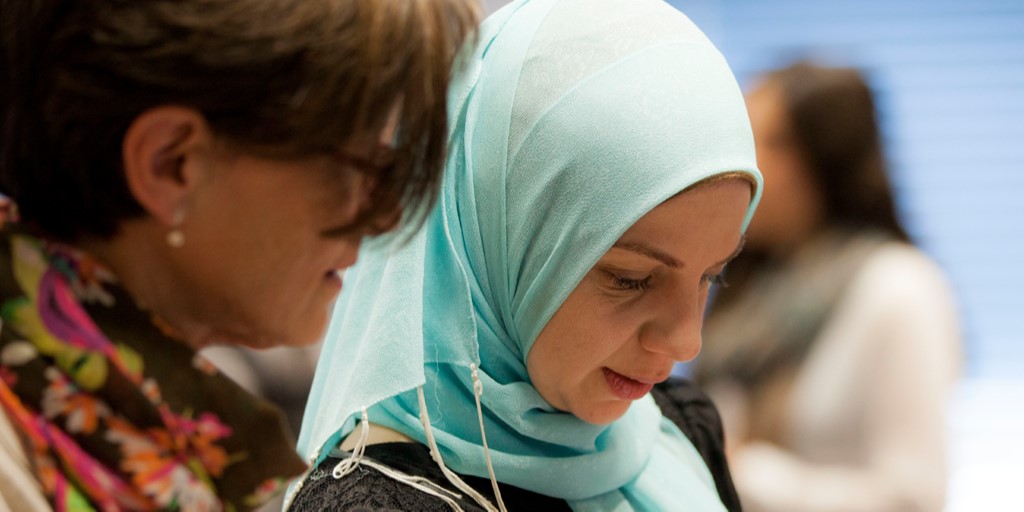
At a recent Nisa-Nashim strategy retreat for Jewish and Muslim women leaders, we confronted the conflict by sharing how we feel it has impacted us here in the UK
Building connections does make a difference. Academic and social research over the decades shows us that where people meet and know each other, prejudice is reduced. It is beyond doubt. Within this, we underestimate or often preclude the involvement of women: carers, mothers, community organisers and proven peace-builders. Similarly, young people, key to the future, are rarely involved in faith-based community building, and the fact that engaging them is hard does not excuse their absence.
At a recent Nisa-Nashim strategy retreat for Jewish and Muslim women leaders, we confronted the conflict by sharing how we feel it has impacted us here in the UK. We heard about how it is tearing us apart, dominating lives, and dividing families. We also talked about what we need from our Muslim and Jewish ‘sisters’ in order to continue the close connections we have built over the years. We did not try to persuade people to our own political narrative – it’s pointless, as no one is listening, and trying flies in the face of building trust and respect.
At a Women’s Faith Forum event in parliament, we shared information and crucially our feelings about gendered hate against both Muslims and Jews, i.e., how women are particularly targeted and how this has increased or changed since 7 October, 2023. To hear that we are all suffering here at home doesn’t make it better or diminish our pain, but it does help to build connections.
There is effective work going on. It’s not easy; it takes courage, but it feels real. And, rather than despair or hide away, it can be an antidote to the corrosive effect of the conflict here at home. Just reaching out to our neighbours, to our workmates, our colleagues, or to fellow students and connecting over something as simple as a cuppa, a Shabbat supper, or a social action project is a start, makes us feel engaged, and is far from a cushioned slumber.
So to Jewish News readers, don’t despair – there is work to do, and there is a role for every one of us to make interfaith/social cohesion work more than just a photo opportunity through empathy, connections, and maybe starting simply with a toasted bagel.
- Laura Marks CBE is the co-founder of Nisa-Nashim; Zaza Johnson Elsheikh is its chair and a leading interfaith educator

Keep community journalism free.
Jewish News is free for everyone. No paywall. No barriers. Just trusted journalism for anyone who wants to stay connected to Jewish life in Britain.
If you value that, please support us.
From as little as £5 a month, you can help keep our journalism free and accessible to all.
Every day, we report on the issues that matter to our community. We celebrate achievements, support charities, challenge antisemitism and ensure Jewish voices are heard more widely.
From as little as £5 a month, you can help us continue to:
- Report on the stories shaping Jewish life in the UK and beyond
- Bring our community together through shared stories, events and campaigns
- Celebrate the people, culture and moments that define our community
- Support organisations doing vital work across Jewish Britain
You can make a one-off donation or become a regular supporter. Every contribution helps keep our journalism free, independent and accessible to all.
If everyone who values Jewish News gave a small amount, it would make a real difference to our future.