Prefer Jewish News on Google

OPINION: Israel was right to target Hamas leaders in Qatar
Western outrage is misplaced. Doha has long sheltered Hamas masterminds while funding terror and undermining regional stability
When American Navy SEALs shot Osama bin Laden in 2011 in Pakistan, much of the world publicly celebrated the elimination of a terror mastermind. The UN’s Ban Ki-moon described the action as ‘a watershed moment in our common global fight against terrorism’. NATO’s Secretary General, Anders Rasmussen, hailed a ‘significant success’, while the EU’s Parliament’s President said we had ‘woken up in a more secure world’. World leaders fell over themselves to praise a military operation that dealt a grievous and lasting blow to Islamist terror.
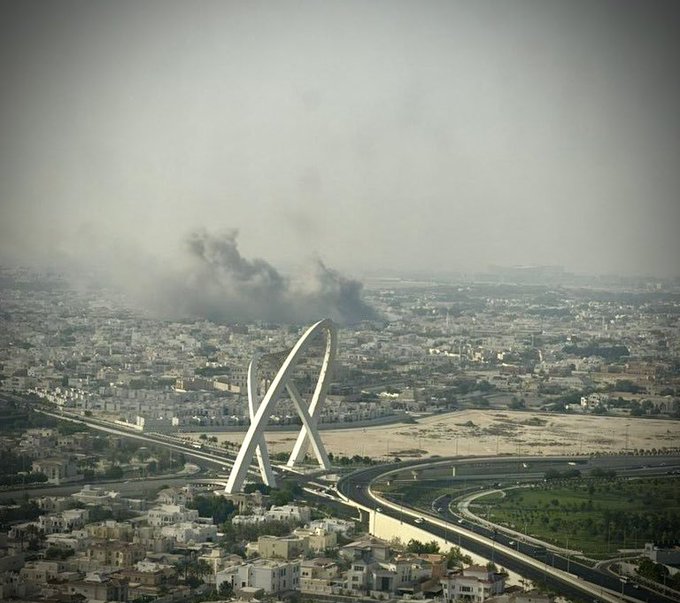
Now fast forward to 2025 and Israel’s attempted elimination of Hamas terror leaders in Qatar two days ago. It is still not clear how many Hamas leaders were actually killed. Nonetheless, there has been unqualified condemnation from, among others, Sir Keir Starmer, Emmanuel Macron and UN Secretary-General António Guterres.
Instead of questioning why Qatar still plays host to Hamas terrorists, these leaders have shown sympathy for Qatar’s Emir and lamented Israel’s regional ‘escalation’. This is shameless and frankly embarrassing. If anything was a heinous escalation, it was the Qatar-funded 7 October attack, as well as Hamas’s threat to repeat it indefinitely.

Qatar has declared that the operation was a violation of its sovereignty. This is nonsense. A war against terrorist leaders does not stop at a border, as Bin Laden found to his cost when he was eliminated in Abbottabad. Israel is entitled to strike at members of a terror group in any place where they choose to reside, provided that they remain an ongoing threat to Israeli citizens.
Netanyahu’s strikes on the soil of a major western ally are a game changer in a few ways. First, they signal to Hamas that they are vulnerable in any part of the Middle East. For too long, their billionaire leaders have received sanctuary in Doha while openly calling for the annihilation of Israel and celebrating the 7 October massacre.


In a grotesque inversion of morality and the rules-based order, these terror masterminds have felt free to plot violent jihad and mass murder while being shielded from the consequences. The long arm of Israeli intelligence and justice has made it clear that they can no longer escape these consequences. Eventually, no matter how long it takes, Israel will find them. If the Hamas leaders survived this attack, as some are suggesting, Israel may well target them again.
The attack is also a game changer for Qatar. The energy-rich powerhouse has been Hamas’s global political headquarters for many years. It has hosted their leaders and treated them like royalty, allowing them to hold court while defending terror attacks like 7 October. Qatar has been Hamas’s chief funder, providing suitcases of cash amounting to nearly £1.54 billion over the years.
It has given Hamas secure communication systems, airports to coordinate with regional allies and banking facilities. It has helped fund Al Jazeera, which has served as a platform for the Muslim Brotherhood but also helped propagandise for Hamas during the current conflict. All of this violates Security Council Resolution 1373, which requires countries to “deny safe haven to those who finance, plan, support, or commit terrorist acts.”
Qatar has long assumed that by buying off the West, it could continue playing a double game of both arsonist and firefighter, fanning the flames of hatred and terror while offering itself as an indispensable intermediary with the West’s enemies. That deceptive game now stands exposed as an outright sham. Instead of siding with Qatar’s leaders, the West should demand that the country expel the remaining Hamas leaders and cease all funding to jihadist causes.
Thirdly, this action sends an important message to other actors in the region, namely that investing in Palestinian extremism, radicalisation and terror brings few dividends and many costs. The smart money is on de-escalation, reconstruction and regional peace initiatives, such as the Abraham Accords.
For some, this military operation has blown up any chance of rescuing hostages. But this assumes that Hamas were negotiating in good faith to end the war, rather than stalling for time and using delays as a form of leverage to pressure Israel. Hamas’s new leaders now know that they cannot play for time in such a cynical fashion, especially when hostages are being slowly starved to death in Gazan tunnels. They must accept the latest US proposals for ending the war or face a huge cost, both political and personal.
- Jeremy Havardi is a freelance journalist and author

Keep community journalism free.
Jewish News is free for everyone. No paywall. No barriers. Just trusted journalism for anyone who wants to stay connected to Jewish life in Britain.
If you value that, please support us.
From as little as £5 a month, you can help keep our journalism free and accessible to all.
Every day, we report on the issues that matter to our community. We celebrate achievements, support charities, challenge antisemitism and ensure Jewish voices are heard more widely.
From as little as £5 a month, you can help us continue to:
- Report on the stories shaping Jewish life in the UK and beyond
- Bring our community together through shared stories, events and campaigns
- Celebrate the people, culture and moments that define our community
- Support organisations doing vital work across Jewish Britain
You can make a one-off donation or become a regular supporter. Every contribution helps keep our journalism free, independent and accessible to all.
If everyone who values Jewish News gave a small amount, it would make a real difference to our future.