Prefer Jewish News on Google
Opinion: Jewish life, not strife, continues to define campus experiences
As Sami Berkoff comes to the end of her tenure as UJS President, she writes about her time in office and a surge in Jewish student engagement
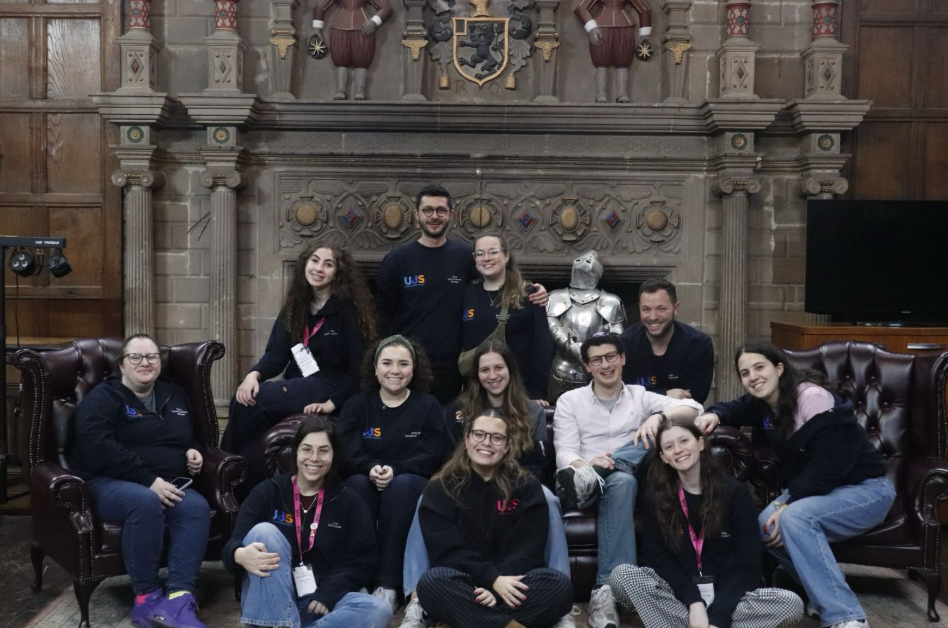
As I come to the end of my term as President of UJS, I’ve been reflecting on what has truly been a historic, challenging, yet inspiring year. This wasn’t just a year of doing more; it was a year of standing stronger, reaching further, and coming together more than ever before.
We saw more unique Jewish students engaging with UJS programmes and events than at any point in our history. More students signed up to attend UJS’ National Convention and Policy Conference. More episodes of the Yalla! podcast were recorded and listened to by Jewish students up and down the country. More non-Jewish schools were reached, continuing UJS’s unique role as the only organisation providing for Jewish students in non-Jewish schools during their school day.
Holocaust Memorial Day events drew record numbers. There were more speaker tours, more panel discussions, more JSoc social events, and more applicants to the Leadership Fellowship. The list of ‘more’ goes on, and it reflects the appetite and energy Jewish students have brought to campus life.
But this year wasn’t just about scale. It was about substance. About innovation. About renewal and reimagination.
We launched a new Sixth Form Leadership Fellowship, empowering future Jewish leaders even before they begin their university studies. We hosted the first-ever UJS Scotland Convention, creating a new space for Jewish students in Scotland to connect and celebrate. We hosted a Shabbaton specifically for Gap Year returnees. We developed a new Israel Educators course to build confidence and understanding around one of the most challenging topics Jewish students navigate today. And, perhaps most poignantly, we opened the UJS 7 October Memorial Garden, a permanent space for remembrance and reflection.



Our welfare work has never been more vital. Since launching our 24/7 Welfare support line just 19 months ago, UJS has received nearly 2,000 phone calls from Jewish students seeking support. Each call represents a moment of vulnerability, a student reaching for reassurance and strength.

The context for all this activity cannot be ignored. Since 7 October, we have not only seen a sharp rise in antisemitic incidents, but we’ve also felt the chilling shift in atmosphere on too many campuses. I’ve heard directly from students who’ve changed their daily routes across campus, avoided certain spaces, skipped lectures, or felt that visibly expressing their Jewish identity would make them a target.
A campus where Jewish students feel unsafe is a campus that fails all its students. And it’s something we will continue to challenge, vocally and relentlessly.
And yet, in the face of hostility, Jewish students have stood strong. They have stood proud. In leadership and life, we’re often faced with a choice: to dwell in the pain of the past or to build something better for the future. A line that stuck with me this year comes from a Netflix show many students will know: ‘I could live in the past. Drown in it. Feel it every day. Be there. But you have to live for the future, because the past will eat you.’
This year, Jewish students have chosen to live for the future. To build, to lead, and to thrive as a community.
For the vast majority of Jewish students, Jewish life, rather than Jewish strife, continues to define their campus experience.

Over 8,000 Jewish students engaged with UJS this past year. Jewish life, joyful, diverse, and defiant, continues to flourish. Interfaith events have taken place on numerous campuses, demonstrating that collaboration, dialogue, and understanding still have room to grow, even in these challenging times.
Over 5,000 university leaders, staff, and students have now received antisemitism awareness training from UJS, helping to create more informed and supportive campus environments.
The resilience Jewish students have shown this year hasn’t just been a reaction to adversity; it’s been a bold statement of identity, belonging, and community spirit. The safe and empowering spaces Jewish students now rely on haven’t happened by accident. They’ve been built through tireless work by UJS staff, student volunteers, and JSoc leaders across the country.
So, thank you. Thank you to the Jewish community that supported me throughout this year, the communal leaders, UJS trustees, permanent staff and my sabbatical team. But most importantly, thank you to the Jewish students who trusted me to represent them. Thank you for standing strong with me.
Since 7 October, I’ve returned again and again to the words of my predecessor, the late former UJS President Alan Senitt: “More Jewish students doing more Jewish things.”
That is exactly what this year has been.
This is how history will remember this chapter in campus life, not defined solely by the hatred Jewish students faced, but by the pride they showed in their Judaism. By the friendships they forged, the leadership they demonstrated, and the community they built together.
The Jewish students of today are not just surviving these times; they’re defining them.

Keep community journalism free.
Jewish News is free for everyone. No paywall. No barriers. Just trusted journalism for anyone who wants to stay connected to Jewish life in Britain.
If you value that, please support us.
From as little as £5 a month, you can help keep our journalism free and accessible to all.
Every day, we report on the issues that matter to our community. We celebrate achievements, support charities, challenge antisemitism and ensure Jewish voices are heard more widely.
From as little as £5 a month, you can help us continue to:
- Report on the stories shaping Jewish life in the UK and beyond
- Bring our community together through shared stories, events and campaigns
- Celebrate the people, culture and moments that define our community
- Support organisations doing vital work across Jewish Britain
You can make a one-off donation or become a regular supporter. Every contribution helps keep our journalism free, independent and accessible to all.
If everyone who values Jewish News gave a small amount, it would make a real difference to our future.