Prefer Jewish News on Google
OPINION: My safta’s message to the world: ‘Am Yisrael Chai — the people of Israel live’
My great-grandmother lived with the unshakable belief that no matter how dark the world becomes, we have the strength to survive, to rebuild, and to thrive

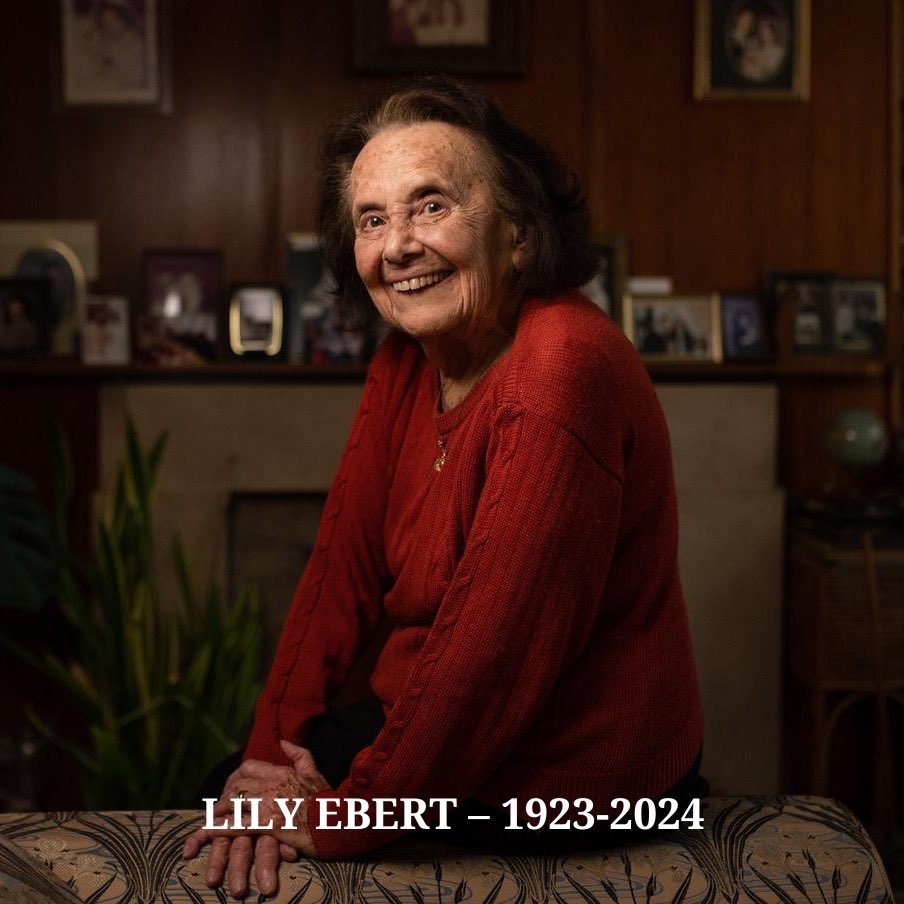
In a world often marked by darkness and hatred, the lessons from my great-grandmother, Lily Ebert—whom we called safta—feel more relevant than ever. Safta, who passed away last week at the age of 100, survived one of humanity’s darkest chapters: Auschwitz. Despite witnessing unimaginable cruelty and loss, she lived a life defined by resilience, hope, and kindness.
Safta frequently reminded us of the fragility of life and freedom. When she arrived at Auschwitz on July 9, 1944, she could not comprehend the horrors that awaited her. She told us about the moment she saw smoke rising from a factory chimney and asked a fellow prisoner, “What are they burning?” The answer—that they were burning her family—was so monstrous she couldn’t believe it. She thought, “That can’t be true.” But it was. Her mother, brother, and sister were murdered and cremated in the gas chambers of Auschwitz-Birkenau that day.
For 80 years, Holocaust survivors like Safta have warned us about the dangers of forgetting. They have shown us how fragile freedom can be and how quickly the world can change. They dedicated their lives to sharing their stories so the world would never forget the depths of human cruelty, and so history would never be allowed to repeat itself.
But antisemitism didn’t die with the liberation of Auschwitz—it evolved. Today, it often disguises itself as political criticism of Israel. Slogans like “From the river to the sea” are not calls for peace. They are calls for the eradication of the Jewish people, first in Israel and then around the world. Safta saw this danger coming and warned about it often.
Her life was a testament to the resilience of the Jewish people, and her message was always the same: Am Yisrael Chai—the people of Israel live.


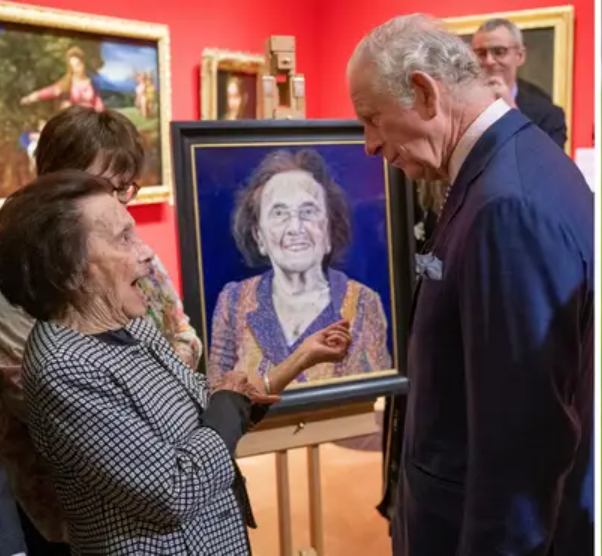 In a post-October 7 world, this phrase, Am Yisrael Chai, has taken on even greater significance. It has been used by Holocaust survivors for nearly 80 years as an affirmation of life and resilience after the worst atrocities. For safta, it was a personal creed. She had been saying it—and living it—ever since her liberation in 1945.
For my generation, Am Yisrael Chai felt like a historical sentiment—a phrase that belonged to a time we hadn’t experienced ourselves. The Jewish people had survived, and we had built lives full of hope and purpose. We never imagined we would need a role model like Safta to show us how to live on in the face of despair.
Safta was the role model I never knew I would need. I thought her story was a lesson in history, not a guidebook for my own life.
Then, October 7 happened, and suddenly her life and her promise became more relevant than ever. The lessons she taught us — about courage, strength, and living with purpose even after immense loss — became our guiding light. Her story gave us the strength to carry on, to hold our heads high, and to say Am Yisrael Chai—not just as a historical sentiment, but as a present reality.
 The horrors of October 7 brought back vivid Holocaust imagery for many around the world. The defenselessness of the victims—families murdered in their homes, children, adults, and the elderly taken hostage—reminded us of a vulnerability we thought we had left behind. For so long, we believed that the establishment of the Jewish state had given us a sense of safety that could never be shattered.
Yet, in those terrifying moments, it felt as though the ghosts of our past had resurfaced, shaking the very foundation of that belief. Once again, the Jewish people were being attacked simply for existing, and we were forced to confront the painful truth that our history still haunts us.
In the aftermath of these new atrocities, Am Yisrael Chai started appearing everywhere. We had to remind ourselves — and the world — that the Jewish people still live, and we will continue to live.
For my great-grandmother, this was never in question. She lived with the unshakable belief that no matter how dark the world becomes, we have the strength to survive, to rebuild, and to thrive. The Jewish people had endured for thousands of years, and she knew we would continue to endure.
Safta was the role model I never knew I would need. I thought her story was a lesson in history, not a guidebook for my own life. But she taught me—and all of us — that even in the depths of despair, life goes on. And not just life, but a life full of love, family and purpose.
Safta lived through the worst of humanity, but she never lost her faith in the goodness of people. She believed in the power of love, of family, and of community. And that is the legacy she leaves behind—a legacy of resilience, strength, and hope.
Am Yisrael Chai. The people of Israel live. And through safta’s story, we will continue to live, thrive, and carry forward the lessons she taught us.

Keep community journalism free.
Jewish News is free for everyone. No paywall. No barriers. Just trusted journalism for anyone who wants to stay connected to Jewish life in Britain.
If you value that, please support us.
From as little as £5 a month, you can help keep our journalism free and accessible to all.
Every day, we report on the issues that matter to our community. We celebrate achievements, support charities, challenge antisemitism and ensure Jewish voices are heard more widely.
From as little as £5 a month, you can help us continue to:
- Report on the stories shaping Jewish life in the UK and beyond
- Bring our community together through shared stories, events and campaigns
- Celebrate the people, culture and moments that define our community
- Support organisations doing vital work across Jewish Britain
You can make a one-off donation or become a regular supporter. Every contribution helps keep our journalism free, independent and accessible to all.
If everyone who values Jewish News gave a small amount, it would make a real difference to our future.