
 Prefer Jewish News on Google
OPINION: The book of life and the limits of silence
Rosh Hashanah calls us to collective reflection — and to insist that basic decency be non-negotiable
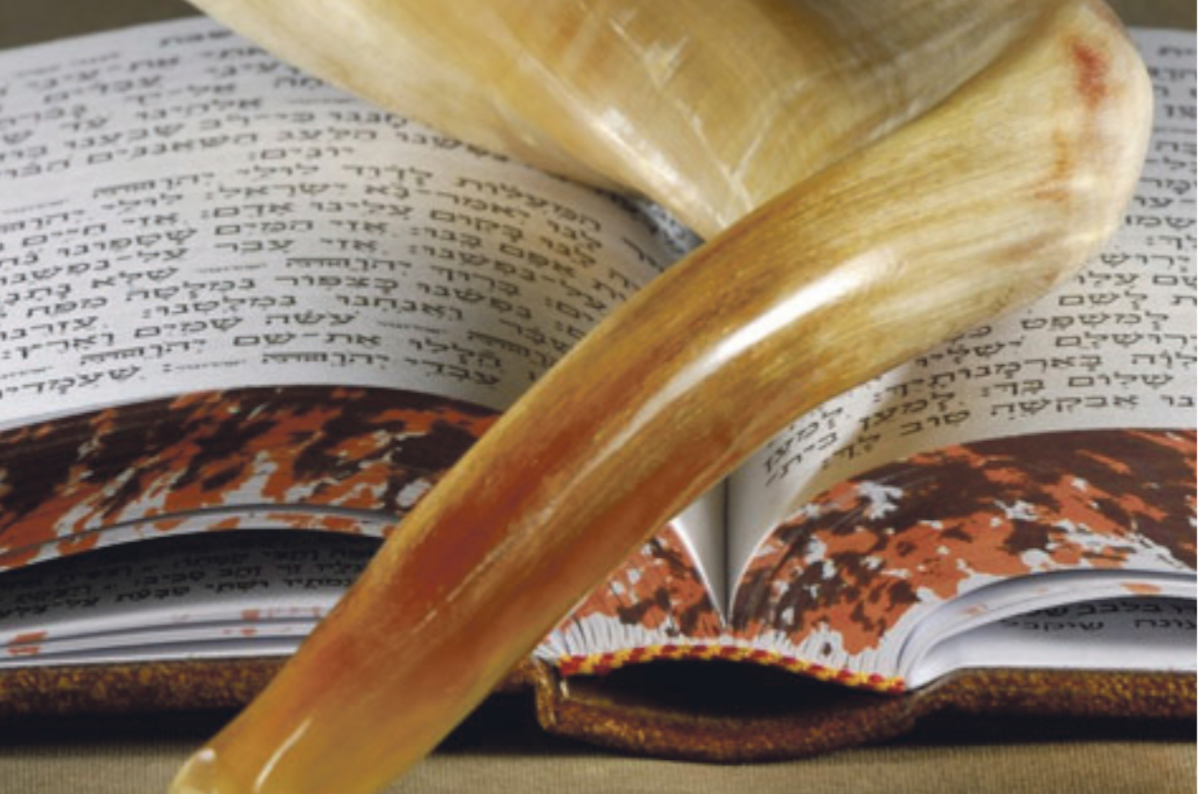
Let me be clear from the start: this is not an argument for religious observance. This is a plea for something much more basic and universal, the human capacity to pause, reflect and choose. Rosh Hashanah is a useful cultural prompt because it asks individuals and communities to inspect their deeds and decide what kind of year they will write. That practice of reflection matters not only for Jews keeping a holy day, but for neighbours, leaders and societies everywhere. It is the habit of moral decision-making that lifts civic life; it is not the act of ritual for ritual’s sake.
So it mattered, painfully and plainly, when a senior Belgian official declined this small and long-standing courtesy, a two-line Rosh Hashanah greeting to the country’s Jewish community, with his staff citing the “sensitivities” of the Middle East. For many Jews in Belgium and across Europe that refusal was not a tiny bureaucratic faux pas: but a public signal that even the smallest human courtesies have become politicised to the point of erasure. A seasonal greeting should not be “radioactive.” When it is treated as such, avoidance becomes the soft cousin of exclusion.
At the same moment, the UK government plans to imminently recognise a Palestinian state, reportedly timed to fall as our community observe the High Holy Days. They will do so without making the return of the hostages taken on 7 October or the immediate removal of Hamas from power in Gaza an absolute precondition. For survivors, hostage families and Jews in this country, for whom the facts on the ground are raw and intimate, that diplomatic choice reads as political calculation divorced from moral clarity. Taken together with the Belgian refusal, it deepens the sense of exposure many Jews now feel: words and gestures in the public square matter because they signal who belongs and as Jews we suffer from deep rooted PTSD, brought about by explicit generational exclusion.
There is a second lesson in the timing, and it is brutal in its clarity. “Never again” is not a slogan; it was the explicit theme of this year’s Holocaust Educational Trust appeal dinner, held last week to mark the 80th anniversary year since the liberation of Auschwitz-Birkenau. Two words that encapsulate the stand that we have taken as a people ever since. A fitting and painful reminder, as survivors, ministers and supporters gathered, to warn that the old promise has never felt more fragile. The Community Security Trust’s figures make the point with cold precision: antisemitic incidents spiked dramatically over the past two years, and for many survivors the fear they now express is unlike anything since 1945. Memory is issuing an alarm; we ignore it at our peril.
That context forces a painful question on those of us who care about Jewish survival and dignity: is outreach beyond our echo chamber still worth the effort? If those who hate us do so not because of what we do but of who we are, is it wiser to conserve our energy and focus inward, educating and fortifying the next generation, rather than pouring time into attempting to persuade the persuadable?

Rosh Hashanah itself offers the answer. The festival teaches responsibility: our deeds matter and the future is not preordained. Yes, pour energy into strengthening Jewish life: teach history, language and ritual; tend institutions; protect the vulnerable. Raise a generation that is confident, educated, stands tall, are loud and proud. But inwardness must not become surrender. To withdraw from the public square is to cede the narrative to those who would normalise our exclusion.
There is a critical distinction here: asking others to show decency is not asking them to adopt our creed. It is asking them to act with basic humanity. It is not naïve to expect a neighbour, a colleague or a political leader to issue a seasonal greeting, to condemn hate when it appears, or to refuse the slippage that turns legitimate criticism of a government into de-legitimisation of a people. Those are modest, reasonable expectations of plural, democratic life, the floor, not the ceiling, of civility.
Rosh Hashanah also teaches humility: mistakes do not define us; what we do next does. We remember the dead; we care for the scarred; we rebuild. But remembrance must be an engine for clarity and action. “Never again” demands it. We must not look away when prejudice amplifies into policy or when political calculation uses minorities as disposable rhetoric. We must press our leaders, here and abroad, to choose moral clarity over performed neutrality when human beings are made vulnerable by words or silence.
So let this High Holy Day mark a twofold pledge. First: to double down on building Jewish pride, to teach, to tend, to create institutions that transmit strength and resilience. Second: to refuse the false choice between protecting ourselves and speaking plainly about the dangers we see, it is only by calling out hate that we protect our longterm survival. We will teach our young to be proud; we will also teach them the patient arts of dialogue, the hard work of alliance-building, and the moral courage to call out exclusion when we see it.
And now a direct call to everyone, of all religions, cultures, geographies and backgrounds: use Rosh Hashanah as a moment of genuine self-reflection and empathy. This is not about religion as ritual for ritual’s sake. It is about the human necessity of pausing, asking hard questions of ourselves, and then acting in ways that protect dignity and advance justice. Ask what small acts of kindness you can offer that say, simply, “You belong here.” Pray, if indeed you pray, for peace. Demand the return of the hostages, demand the end of this conflict, demand that our leaders maintain and indeed fight for open dialogue and conversation. Stand where decency stands and insist on self-determination and dignity for all peoples.
The Book of Life is open; the choices we make are being written. Let this year be the one in which we refuse to be driven inward by fear or lulled into false neutrality by silence. Let us be builders, of homes and of argument, of ritual and of friendship, and witnesses who insist that the smallest courtesies reflect the largest commitments of a civil society.
May this new year bring courage, compassion, and the stubborn, necessary insistence on dignity for every human being. Shanah tovah.

Keep community journalism free.
Jewish News is free for everyone. No paywall. No barriers. Just trusted journalism for anyone who wants to stay connected to Jewish life in Britain.
If you value that, please support us.
From as little as £5 a month, you can help keep our journalism free and accessible to all.
Every day, we report on the issues that matter to our community. We celebrate achievements, support charities, challenge antisemitism and ensure Jewish voices are heard more widely.
From as little as £5 a month, you can help us continue to:
- Report on the stories shaping Jewish life in the UK and beyond
- Bring our community together through shared stories, events and campaigns
- Celebrate the people, culture and moments that define our community
- Support organisations doing vital work across Jewish Britain
You can make a one-off donation or become a regular supporter. Every contribution helps keep our journalism free, independent and accessible to all.
If everyone who values Jewish News gave a small amount, it would make a real difference to our future.





















